A new air conditioning system is a long-term investment, so F gas aircon changes matter well before your current unit stops cooling. For homeowners, landlords and businesses in Essex, the practical question is simple: will the system you install today remain efficient, serviceable and sensible to run in the years ahead?
The answer depends largely on the refrigerant inside it. F gases are fluorinated greenhouse gases used in many air conditioning and heat pump systems. They are effective refrigerants, but some have a high global warming potential if released. UK rules are designed to reduce their use over time, encourage lower-impact alternatives and make sure equipment is installed and maintained correctly.
Why F gas aircon changes affect your decision
The biggest change is not that air conditioning is being phased out. It is that higher-global-warming-potential refrigerants are becoming less attractive for new equipment as supply controls tighten and the market moves towards lower-impact options.
Older systems commonly use R410A, a refrigerant with a relatively high global warming potential. It remains present in many installed systems and does not suddenly make a working unit unlawful. However, manufacturers have increasingly moved new split air conditioning equipment towards refrigerants such as R32, which has a considerably lower global warming potential and is widely available in modern domestic and light-commercial systems.
For larger or more specialised installations, the right option may be different. System design, cooling capacity, building layout, ventilation, fire-safety requirements and how the premises are used all affect the best choice. There is no benefit in selecting a refrigerant on headline figures alone if the equipment is not appropriate for the property.
For customers, this market direction has two clear implications. A modern system is more likely to be built around a refrigerant with a stronger future outlook. At the same time, maintaining an older high-GWP system may become more expensive if a repair requires refrigerant that is less readily available.
F gas aircon changes do not mean replacing every older unit
A reliable existing system should be assessed on its condition, performance and repair history rather than replaced simply because it uses an older refrigerant. There is a meaningful difference between a system that needs routine servicing and one that is leaking, inefficient or approaching the end of its working life.
If an older R410A unit is cooling properly, has no leak issues and is economical to run, planned maintenance may be the sensible short-term route. Good maintenance can reduce energy waste, spot wear before it causes a breakdown and help prevent refrigerant loss.
Replacement becomes more compelling where call-outs are frequent, parts are difficult to source, cooling is inconsistent or a major repair is needed. In those cases, putting substantial money into ageing equipment can be false economy. A new system may offer better seasonal efficiency, quieter operation, improved controls and a lower-GWP refrigerant.
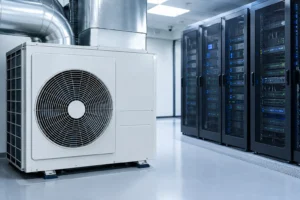
Landlords and commercial operators should also consider continuity. A failure in a server room, salon, shop, office or restaurant can affect far more than comfort. Planning a replacement outside peak summer demand is usually less disruptive than waiting for an urgent breakdown.
What UK F gas rules mean for owners and operators
Great Britain has its own F gas regime, including controls on the placing of equipment and refrigerants on the market, handling refrigerant, preventing leaks and recovering gas at end of life. EU F gas changes do not automatically apply in the same way in England, Scotland and Wales, so it is worth taking advice based on the location and type of installation rather than relying on general online guidance.
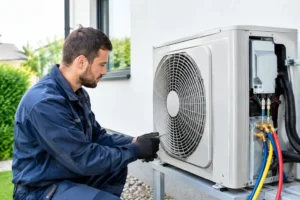
For most domestic customers, the key requirement is straightforward: equipment containing refrigerant must be installed and commissioned by an appropriately certified engineer. This protects the manufacturer warranty, supports safe operation and prevents avoidable refrigerant emissions.
For businesses with larger systems, there may be additional responsibilities. Leak checks are determined by the system’s carbon dioxide equivalent refrigerant charge, not simply the weight of gas in the unit. Where checks are required, records must be kept and leaks must be repaired without undue delay. The exact frequency depends on the refrigerant and charge, so it should be confirmed for the specific equipment.
When a unit is decommissioned, the refrigerant must be recovered correctly. It must not be vented into the atmosphere. This is an environmental requirement, but it also reflects professional workmanship and protects the customer from poor practice.
Choosing a new system with confidence
When comparing quotations, ask what refrigerant the proposed system uses and why it has been recommended. A professional contractor should be able to explain the choice in plain English, alongside the system’s capacity, energy performance and expected maintenance needs.
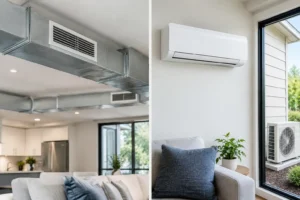
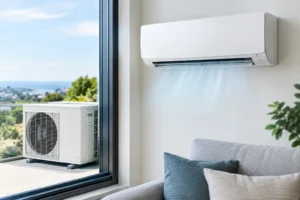
R32 is now a common choice for many wall-mounted split systems in homes, small offices and retail spaces. It offers a lower global warming potential than R410A and is used by major manufacturers. It is mildly flammable, classified as A2L, which is why correct design, installation location and commissioning are essential. This is not usually a reason to avoid it, but it is a reason not to treat air conditioning installation as a general electrical job.
Some larger systems use other refrigerants and may suit particular commercial applications better. A good survey considers the whole installation, including indoor-unit locations, pipe runs, condensate drainage, electrical supply, occupancy and access for future servicing. The lowest initial price is not always the lowest cost over the life of the system.
It is also worth avoiding surplus or outdated stock offered at an unusually low price. A compliant, well-supported system with readily available parts is normally the safer investment, particularly where cooling is essential to your operations.
Maintenance is more valuable as refrigerants change
F gas aircon changes make preventive maintenance more valuable, not less. Refrigerant is only one part of a system, but a small leak can reduce capacity, increase energy use and place more stress on the compressor. Left unchecked, what started as a straightforward repair can become a major expense.
A proper maintenance visit goes beyond cleaning a filter. Depending on the system and service agreement, it should include checks on operating performance, electrical connections, drainage, filters, coils, refrigerant circuit condition and signs of leakage. Any required F gas records and checks should be completed properly.
For domestic systems, an annual service is a sensible way to protect performance and identify developing faults. For commercial premises, the right schedule depends on operating hours, environment and how critical the cooling is. A busy kitchen, IT room or customer-facing business may need more frequent attention than a lightly used office.
Practical next steps for Essex property owners
Start by finding out what refrigerant your current system uses. This is usually shown on the outdoor unit’s data plate, although an engineer can confirm it during a service visit. If the system uses R410A, there is no need to panic, but it is sensible to factor future repair costs into your plans.
If you are considering an installation, focus on suitability rather than chasing a particular refrigerant name. Ask for a survey, a clear explanation of the proposed equipment and realistic advice on maintenance. For commercial sites, request confirmation of any leak-check and record-keeping obligations that will apply once the system is in use.
Essex Air Conditioning can assess existing equipment or specify a new system around the needs of your home or premises. A well-planned installation gives you dependable cooling now while putting you in a stronger position as refrigerant rules and equipment choices continue to develop.