A split air conditioner that has not been cleaned for a season often gives the first warning signs quietly: weaker airflow, a musty smell, more noise than usual or a room that takes longer to cool. Knowing how to maintain split air conditioner units helps prevent these issues from becoming a breakdown, while protecting comfort, energy efficiency and the working life of the system.
Split systems are designed to be dependable, but they do need routine attention. The indoor unit draws air through filters and over its coil, while the outdoor condenser releases heat to the outside air. Dirt, blocked airflow and drainage problems make both parts work harder. A simple routine at home or on site, supported by professional servicing, is the most practical way to keep the system performing properly.
Start with safe, regular cleaning
Before cleaning any part of the system, switch it off at the remote control and isolate the power supply where possible. Never spray water, cleaning products or disinfectant directly into the electrical components, display panel or circuit board.
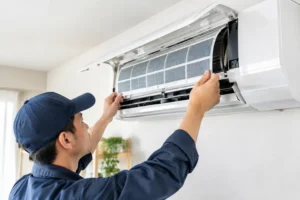
For most homes and small business premises, the indoor filters are the first maintenance task to address. Open the front panel carefully, remove the filters as instructed by the manufacturer and vacuum away loose dust. If the filters are washable, rinse them with lukewarm water and allow them to dry completely before refitting them. Do not reinstall damp filters, as this can encourage odours and mould growth.
How often this is needed depends on use. A bedroom unit used occasionally may only need attention every two to three months. A unit in a busy office, shop, kitchen-adjacent area or home with pets may need cleaning monthly. During periods of daily summer use, a monthly check is a sensible baseline.
Wipe the casing and accessible air outlet with a soft, dry or lightly damp cloth. This keeps dust from being drawn back into the unit. Avoid bleach, abrasive sprays and strongly perfumed products, which can damage plastics or leave residue on internal surfaces.
Keep the outdoor unit clear
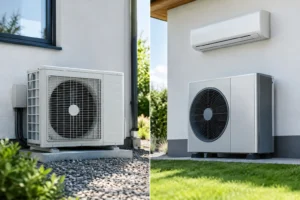
The outdoor unit needs a reliable supply of air to reject heat. If leaves, garden waste, soil or stored items restrict the condenser, the system can lose efficiency and may run for longer than necessary.
Check the area around the condenser every few weeks, particularly after high winds, autumn leaf fall or gardening work. Clear loose debris from around the base and make sure there is open space around the sides and above the unit. Do not place bins, furniture, planters or stored stock against it.
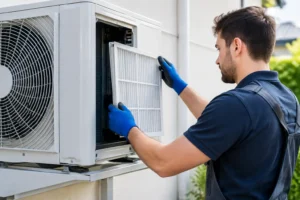
You can gently remove leaves and surface debris from the external grille using a soft brush or vacuum with a brush attachment. Take care not to bend the delicate fins behind the grille. Bent fins reduce airflow and are best straightened by a technician with the correct tools.
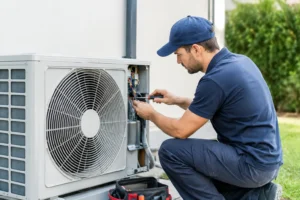
It is also worth looking at the condition of the mounting brackets, anti-vibration feet and visible pipe insulation. Rusting brackets, loose fixings, damaged insulation or a unit that appears to be vibrating excessively should be inspected professionally. These are not cosmetic details – they can affect performance, noise levels and long-term reliability.
Watch the condensate drain
When your air conditioner cools a room, it removes moisture from the air. This water travels through a condensate drain pipe to a suitable outlet. If the drain becomes blocked, water can back up into the indoor unit and lead to leaks, staining or damage to walls and ceilings.
Check periodically for water where it should not be: beneath the indoor unit, around trunking, or near the external drain outlet. A small amount of water from the drain outside is usually normal when the unit is cooling. Water dripping indoors is not.
Musty smells can also point to moisture sitting inside the unit or drain system. Cleaning filters may help, but persistent odours, leaks or visible mould call for a proper internal clean and drain inspection. This work requires care because the coil, fan barrel and drainage components sit close to electrical parts.
Use the system in a way that reduces strain
Good maintenance is not only about cleaning. The way a split air conditioner is operated affects wear, running costs and indoor comfort.
Set a realistic temperature rather than forcing the system to work at its limit. In cooling mode, a setting around 21°C to 24°C is comfortable for many people, although the right temperature depends on the room, occupancy and external conditions. Setting the thermostat extremely low will not cool the room faster. It simply keeps the system running longer and can increase electricity use.
Keep doors and windows closed while cooling or heating is in use. Close blinds or curtains on south-facing windows during hot periods, and avoid placing heat-producing equipment directly beneath the indoor unit. In offices and retail spaces, these simple measures can make a noticeable difference to system performance.
If the unit has a fan-only, dry or sleep mode, use the setting that suits the room rather than relying on full cooling all the time. Dry mode can improve comfort during humid weather without aggressively lowering the temperature. The correct setting varies by manufacturer, so the operating manual remains useful.
Know what should be left to an engineer
Homeowners, landlords and facilities teams can keep filters and surrounding areas clean, but internal deep cleaning and technical checks should be carried out by a qualified air conditioning engineer. Modern split systems contain electrical controls, refrigerant pipework and components that need specialist equipment to test properly.
A professional maintenance visit typically includes inspection and cleaning of the indoor coil, fan and condensate system; assessment of the outdoor coil and fan; checks for unusual noise or vibration; and testing of operating temperatures and controls. The engineer can also identify worn insulation, loose electrical connections, developing drainage faults and performance issues before they lead to lost cooling or heating.
Refrigerant must never be handled as a DIY task. A system that is low on refrigerant may have a leak, and simply adding more gas without finding the cause is not a proper repair. F-Gas work must be completed by an appropriately certified engineer.
For a domestic unit, annual servicing is generally a sensible recommendation, especially if it is used for both cooling and heating. A lightly used system may require less frequent deep maintenance, but annual checks still offer valuable reassurance. For commercial systems in offices, shops, server rooms, salons and rental properties, the right frequency depends on operating hours, occupancy, equipment type and the consequences of downtime. Higher-use systems may benefit from two planned visits a year.
Signs your split air conditioner needs attention
Do not wait for the unit to stop entirely before arranging a check. Early intervention is usually less disruptive and can prevent a minor fault becoming a costly repair.
Arrange professional advice if you notice any of the following:
- Airflow is weak even after the filters have been cleaned.
- The unit is blowing warm air in cooling mode or cool air in heating mode.
- Water is leaking from the indoor unit or appearing on nearby walls.
- There is a persistent musty, burning or unusual smell.
- The system is louder than normal, rattles or repeatedly switches itself off.
- Ice forms on the indoor coil, refrigerant pipework or outdoor unit.
- Your electricity use rises without an obvious change in how the system is used.
Some causes are straightforward, such as a dirty filter or incorrectly selected mode. Others can indicate a blocked drain, fan fault, refrigerant issue or electrical problem. A qualified technician can diagnose the difference safely rather than relying on guesswork.
Plan maintenance around the seasons
The best time to service a cooling-led system is often in spring, before the first prolonged warm spell. This gives time to clean the unit, resolve faults and confirm it is ready when demand increases. If your split system provides heating during colder months, an autumn check is equally worthwhile.
For Essex homes and businesses, outdoor units are exposed to rain, coastal air in some areas, falling leaves and changing temperatures across the year. A quick visual check after severe weather is sensible, particularly for units installed on wall brackets, roofs or less accessible external areas.
Landlords and business operators should keep a simple record of filter cleaning, service dates, repairs and reported issues. It makes planned maintenance easier to manage and provides a clear history if a recurring fault develops.
A well-maintained split air conditioner should be quiet, responsive and easy to live or work with. Clean the filters, protect airflow around the outdoor unit and act promptly when something changes. For the deeper work, planned servicing from an experienced local contractor such as Essex Air Conditioning gives your system the professional care needed to stay dependable when you need it most.