A quiet air conditioning system should fade into the background. If it suddenly rattles during the night, buzzes when it starts, or bangs every time the fan stops, it is doing more than disrupting your comfort. Getting aircon noise problems solved promptly can prevent a small fitting issue from becoming a costly repair, especially where a unit is working hard through warm weather.
Some sounds are normal. A brief hum from the fan, a soft rush of air and an occasional click as the system switches on or off are all part of normal operation. Persistent, loud or changing noises are different. They deserve attention before performance, efficiency or reliability is affected.
Start by identifying where the sound comes from
The location and character of a noise provide useful clues. Stand clear of the unit and listen while the system starts, runs and shuts down. Is the sound coming from the indoor wall unit, ductwork, pipework or outdoor condenser? Does it occur constantly, only on start-up, or only when cooling is demanded?
This does not replace a professional inspection, but it helps describe the fault accurately when arranging a repair. It can also reveal simple issues, such as an item resting against a unit or leaves caught around an outdoor condenser.
Avoid removing covers, touching electrical connections or attempting to access refrigerant components. Air conditioning equipment combines electrics, moving parts and pressurised refrigerant. A safe diagnosis needs the right tools and experience.
Rattling and vibrating noises
Rattling is one of the most common complaints in homes, offices and shops. It may be as minor as a loose front panel or fixing, but it can also point to a fan assembly or mounting problem.
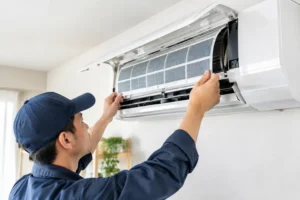
An indoor unit can vibrate if its casing, filters or louvres are not properly seated. Check that washable filters are clean and fitted correctly, following the manufacturer’s instructions. A blocked filter makes the fan work harder and may increase airflow noise as well as reduce cooling performance.
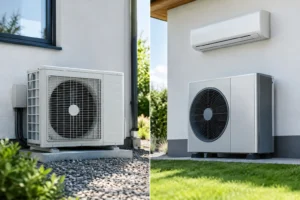
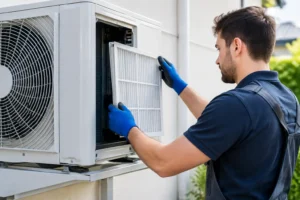
At the outdoor unit, loose screws, worn anti-vibration mounts, damaged fan blades or debris around the casing can all create a rattle. Condensers installed on brackets may transmit vibration into an external wall if the mounting hardware has deteriorated or was not specified correctly for the unit. This is particularly noticeable in bedrooms, conservatories and small commercial premises where background noise is low.
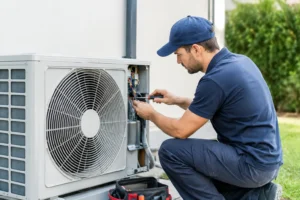
Do not tighten random screws in the hope of curing the problem. The source may be behind a panel, and an incorrectly secured component can make the issue worse. An engineer can check the fan motor, bracketry, casing and mounts, then secure or replace the affected part properly.
When vibration affects the room below or beside it
Vibration can travel farther than expected. A condenser fixed near a bedroom, a wall-mounted indoor unit on a lightweight partition, or poorly supported pipework may create a low hum through the building fabric. The fault may not be the air conditioner itself. Pipe clips, trunking, brackets and insulation all need to be assessed as part of the installation.
The right solution depends on the cause. It may involve new vibration isolation, improved pipe support or adjustment to the unit’s mounting rather than replacement of the whole system.
Buzzing, humming and electrical sounds
A low, steady hum while the unit is operating is usually normal. A loud electrical buzz, an intermittent humming that prevents the system starting, or a noise accompanied by flickering lights, burning smells or a tripped breaker is not.
Buzzing can be caused by a failing capacitor, contactor, electrical connection, fan motor or compressor. These parts should only be tested by a qualified air conditioning engineer. Continuing to run a system with an electrical fault risks further damage and may leave you without cooling when you need it most.
Turn the unit off at the controller if there is a burning smell, smoke, repeated tripping, visible damage or an unusually intense buzz. Do not restart it repeatedly. Arrange a professional repair visit instead.
For landlords and business operators, this is also a practical reason to keep maintenance records. Regular checks can identify signs of wear before a component fails during a busy trading period or a warm spell.
Banging, clanking and scraping sounds
Banging and clanking generally need faster attention. They can indicate a loose fan blade, failing motor bearings, compressor issue or an internal component that has come free. Scraping often occurs when a fan is contacting its housing or another part of the unit.
A system may still cool for a short time, but running it in this condition can cause significant damage. Switch it off and book a repair. Trying to compensate by changing settings, raising the fan speed or leaving the unit running overnight is unlikely to help.
There is one exception worth understanding: a soft click or brief mechanical movement from the indoor louvres is often normal as airflow direction changes. The concern is a repetitive knock, metallic clank or scraping sound that was not present before.
Whistling, hissing and rushing air
Whistling from an indoor unit is sometimes caused by restricted airflow. Dirty filters, blocked grilles or poorly adjusted louvres can make air move noisily through a narrow path. Cleaning approved filters and ensuring furniture, curtains or stock are not blocking the unit may reduce the sound.
Hissing needs more care. A faint, short hiss can occur during normal refrigerant movement or as pressures equalise after shut-down. A sustained hissing sound, particularly alongside weaker cooling, ice on pipework, water leaks or a unit that runs for long periods without reaching the set temperature, may suggest a refrigerant leak or system fault.
Refrigerant work must be carried out by an appropriately qualified professional. It is not a top-up job. The leak must be located and repaired, the system tested, and refrigerant handled correctly. Simply adding more refrigerant without fixing the cause is poor practice and does not provide a lasting solution.
Water noises and dripping around the indoor unit
Gurgling, bubbling or dripping can be linked to condensate drainage. Air conditioners remove moisture from the air, and that water must drain away cleanly. A partially blocked drain line, failed condensate pump or poorly graded pipe can cause water to back up, making noise and potentially leaking into the room.
If you see water from an indoor unit, turn it off and protect the area beneath it. Do not ignore a small drip. Over time, moisture can damage plaster, ceilings, furnishings and electrical equipment.
An engineer can clear and test the drain, inspect the pump where fitted, and check that pipework has the correct fall. During planned maintenance, this is one of the routine checks that helps prevent inconvenient leaks.
Why maintenance keeps air conditioning quieter
Many noise faults begin with gradual wear rather than a sudden breakdown. Dust accumulates on filters and coils, fan motors work harder, fixings loosen through normal vibration, and drainage systems collect debris. A well-maintained unit usually operates more quietly, uses energy more efficiently and is less likely to fail unexpectedly.
For a home system, an annual service is a sensible baseline. Commercial systems may need more frequent attention depending on operating hours, occupancy, kitchen extract nearby, dust levels and how critical cooling is to the premises. A small office used five days a week has different demands from a server room, salon or retail space.
Professional maintenance should look beyond a quick filter clean. It should include checks of airflow, electrical components, fan operation, drainage, mounting condition and overall system performance. This gives you a clearer picture of whether a repair is worthwhile or whether an older unit is becoming uneconomical to maintain.
When to call an air conditioning engineer
A new or worsening noise is reason enough to arrange an inspection, but some signs should not wait. Turn the system off and seek professional help if the noise is loud, metallic or electrical; cooling has dropped noticeably; water is leaking; the breaker trips; or there is a burning smell.
Essex Air Conditioning provides repair and maintenance support for residential and commercial systems across Essex. A proper assessment identifies the cause rather than masking the symptom, whether that means securing a loose mount, repairing a fan issue, clearing drainage or investigating a more serious mechanical fault.
A quiet system is not just more pleasant to live or work with. It is often a sign that the equipment is correctly installed, clean, secure and operating as intended. Acting when the sound first changes gives you the best chance of a straightforward repair and dependable comfort ahead.