A south-facing office that becomes stifling by 2pm needs a different answer from a family home trying to reduce its winter heating bills. That is why the question of aircon versus heat pumps is not simply about choosing the more modern system. Both can be highly efficient, but their design, purpose and performance in your property can be very different.
For homeowners, landlords and business owners in Essex, the right choice starts with how you use each room. Do you need dependable summer cooling, lower-carbon heating, or both? A professional survey should turn those priorities into a properly sized, practical solution rather than a costly compromise.
Aircon versus heat pumps: the key difference
Air conditioning and heat pumps work using the same basic refrigeration process. They move heat rather than creating it directly, which is why they can use electricity very efficiently. The meaningful distinction is usually the type of system and its main job.
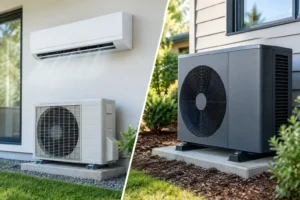
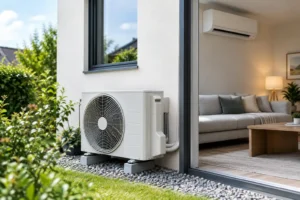
A split air conditioning unit is commonly an air-to-air heat pump. In cooling mode, it takes heat from indoors and releases it outside. In heating mode, a reversible model does the opposite, drawing available heat from outdoor air and delivering warm air into the room. This makes modern air conditioning an excellent year-round option for individual rooms, offices, shops, loft conversions and garden rooms.
When people refer to a heat pump, they often mean an air-to-water heat pump. This system transfers heat into water for radiators, underfloor heating and domestic hot water. It is designed primarily as a whole-home heating solution, although some arrangements can provide cooling through suitable underfloor systems or fan coils.
So, air conditioning is not necessarily separate from heat pump technology. The more useful question is whether you need room-by-room air treatment or a system built around your property’s wet central heating.
When air conditioning is the better choice
Air conditioning is often the clear option where cooling is the main requirement. British summers may be shorter than those in southern Europe, but prolonged warm spells can make bedrooms, top-floor flats, conservatories and busy workplaces uncomfortable. A well-designed system provides fast, controlled cooling exactly where it is needed.
It also gives you useful heating outside the coldest part of winter. For a home office, retail unit or small commercial space, an air-to-air system can warm a room quickly without waiting for the central heating to bring radiators up to temperature. This can be particularly economical in spring and autumn, or where only a few rooms are occupied during the day.
Practical advantages of aircon
The main strength of air conditioning is precision. Individual indoor units can be controlled separately, allowing different temperatures in a bedroom, meeting room, server room or reception area. That avoids paying to condition areas that are empty.
Installation can also be relatively straightforward where there is a suitable outside wall and an appropriate route for pipework and electrics. A split system does not require new radiators, extensive plumbing or a hot water cylinder. For many properties, this means less disruption than replacing an entire heating system.
Modern units also filter circulating air and can reduce indoor humidity during cooling. This is valuable in rooms that feel close and damp during warm weather, although air conditioning should not be treated as a substitute for resolving serious damp or ventilation problems.
The limitation is equally clear: a wall-mounted air conditioning system heats and cools the spaces where indoor units are fitted. It will not normally provide domestic hot water or replace a full central heating system throughout a large house.
When an air-to-water heat pump makes more sense
An air-to-water heat pump suits properties looking to change the way they heat their entire building. It can supply low-temperature heat to radiators or underfloor heating and, with the right equipment, provide hot water as well. For a well-insulated home with suitable emitters, it can be an effective alternative to a boiler.
These systems work best when the property loses heat slowly and the heating distribution system is designed for lower water temperatures. Older homes can still be suitable, but they may need insulation improvements, larger radiators or other upgrades first. The unit must be correctly sized after a heat-loss assessment, not selected from a rough estimate of floor area.
Cooling is possible with some air-to-water designs, but it is not as simple or as responsive as a dedicated air conditioning installation. Standard radiators are generally not suitable for cooling. Underfloor cooling and fan coil units require careful design to prevent condensation and manage humidity.
For a commercial property with a major cooling load, or a household that cannot sleep comfortably during hot weather, an air-to-water heat pump may solve the heating question while leaving the cooling need only partly addressed.
Compare comfort, running costs and installation
Both systems can offer lower running costs than direct electric heaters because they typically deliver more heat energy than the electrical energy they consume. However, no contractor can responsibly promise a universal saving without looking at the building, tariff, controls and existing heating setup.
Running costs depend on insulation levels, outdoor temperatures, how warm you keep the property and the performance of the installed system. An air-to-air unit can be very cost-effective for heating occupied rooms selectively. An air-to-water system may deliver good whole-house efficiency when it runs steadily at lower temperatures, but it needs a suitable building and heating design to achieve that potential.
Upfront costs also vary significantly. A single-room air conditioning installation is usually less expensive and less disruptive than a whole-property air-to-water heat pump conversion. A multi-room aircon system increases the initial investment but can still be a sensible route where summer comfort and zoned heating matter most.
Noise, appearance and outdoor space deserve attention too. Both systems use an outdoor unit with a fan and compressor. Correct siting helps protect comfort for you and your neighbours, while avoiding restricted airflow and allowing technicians safe access for maintenance. Planning requirements and lease conditions can also affect what is possible, especially for flats, conservation areas and commercial premises.
Why system design matters more than the label
The wrong size creates problems whichever route you choose. An oversized aircon unit may cycle on and off too often, affecting comfort and efficiency. An undersized unit may struggle during the hottest days or fail to heat adequately in colder spells. Poor placement can leave a room with cold or warm spots even if the equipment itself is high quality.
For heat pumps, design is even more closely tied to property performance. Heat loss, radiator output, hot water demand, cylinder capacity and control settings all need to work together. Replacing a boiler with a heat pump without assessing these details can lead to disappointing results.
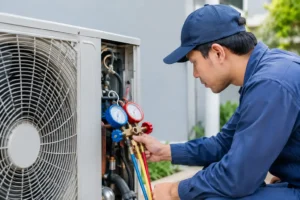
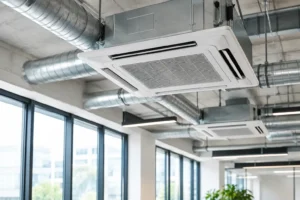
This is why a free survey is more valuable than choosing from a price list alone. A competent contractor will ask how each space is used, assess insulation and layout, identify suitable indoor and outdoor unit positions, and explain the expected scope of work. For businesses, they should also consider occupancy, equipment heat gains, opening hours and the need to keep trading during installation.
A practical route for Essex properties
If your priority is sleeping comfortably through humid nights, cooling a home office, protecting equipment or making customer areas pleasant in summer, reversible air conditioning is often the most direct answer. It also provides efficient supplementary heating when temperatures drop.
If your priority is replacing a boiler and supplying heating and hot water across a well-prepared property, an air-to-water heat pump may be the better long-term project. It is a broader change to the building’s heating infrastructure and should be assessed accordingly.
Some larger homes and commercial sites benefit from both: an air-to-water heat pump for central heating and hot water, plus air conditioning in spaces where reliable cooling is essential. This is not automatically the best-value approach, but it can provide the most complete comfort where the need is genuine.
Essex Air Conditioning can assess air conditioning requirements for homes and businesses with a clear, no-obligation survey. The goal is not to sell the biggest system, but to specify equipment that suits the room, the budget and the way you actually use the property.
A comfortable building should not force you to choose between a boiling summer room and an inefficient winter heater. Start with the rooms that cause the greatest frustration, then choose the technology that solves that specific problem properly.