A hot upstairs bedroom, a south-facing office or a busy salon can become uncomfortable long before the height of summer. Split aircon gives you direct, controllable cooling exactly where it is needed, without the disruption of fitting ductwork throughout a property. For many Essex homes and businesses, it is the most practical route to dependable year-round comfort.
Unlike temporary fans, a properly specified air conditioning system reduces the room temperature rather than simply moving warm air around. Most modern systems also provide efficient heating, making them useful well beyond a few warm weeks each year.
What is split aircon?
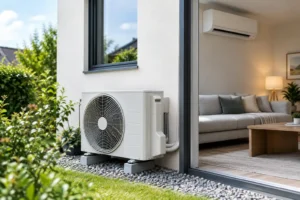
A split air conditioning system has two main parts: a quiet indoor unit that conditions the air in the room and an outdoor condenser unit that releases heat outside. Refrigerant pipework and electrical connections link the two. The indoor unit draws in room air, cools or warms it to the selected setting, filters it and returns it evenly to the space.
This arrangement is called a split because the system is divided between indoors and outdoors. It is a familiar choice in bedrooms, lounges, garden offices, retail premises, treatment rooms and small commercial spaces because it delivers targeted comfort without taking over the room.
A single-split system serves one indoor area from one outdoor unit. A multi-split system connects several indoor units to one outdoor condenser, allowing separate rooms to be controlled independently. The right option depends on the layout of the property, the number of rooms to be treated and how people use each area.
Why split aircon suits homes and businesses
The main advantage is control. A bedroom can be kept cool for sleep without cooling the entire house, while an office can be set to a sensible working temperature without affecting a stockroom or reception area. Most units have remote controls, timers and app-based controls, so users can adjust settings around their routine.
Modern inverter technology also helps systems run more efficiently. Rather than repeatedly switching fully on and off, the unit adjusts its output to maintain the chosen temperature. This usually means steadier comfort, lower noise and less wasted energy than older fixed-output equipment.
Heating is another valuable benefit. An air-to-air heat pump can provide warm air during cooler months, often more efficiently than direct electric heaters. It will not replace every central heating system in every property, but it can be an effective supplementary or primary heating solution for a well-used room, small office or converted space.
Air quality matters too. Indoor units contain filters that capture airborne dust and other particles as air passes through the system. This does not make a standard system a medical-grade air purifier, and filters still need regular cleaning, but it can make a noticeable difference to the freshness of a regularly occupied room.
Choosing the right system size
The most common mistake with air conditioning is choosing a unit based only on floor area. Room size matters, but it is not the full picture. A compact, shaded room with good insulation needs very different capacity from a similarly sized top-floor room with large south-facing glazing.
A professional survey considers the heat load rather than relying on guesswork. This includes the room dimensions, ceiling height, window size and direction, insulation, occupancy, electrical equipment and whether doors are frequently opened. In commercial premises, lighting, computers, catering equipment and customer footfall can add significant heat.
An undersized unit may run constantly without reaching the desired temperature. An oversized unit may cool the space too quickly, cycle inefficiently and remove less moisture from the air. Correct sizing is central to comfort, running costs and equipment life.
Indoor unit placement makes a real difference
The indoor unit should distribute air across the room without blowing constantly onto a bed, desk or seating area. It also needs clear space around it for airflow and future servicing. In most rooms, a high wall-mounted unit is the practical choice, but ceiling cassettes, floor-mounted units and concealed options can be suitable for particular layouts.
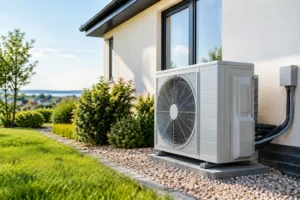
The outdoor unit requires a stable location with good airflow and sensible access for maintenance. It should not be boxed into a tight space or positioned where its operating sound could create an avoidable issue for neighbours. A survey identifies a location that balances performance, appearance, pipework routes and planning considerations.
What installation involves
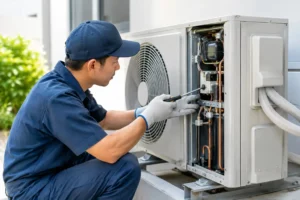
Professional installation is more than fitting an indoor unit to a wall. The engineer confirms the design, mounts both units securely, runs insulated pipework, installs condensate drainage and electrical connections, then pressure-tests and commissions the system. This work must be carried out correctly for the equipment to operate safely, efficiently and within the manufacturer’s requirements.
The amount of disruption is usually modest. In a straightforward installation, pipework can often be routed discreetly through an external wall, trunking or a planned route within the building. More complex properties may require longer runs, condensate pumps, specialist access or careful coordination with other works. These factors affect both the installation approach and the final cost.
For businesses, installation should also account for trading hours, customer areas and operational continuity. A clear plan helps minimise downtime and ensures the finished system is positioned around the way the premises actually work.
Running costs: what should you expect?
There is no single cost for running split aircon because usage patterns vary. The electricity used depends on the unit’s efficiency rating, capacity, target temperature, room heat gain, maintenance condition and local electricity tariff. Cooling a small, insulated bedroom overnight is very different from conditioning a glazed shop through a hot afternoon.
The best approach is to choose an appropriately sized, efficient system and use it sensibly. Set a realistic temperature rather than the lowest possible setting. During warm weather, a moderate indoor temperature is usually more comfortable and economical than trying to make the room feel cold. Closing blinds during direct sun, keeping doors and windows shut while the unit operates and using timers all reduce unnecessary demand.
Heating mode needs the same practical approach. A split system performs well when it is maintaining a sensible temperature in an occupied space. Constantly turning it off and then asking it to recover from a very low temperature may not be the most economical routine, particularly in a commercial environment.
Maintenance protects performance
Air conditioning needs regular attention, even when it appears to be working normally. Dirty filters restrict airflow, reduce efficiency and can lead to odours. Blocked condensate drains may cause water leaks. Outdoor units can collect leaves and debris, while electrical and refrigerant components need periodic professional checks.
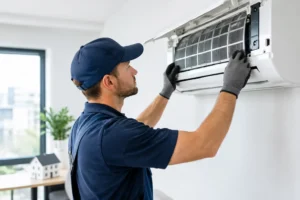
Homeowners can usually clean or vacuum accessible filters in line with the manufacturer’s guidance. Beyond that, planned servicing is the sensible way to protect the system. An engineer can inspect components, clean coils where required, check drainage, test operation and identify developing issues before they become an inconvenient breakdown.
For landlords and businesses, maintenance is particularly valuable because comfort problems affect tenants, staff and customers quickly. Where equipment is used heavily, a planned schedule provides more confidence than waiting for performance to drop in the middle of a heatwave.
When a split system may not be the best fit
Split aircon is highly versatile, but it is not automatically the answer for every building. A listed property, a flat with restrictions on external equipment or a building with no suitable outdoor location may require a different approach. Larger sites with many rooms may be better served by a more extensive multi-room or commercial design.
Noise, aesthetics and permissions should be considered early, not after equipment has been selected. Most modern units are designed for quiet operation, yet location still matters. A reputable installer will explain the practical options rather than forcing a standard design into an unsuitable property.
If you are considering cooling or heating for a home, rental property or commercial space, start with a proper survey. Essex Air Conditioning can assess the room, explain the suitable options and provide a clear, no-obligation quote. The right system should feel unobtrusive in daily life: reliable when the room needs it, economical to run and professionally maintained for years to come.