A wall-mounted air conditioning unit can look perfectly clean while its filters are holding weeks of dust, pollen and household debris. Regular aircon filter cleaning is one of the simplest ways to protect airflow, maintain comfortable temperatures and avoid making your system work harder than it should.
For homeowners, landlords and businesses, the difference can be noticeable. A clean filter helps conditioned air move freely through the unit. A blocked one can leave rooms slower to cool, encourage unpleasant smells and add unnecessary strain to equipment that should be operating efficiently.
Why aircon filter cleaning matters
Your indoor unit draws room air through its filters before cooling or heating it and returning it to the space. The filters are designed to catch airborne particles, including dust, hair, lint and pollen. This keeps the indoor coil cleaner and helps maintain better air quality within the room.
As debris builds up, airflow becomes restricted. The unit may need to run for longer to achieve the set temperature, which can increase electricity use and reduce the comfort you expect from your air conditioning. On systems used for heating as well as cooling, dirty filters can affect performance throughout the year.
Neglecting filters does not usually cause an immediate breakdown, but it can contribute to larger maintenance issues over time. Reduced airflow may increase stress on components, while dust that passes beyond neglected filters can settle on the coil and fan. These parts are harder to access and require professional cleaning.
For commercial premises, the stakes can be higher. In a salon, office, shop, restaurant or treatment room, frequent door openings, footfall and nearby traffic can introduce more dust into the system. A planned maintenance routine is often a more cost-effective option than waiting for poor performance or a fault callout.
How often should aircon filters be cleaned?
There is no single schedule that suits every property. A lightly used bedroom unit may only need attention every two to three months, while a busy office or a unit running daily through summer may need cleaning every two to four weeks.
As a sensible starting point, inspect filters monthly during periods of regular use. You do not need to clean them every time, but a quick inspection makes it easier to spot build-up before it becomes a problem.
Cleaning may be needed more often where there are pets, smokers, open windows near busy roads, building work, high pollen levels or large numbers of people using the space. Landlords should also consider checking filters between tenancies, particularly if a system has been used heavily.
A filter that looks grey, fluffy or visibly coated in dust should be cleaned. Do not wait for airflow to become noticeably weak. Preventative care is quicker, cleaner and usually far less disruptive.
Signs your filters need attention
The most obvious sign is reduced airflow from the indoor unit, even when the fan setting is high. You may also find that the room takes longer to cool or heat than usual, or that the system seems to run continuously without reaching its target temperature.
Musty or dusty odours when the unit starts can also point to a cleaning requirement. Filters are not always the sole cause of smells, as moisture around the coil or drain system can create a separate hygiene issue, but they are the first item worth checking.
Other warning signs include more dust settling around the room, unusual operating noise caused by restricted airflow, or a rise in running costs without an obvious change in usage. If cleaning the filters does not improve performance, the system should be assessed by an experienced air conditioning engineer.
How to clean aircon filters safely
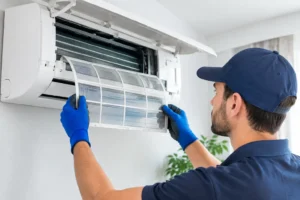
Most domestic and light commercial split systems have washable mesh filters located behind the front cover of the indoor unit. Always consult the manufacturer instructions for your specific model, as access and filter types vary.
Before starting, switch the air conditioning system off at the controller and isolate the power supply where possible. This prevents the unit from operating while the front panel is open and allows you to work safely.
- Open the indoor unit’s front cover carefully. On many wall-mounted units, it lifts upwards from the lower edge.
- Slide or lift out the mesh filters without bending them. Take a moment to check their orientation so they can be returned correctly.
- Remove loose dust using a vacuum cleaner with a soft brush attachment. If the filters are more heavily soiled, rinse them with lukewarm water.
- Use a mild detergent only if needed, and avoid abrasive brushes, strong cleaning products or very hot water, which may damage the mesh.
- Leave the filters to air dry fully in a clean, shaded area. Never refit damp filters or use a hairdryer, radiator or direct strong sunlight to speed up drying.
- Reinstall the filters securely, close the cover and restart the system once everything is dry.
The task is straightforward, but care matters. Do not spray water, fragrance products or household disinfectant into the unit. Avoid touching the coil, electrical connections or fan components behind the filters. These areas can be damaged easily and should be cleaned as part of a professional service.
Not every filter should be washed
Some systems use additional deodorising, carbon, antibacterial or fine-particle filters. These may have a limited service life and need replacing rather than washing. Washing a disposable or specialist filter can reduce its effectiveness or cause it to deteriorate.
If you are unsure what type of filter your unit has, check the operating manual or ask an engineer during maintenance. Using the wrong cleaning method can be less effective than replacing the filter at the recommended interval.
What a professional service covers beyond the filters
Filter cleaning is an essential owner task, but it is not a substitute for air conditioning maintenance. A professional visit deals with areas that are difficult to inspect safely and properly without the right tools.
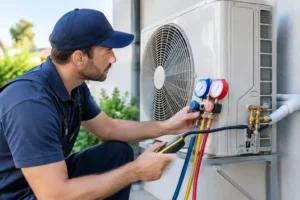
An engineer can inspect the indoor coil, blower wheel, condensate drain, outdoor unit, electrical connections and refrigerant performance. They can identify early signs of wear, leaks, drainage blockages or contamination before they affect reliability.
This matters particularly where an air conditioner is producing water indoors, switching itself off, showing an error code, making new noises or delivering little cooling despite clean filters. Those symptoms require more than a quick clean and should not be ignored.
Essex Air Conditioning provides maintenance and repair support for residential and commercial systems across Essex, helping customers keep equipment efficient, hygienic and dependable through the seasons.
Aircon filter cleaning for landlords and businesses
For landlords, clean filters make a meaningful difference to tenant comfort and can help reduce avoidable service requests. Include filter checks in planned property inspections and make sure tenants know how to use the system correctly. Where responsibility sits with the tenant, clear guidance can prevent filters being left untouched for an entire tenancy.
For businesses, a documented maintenance schedule is the better approach. It creates consistency across multiple units and helps facilities teams plan visits around trading hours or office occupancy. Systems in kitchens, workshops or customer-facing spaces may require more frequent attention because airborne grease, dust and everyday footfall quickly affect filters and indoor components.
There is a balance to strike. Cleaning filters too often when they are barely soiled is unnecessary, but leaving them until performance drops is false economy. Regular inspection lets you respond to the actual environment in which the system operates.
When to call an engineer
Book professional help if filters are clean but airflow remains poor, if there is persistent odour, visible mould, leaking water or ice forming on the unit. You should also arrange an inspection if the system has not been serviced for a year, or if a commercial unit is relied on daily for staff or customer comfort.
A clean filter is a small job with a worthwhile return: better airflow, a more comfortable room and less avoidable strain on your equipment. Make it part of your regular property care, and seek professional support when the system gives you a reason to look beyond the front cover.