A poorly maintained office air conditioning system rarely fails without warning. Staff notice rooms that are too warm or cold, meeting rooms become stuffy, and energy bills climb before a complete breakdown brings operations to a halt. A clear aircon maintenance schedule for offices turns those warning signs into planned action, helping to protect comfort, equipment life and day-to-day productivity.
For most offices, maintenance should not be treated as a single annual visit. Filters, drainage, controls and outdoor units all need attention at different intervals. The right plan depends on the number of occupants, how long the system runs, the building layout and whether the air conditioning also provides heating.
Why office air conditioning needs a planned schedule
Office systems work hard in ways that are easy to overlook. Even a modest unit may run for long periods during summer, support heating in cooler months and serve rooms with varying levels of occupancy. Dust builds up on filters and coils, condensate drains can become blocked, and small electrical or refrigerant issues can gradually reduce performance.
Without preventive maintenance, the system has to work harder to deliver the same temperature. That means higher electricity use, uneven cooling or heating, more noise and a greater risk of a costly callout at the busiest time of year. Poorly maintained units can also affect indoor air quality, which matters when staff spend full working days inside.
A planned approach gives facilities managers and business owners a record of what has been checked, cleaned and repaired. It also makes budgeting more predictable. Rather than reacting to an unexpected failure in July, you can address developing faults during a scheduled service.
A practical aircon maintenance schedule for offices
The most effective programme combines simple in-house checks with professional servicing. Staff can report obvious changes in performance, but technical work should be completed by experienced air conditioning engineers, particularly where electrical components and refrigerant are involved.
Every week: basic visual and comfort checks
A nominated member of staff or facilities team should take a few minutes to look for changes that may require attention. Check that indoor units are operating normally, remote controls or wall controllers respond correctly, and there are no unusual sounds, water drips or unpleasant smells.
It is also worth asking whether certain rooms are consistently too warm, too cold or stuffy. A recurring complaint can point to a blocked filter, poor airflow, an incorrectly positioned sensor or a system that no longer matches the room’s use. Meeting rooms, server areas and south-facing offices often need closer attention than general workspaces.
These checks do not replace servicing, but early reporting can prevent a minor issue from becoming an emergency repair.
Every month: filters, airflow and external obstructions
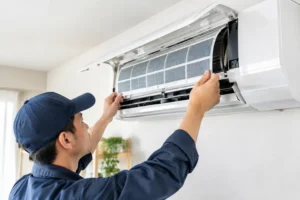
In a typical office, filters should be inspected monthly. How often they need cleaning or replacement depends on the environment. A quiet, low-occupancy office may need less frequent attention than a busy premises near a main road, workshop or construction site.
Dirty filters restrict airflow and force the system to use more energy. They can also allow dust and particles to circulate through the office. Clean filters are one of the simplest ways to support better comfort and efficient operation.
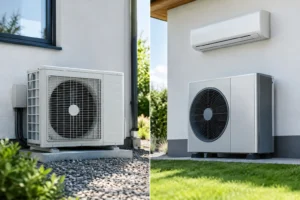
The outdoor condenser unit also needs a quick visual check. Leaves, litter, stored materials and overgrown vegetation can obstruct airflow around the unit. There should be clear space around it, with no attempt to cover it while it is running. Outdoor equipment is built for the weather, but it cannot perform properly if it cannot move air freely.
Every three months: operational review
Quarterly reviews are especially useful for larger offices, high-use systems and buildings with several indoor units. At this stage, review the operating temperatures, airflow from each unit and any patterns in staff feedback. Confirm that timers and controls still suit office opening hours, including changes caused by hybrid working.
Running air conditioning in empty areas wastes energy. Equally, systems that are switched off too early can leave late-working staff uncomfortable. Adjusting schedules, temperature setpoints and zoning can often reduce unnecessary use without compromising comfort.
A sensible target is generally to avoid extreme settings. Setting cooling very low does not cool a room faster, but it can increase energy use and create uncomfortable temperature differences. The best setting depends on the office, but consistency is usually more valuable than chasing the lowest possible temperature.
Twice a year: professional maintenance visits
For most Essex offices, two professional maintenance visits per year are a sensible baseline. One visit should take place in spring, before cooling demand rises, and another in autumn, before the system is relied upon for heating. If a system runs heavily all year, serves a busy commercial environment or has previously developed faults, more frequent visits may be appropriate.
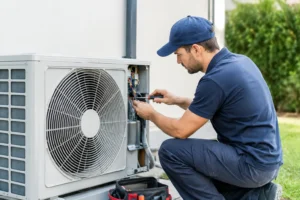
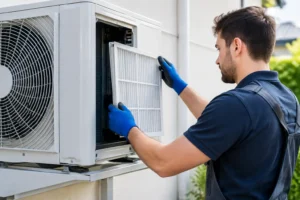
During a planned service, an engineer can inspect and clean components that are not suitable for routine in-house maintenance. This normally includes indoor and outdoor coils, electrical connections, fans, condensate drainage, controls and overall system operation. The engineer will also check for signs of refrigerant leakage, damaged insulation, corrosion and worn parts.
Cleaning coils is particularly valuable. Dirt on the indoor evaporator or outdoor condenser reduces heat transfer, so the system takes longer to achieve the required temperature. A professional clean can improve efficiency and help prevent strain on key components.
Before summer: prepare for peak cooling demand
Spring servicing should focus on whether the system can cope with warm weather. Test every indoor unit, check cooling performance and make sure the condensate drain is clear. A blocked drain is a common cause of water leaks from indoor units, often discovered only when the system begins running for longer periods.
This is also the right time to confirm that outdoor units are clear and secure, particularly after winter weather. If the office has received layout changes, new partitions or additional desks, assess whether airflow still reaches occupied areas effectively.
Booking this work before the first heatwave gives you more choice of appointment times and reduces the chance of a disruption when your staff need cooling most.
Before winter: check heating and controls
Many modern air conditioning systems provide efficient heating through heat pump technology. The autumn visit should therefore test heating operation as well as cooling. Check that indoor units respond correctly, defrost cycles operate normally and controls are set for the season.
A common problem is retaining summer schedules after temperatures fall. Reviewing timers and temperature settings can help avoid cold starts in the morning or unnecessary operation overnight. If certain rooms are unused, consider whether zoning or controller adjustments could reduce their running hours.
What a professional office service should cover
Not every maintenance visit is equal. A proper planned maintenance service should look beyond a quick filter clean and visual inspection. It should assess safety, performance, cleanliness and developing faults across the whole system.
A thorough visit will usually include the following:
- Inspection and cleaning of filters, indoor coils, outdoor coils and condensate drains.
- Checks of electrical terminals, controls, fans, refrigerant pipework and insulation.
- Testing of cooling and heating performance, airflow, temperatures and operating pressures where appropriate.
- Identification of leaks, corrosion, vibration, unusual noise and components approaching the end of their service life.
- A clear report of findings, work completed and any recommended repairs or improvements.
Refrigerant work must be handled by appropriately qualified engineers. Trying to resolve a suspected leak without professional assessment can lead to further damage, poor performance and non-compliance with refrigerant handling requirements.
Do not overlook compliance and records
For offices with air conditioning systems above 12 kW total effective cooling output, TM44 air conditioning inspections are generally required at least every five years. This is separate from routine maintenance. A TM44 inspection reviews energy efficiency and provides recommendations for improving system operation.
Maintenance records remain valuable for every office, regardless of system size. Keep service reports, repair records, equipment details and any inspection documentation together. These records make it easier to identify recurring issues, plan replacements and demonstrate that the system has been professionally managed.
If your office is leased, clarify where maintenance responsibility sits. The landlord may be responsible for central plant, while the tenant is responsible for equipment serving their own space. Do not assume this is covered without checking the lease and maintenance arrangements.
When to increase maintenance frequency
Twice-yearly servicing is a strong starting point, but it is not a fixed rule for every site. More frequent visits may be worthwhile where the office has high occupancy, extended opening hours, frequent visitor traffic or equipment that produces heat. Server rooms, clinics, kitchens adjacent to office areas and premises close to dusty roads may also place greater demand on air conditioning.
Older systems can benefit from closer monitoring too. The cost of an additional inspection may be far lower than the disruption of losing cooling or heating during working hours. Conversely, a small, lightly used office with a modern system may require fewer filter interventions between scheduled professional visits, provided performance remains stable.
The key is to base the schedule on actual use, not simply the date on the calendar.
Make maintenance part of everyday office management
The best maintenance schedules are easy to follow. Give one person responsibility for logging issues, keep outdoor units accessible, and encourage staff to report leaks, smells or changes in comfort promptly. Avoid placing furniture directly in front of indoor units, as this can restrict airflow and create misleading temperature complaints.
Essex Air Conditioning can help local businesses set a maintenance plan around their equipment, occupancy and operating hours. A planned visit before peak seasonal demand gives your office the best chance of staying comfortable, efficient and ready for work when it matters most.