A low monthly price can look attractive until a failed unit on a busy summer day reveals that call-outs, parts, refrigerant or labour are not included. A proper aircon maintenance contract review looks beyond the headline cost and confirms exactly what your home or business receives. The right agreement should protect comfort, reduce avoidable breakdowns and give you a clear route to support when you need it.
For homeowners, landlords and business operators, maintenance is less about ticking a box and more about keeping an expensive system efficient, clean and dependable. The details in the contract determine whether that is what you actually get.
Start With the Equipment Covered
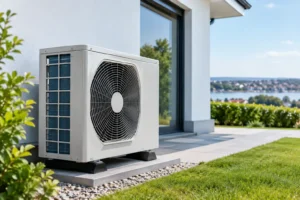
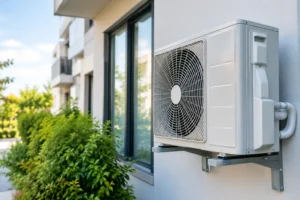
The agreement should identify every indoor and outdoor unit by location, make, model and, where available, serial number. This sounds basic, but vague descriptions can create confusion where a property has several wall-mounted units, ceiling cassettes, ducted systems or ventilation equipment.
Check that the asset list reflects the system as it stands today. If units have been added during an extension, refurbishment or office fit-out, make sure they are included before signing or renewing. A contract that covers only the original equipment may leave newer units without planned servicing.
It is also worth confirming whether condensate pumps, controllers, ventilation units and remote sensors are included. These components can affect the operation of the entire system, even though they are not always listed as the main air conditioning unit.
How Often Will Maintenance Visits Take Place?
There is no single visit frequency that suits every property. A lightly used domestic system may need one thorough annual service, ideally before warmer weather arrives. A busy office, shop, server room, salon, restaurant or rental property may need two or more planned visits each year because usage, occupancy and airborne contaminants place greater demand on the equipment.
Your contract should state the number of visits, the likely timing and whether the contractor will contact you to arrange them. This avoids a common problem: a plan is paid for but servicing is delayed until the unit is already working hard in summer.
Ask whether the frequency has been chosen after a site assessment. More visits cost more, but they can be sensible where downtime would disrupt customers, staff, stock or tenants. Equally, paying for an excessive schedule on a little-used residential system is not necessarily good value.
What a Proper Service Visit Should Include
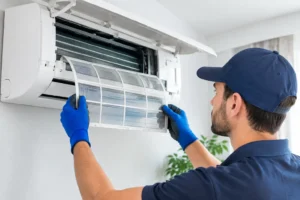
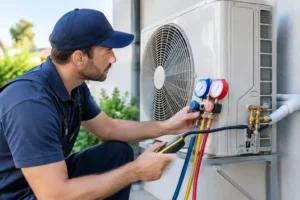
A maintenance visit should involve more than a quick visual inspection. The exact tasks vary by system, but a competent service commonly considers the condition, cleanliness and operation of key parts, including:
- filters, indoor coils and outdoor coils
- fans, electrical connections and controls
- condensate drains, pumps and pipework
- refrigerant circuit performance and signs of leaks
- temperatures, airflow and overall system operation
Cleaning is particularly significant. Dirty filters and coils restrict airflow, reduce efficiency and can contribute to poor air quality, unpleasant odours and water leaks. The contract should make clear whether routine cleaning materials are included and whether deep cleans are priced separately when a unit has been neglected.
Check the Difference Between Planned Maintenance and Repairs
This is the point most likely to cause disappointment. Planned preventative maintenance is designed to find problems early and keep the system in good condition. It does not automatically mean that all repairs are covered.
Read the repair section carefully. Some agreements include discounted labour or a priority response, while others include a defined amount of labour for breakdowns. Parts, replacement units, refrigerant and out-of-hours attendance are often charged separately. That can still be a fair arrangement, provided it is stated clearly from the outset.
Look for a direct explanation of what happens if an engineer finds a fault during a planned visit. Will you receive a written quotation before work begins? Is there a call-out charge? Is diagnostic time included? Can urgent repairs be authorised by a named contact for a commercial property?
For many Essex businesses, priority attendance is one of the strongest reasons to hold a contract. However, “priority” should mean something measurable. Check whether the provider gives a target response time during normal working hours and what arrangements apply for a critical fault outside those hours. A target is not the same as an absolute guarantee, but it gives you a sensible expectation.
Review Exclusions Before They Become Unexpected Costs
Every maintenance agreement has limits. The issue is not that exclusions exist, but whether they are easy to understand. A good contract sets them out in plain language rather than hiding them in lengthy terms.
Typical exclusions may include accidental damage, misuse, damage caused by third parties, electrical supply faults, building works, blocked drains caused by external debris, replacement parts and refrigerant. Some plans exclude work on equipment that was already in poor condition when the agreement began.
Pay particular attention to refrigerant. Loss of refrigerant can point to a leak, and simply adding more refrigerant without investigating the cause is not a long-term repair. Costs can vary according to the type and quantity required, so it is helpful to know the contractor’s process for leak investigation, quotation and repair.
If you manage commercial premises, ask how the agreement supports your compliance responsibilities. Certain systems may require leak checks at set intervals under F-Gas requirements, depending on their refrigerant charge and carbon dioxide equivalent. Not every air conditioning system needs a statutory leak check, so avoid paying for generic wording. The contract should identify what applies to your equipment and retain appropriate service records.
Make Sure Reporting Is Useful
After each visit, you should receive a service report that records the units checked, work completed, faults found and recommendations made. This provides useful evidence for landlords, facilities managers and businesses that need to plan budgets across several sites.
The report should distinguish between urgent defects and advisory improvements. For example, a blocked condensate drain may need immediate attention to prevent a water leak, while an ageing fan motor may be monitored and budgeted for before it fails. Clear reporting lets you make informed decisions rather than reacting under pressure.
For landlords, these records can also help demonstrate that the equipment has been professionally maintained between tenancies. For businesses, they create a clearer maintenance history when assessing whether a repair remains worthwhile or replacement is the better investment.
Compare the True Annual Cost
Do not compare contracts solely by monthly payment. Add up the annual fee, then consider likely extras: repair call-outs, labour rates, parts mark-up, refrigerant, emergency attendance and cleaning that falls outside routine servicing.
A lower-cost agreement can be appropriate for a newer, lightly used system with minimal risk. A more comprehensive plan may offer better value where air conditioning is essential to daily operations. A server room, care setting, busy retail space or customer-facing reception cannot always wait for the next available engineer.
Ask whether prices are fixed for the contract term and whether there is an annual increase clause. You should also check the contract length, notice period and renewal process. A fair agreement does not make it unnecessarily difficult to leave if your needs change or service standards are not met.
Choose a Contractor You Can Reach
A maintenance contract is only as dependable as the team behind it. Check that engineers are suitably qualified for the equipment and refrigerants involved, that the company can supply clear paperwork, and that there is a direct way to request support.
Local coverage matters when a fault needs attention quickly. Essex Air Conditioning provides planned maintenance, repairs and installation support for homes and commercial properties across Essex, giving customers one point of contact as their system ages or their requirements change.
Before agreeing to any plan, request a clear written scope based on your actual equipment and usage. The best contract is not necessarily the cheapest or the most extensive – it is the one that leaves no uncertainty about who is responsible, what is covered and how quickly help will arrive when comfort cannot wait.