A garden room can feel perfect in April and unusable by July. South-facing glass, insulated walls and a compact footprint often mean these spaces heat up quickly, then hold that heat far longer than people expect. That is why air conditioning for garden rooms has become less of a luxury and more of a practical upgrade for homeowners who want to use the space properly all year.
If your garden room is an office, gym, studio or treatment space, comfort is not a small detail. It affects how long you can work there, how well equipment performs and whether the room stays pleasant through both summer heat and damp winter mornings. A well-chosen system solves more than temperature alone.
Why garden rooms need their own climate control
Garden rooms behave differently from the main house. They are usually smaller, more exposed to direct sunlight and often built with large doors or windows to bring in natural light. That creates a bright, attractive space, but it also leads to faster temperature swings.
In summer, solar gain can make the room uncomfortable within a few hours, especially if you are using computers, gym kit or other electrical equipment that adds heat. In winter, even a well-insulated garden room can feel cold at the start and expensive to heat with portable electric heaters. Add condensation into the mix, and you can end up with a room that looks smart but is difficult to use consistently.
Air conditioning deals with all of that in one system. It cools during warm weather, heats efficiently when temperatures drop and removes excess moisture from the air. For most garden room owners, that combination is what makes the room genuinely useful rather than seasonal.
Is air conditioning for garden rooms the right choice?
In many cases, yes, but it depends on how you use the space. If the room is only used occasionally and you are happy opening windows in summer or using a plug-in heater in winter, you may not need a fixed system. But if the space is used several days a week, comfort and running costs start to matter much more.
For a home office, steady temperature control helps concentration and protects laptops, monitors and paperwork from overheating or damp conditions. For a gym, cooling and dehumidification make a major difference, particularly in an enclosed room where moisture builds up quickly. For a garden bar, hobby room or beauty room, a quiet and well-controlled environment simply makes the space more enjoyable for you and your guests or clients.
The other consideration is property value and long-term use. A properly climate-controlled garden room tends to feel like a true extension of the home. That matters if you want flexibility in how the room is used over time.
What type of system works best?
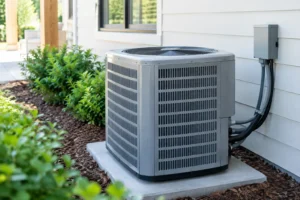
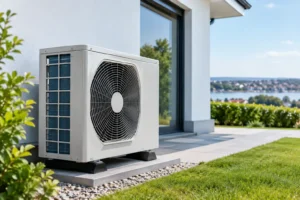
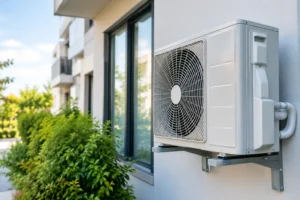
For most garden rooms, a wall-mounted split air conditioning system is the strongest option. It gives you efficient cooling and heating, runs quietly and does not take up floor space. The indoor unit sits high on a wall, while the outdoor condenser is positioned externally and connected by pipework.
This setup is usually far more effective than a portable air conditioner. Portable units can be tempting because the upfront cost looks lower, but they are generally noisier, less efficient and less capable of properly heating the room in winter. They also require a hose through a door or window, which defeats part of the purpose in a well-insulated garden room.
A fixed split system is neater, more reliable and much better suited to regular use. It is also the option most likely to give you the balanced year-round control that garden rooms need.
Sizing matters more than many people think
Choosing the right capacity is critical. A system that is too small will struggle on hot days and run harder than it should. One that is too large can cycle on and off too quickly, which affects efficiency and comfort.
The correct size depends on more than floor area. Glass area, insulation quality, ceiling height, room orientation and how the space is used all influence the heat load. A garden office with one person and a laptop needs something different from a garden gym with bi-fold doors and direct afternoon sun.
This is where a proper survey matters. An experienced installer will assess the room rather than guess from square metre figures alone.
What to look for in air conditioning for garden rooms
The best system is not always the most powerful or the most expensive. It is the one that suits the room, the usage and the budget without creating unnecessary running costs.
Quiet operation should be high on the list, particularly if the room is used as an office or bedroom-style retreat. Modern systems can be very discreet, but there is a clear difference between entry-level and better-quality units. Energy efficiency also deserves attention. A system that is cheap to buy but costly to run often proves poor value over time.
Heating performance matters too. Many people buy air conditioning for summer comfort, then realise the heating mode becomes just as useful in colder months. A good system will warm the space quickly and efficiently without the harsh, dry feel of a basic fan heater.
You should also think about controls. Simple remote operation is standard, but app-based controls can be useful if you want to pre-heat or cool the room before you step inside.
Installation considerations for garden rooms
Most garden room installations are straightforward, but the detail still matters. Unit placement affects performance, appearance and noise levels. The indoor unit needs to distribute air effectively without blowing directly onto a desk, sofa or workout area. Outside, the condenser should be positioned where airflow is not restricted and sound is kept to a sensible minimum.
Pipe runs and cable routes also need to be neat. In a compact garden room, poor installation is much more noticeable than in a larger property. A tidy finish helps the system look like part of the room rather than an afterthought.
Planning is not usually complex for this type of work, but each site is different. If your garden room is close to a boundary, in a more sensitive location or part of a larger building project, it is worth checking early rather than assuming.
Running costs and value over time
One of the most common questions is whether air conditioning is expensive to run. The honest answer is that it depends on the system quality, the room specification and how often you use it. But modern inverter systems are generally far more efficient than people expect.
Because they do not simply switch fully on or off, they adjust output to maintain the target temperature more efficiently. In heating mode, they can also provide very good value compared with direct electric heating. That makes them especially attractive for garden rooms, where people often rely on costly portable heaters.
A properly sized, professionally installed system should give dependable performance for years, especially when it is maintained correctly. That changes the conversation from upfront cost alone to overall value.
Maintenance and long-term performance
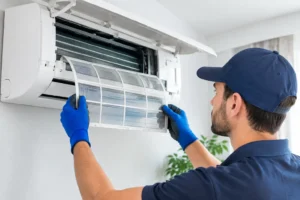
Garden rooms are often seen as low-maintenance spaces, but the air conditioning still needs care. Filters should be cleaned regularly, especially if the room is used as a gym, workshop or pet-friendly space. Dust build-up reduces airflow and makes the unit work harder.
Professional servicing is equally important. It helps keep the system efficient, hygienic and reliable, while giving technicians the chance to spot wear before it turns into a fault. If you depend on the room for work or regular daily use, maintenance is not an extra. It is part of protecting the investment.
For homeowners across Essex, that practical approach matters. A garden room should be simple to use, comfortable in every season and supported by a contractor who can install it properly and keep it performing as it should.
When air conditioning makes the biggest difference
The biggest benefit usually comes when the garden room is part of everyday life. If you work from it Monday to Friday, train in it several evenings a week or use it to see clients, inconsistent temperature becomes a genuine problem rather than a mild annoyance.
That is when professional air conditioning changes the space completely. It gives you control, protects the room from excessive humidity and makes the environment more stable and more enjoyable. In practical terms, it helps you get full use from a building you have already invested in.
If you are planning a new garden room or struggling with one that is too hot in summer and too cold in winter, it is worth looking at the solution as a year-round comfort system rather than a seasonal add-on. The right installation should make the room feel ready whenever you are.