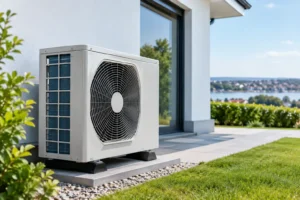
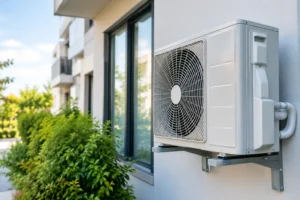
One hot, airless night is usually all it takes for people to start asking, is air conditioning worth it UK homes and businesses now face warmer summers, better insulated buildings, and a growing need for reliable indoor comfort. The short answer is yes for many properties, but the real answer depends on how you use the space, how often it overheats, and what matters most to you – comfort, sleep, productivity, air quality, or long-term value.
For years, air conditioning was treated in Britain as something optional or excessive. That view is changing. Homes hold heat for longer, loft conversions and south-facing rooms can become uncomfortable by late afternoon, and many offices, shops and salons simply cannot operate well when indoor temperatures climb. What used to be a luxury is, for a lot of people, becoming a practical upgrade.
Is air conditioning worth it UK property owners?
In many cases, yes – especially if your property regularly becomes too warm to sleep, work or serve customers comfortably. The key is to judge air conditioning against the actual problem you are trying to solve.
If you only experience two or three mildly uncomfortable days each year, a permanent system may not feel worthwhile. But if bedrooms are regularly too hot in summer, a home office becomes hard to use in the afternoon, or customers avoid your premises when it feels stuffy, the value becomes much clearer. Air conditioning is not only about lowering the temperature. It gives you control.
That control matters more than people often expect. Instead of relying on open windows, noisy fans, and hoping for cooler evenings, you can maintain a stable indoor environment. That makes a noticeable difference in bedrooms, retail units, server rooms, treatment rooms, and any space where heat builds up quickly.
Why more UK homes and businesses are installing it
The British climate is still mixed, but periods of high heat are becoming more disruptive. Many newer and refurbished buildings are also better sealed, which helps in winter but can trap unwanted heat in summer. Add large windows, flat roofs, loft conversions or busy commercial activity, and overheating becomes a real issue.
For homeowners, the biggest driver is usually comfort at night. Poor sleep during hot weather has a knock-on effect on work, mood and family life. In bedrooms, air conditioning often delivers its value fastest because people feel the difference immediately.
For businesses, the case can be even stronger. Staff work better in comfortable conditions. Customers stay longer in spaces that feel fresh. Equipment runs more reliably when temperatures are controlled. In some settings, such as salons, clinics, offices, cafés and small shops, a well-cooled environment is not a bonus. It is part of the service people expect.
In parts of Essex, particularly in properties with strong sun exposure or limited natural ventilation, this is a common issue. A proper survey usually shows very quickly whether a room has a one-off heat problem or an ongoing cooling requirement.
The biggest benefits beyond just cooling
Cooling is the obvious benefit, but it is not the only one. A modern air conditioning system can also improve air circulation, reduce humidity, and filter airborne particles. That means the room can feel fresher as well as cooler.
Humidity control is especially valuable in the UK. On muggy days, even a moderate temperature can feel uncomfortable. Removing excess moisture from the air can make a room feel significantly better without having to run the system at extremes.
Many systems also provide heating. This is one of the most overlooked advantages. A quality air conditioning unit with heat pump technology can be an efficient way to warm a room during milder months, giving you year-round use rather than a system that only earns its keep in July and August.
That changes the value calculation. If one installation helps cool in summer and heat in spring and autumn, it becomes easier to justify the investment.
What about the cost?
This is usually the deciding factor. Installation cost varies depending on room size, property layout, system type, pipe runs and the number of indoor units required. A single room system will cost far less than a whole-home or multi-room solution, and commercial projects are priced according to scale and usage.
The right way to think about cost is not whether air conditioning is cheap. It is whether it solves a problem well enough to justify the spend. For some customers, better sleep alone makes it worthwhile. For others, protecting staff comfort or customer experience has a direct business return.
Running costs are often lower than people expect, particularly with modern, efficient systems used sensibly. If the unit is correctly sized and professionally installed, it should cool the room efficiently rather than constantly struggling to catch up. Oversized or poorly planned systems can waste energy, while a properly designed installation delivers much better performance for the money.
Maintenance also matters. Like any working system, air conditioning performs best when it is serviced properly. Regular maintenance protects efficiency, supports air quality and reduces the risk of breakdowns at the worst possible time.
When air conditioning is clearly worth it
There are some situations where the case is particularly strong. If you have a loft conversion, a south-facing bedroom, a garden office, or a room with large glazing, summer overheating is often difficult to manage with fans alone. In these spaces, air conditioning offers a practical, lasting solution.
It is also worth serious consideration for landlords and property managers. A comfortable property is easier to let, and in some cases air conditioning can help a space stand out in a competitive market, especially in high-spec rentals or commercial lets.
For businesses, it is often worth it where customer comfort, staff performance or equipment reliability matter day to day. Waiting rooms, meeting rooms, open-plan offices, beauty rooms, retail spaces and hospitality settings all benefit from dependable temperature control.
When it may not be the right choice
A balanced answer matters here. Air conditioning is not automatically the right investment for every property.
If overheating is rare and limited to a few short periods each year, improving shading, ventilation or insulation may be enough. Likewise, if the issue is caused mainly by poor building design or internal heat sources, those factors should be looked at alongside cooling rather than ignored.
There is also the question of expectations. Air conditioning works best when it is correctly specified for the room and used realistically. It is not about turning a house into a fridge. It is about creating a comfortable, controlled indoor temperature you can actually live or work in.
That is why professional advice is important. A proper assessment helps avoid paying for more capacity than you need or choosing a system that does not suit the space.
Is air conditioning worth it UK buyers compared with fans?
Fans are cheaper upfront, so they are often the first alternative people consider. They can help a little, especially in mildly warm conditions, but they do not lower the room temperature. They simply move air around.
That can be enough on a tolerable day. It is far less effective in a genuinely overheated room, during humid weather, or at night when you need steady, quiet comfort to sleep. Air conditioning actively removes heat from the room and can hold a set temperature. That is the difference.
If your goal is occasional relief, a fan may do the job. If your goal is dependable comfort, better sleep, or a professional environment for staff and customers, air conditioning is in a different category altogether.
The long-term view
As summers become less predictable and expectations around comfort continue to rise, air conditioning is likely to feel more normal across the UK, not less. Buyers, tenants, staff and customers increasingly notice indoor comfort, especially in properties that trap heat.
A well-installed system is an upgrade that improves how a space functions. In homes, that can mean sleeping properly and using every room more comfortably. In businesses, it can support day-to-day operations, protect your environment, and create a better experience for everyone inside.
For anyone weighing up the decision, the best question is not whether air conditioning sounds like a luxury. It is whether your property would work better with reliable temperature control. If the answer is yes, then it is usually money spent on comfort, usability and peace of mind rather than money spent on a nice-to-have.
If you are already dreading the next hot spell, that is often your answer.