A new air conditioning system should make your property more comfortable, not leave you managing unexpected costs, noisy equipment or a poorly positioned indoor unit. This air conditioning installer checklist helps Essex homeowners, landlords and business owners ask the right questions before work starts – and recognise a professional installation when they see one.
The right contractor will guide you through the choices, explain any compromises clearly and commission the system properly. Price matters, but a low quote is not good value if it excludes essential electrical work, drainage, controls or aftercare.
Air conditioning installer checklist before you accept a quote
A credible installation begins with a proper survey. An installer should not recommend a system purely from room dimensions or a photograph. The heat entering a space depends on glazing, insulation, ceiling height, room use, occupancy, computers and other heat-producing equipment, as well as the direction the room faces.
For example, a south-facing loft bedroom in Basildon may need a different approach from a shaded ground-floor office in Chelmsford. A room that is comfortable for one person may struggle when it is used as a busy meeting room. The survey is where these practical details become part of the design.
Before committing, make sure the installer can clearly answer the following points:
- Have they inspected the property and discussed how each room is used?
- Have they recommended the right capacity rather than simply the largest available unit?
- Are they qualified to handle fluorinated refrigerant gases and able to provide the required certification?
- Does the quotation include equipment, pipework, condensate drainage, electrical connections, controls, commissioning and making good?
- Have they explained the manufacturer warranty and any servicing conditions attached to it?
- Will they provide a clear installation date, expected duration and a named point of contact?
A fixed, itemised quotation is particularly useful. It lets you compare like for like when considering more than one contractor. If one quote is substantially cheaper, ask what has been omitted. It may be a fair saving, but it may also mean a shorter warranty, limited pipe runs, no electrical provision or no allowance for difficult access.
Check credentials and accountability
Air conditioning installation involves refrigerant, electrical work and structural fixing. It is not a job for a general handyman or an installer who cannot show relevant credentials. Ask about F-Gas certification, public liability insurance and experience with the type of system you are considering.
For domestic and small commercial projects, it is also sensible to establish who is responsible for electrical work and whether certification is required for your circumstances. A professional contractor will explain this without using unnecessary jargon. They should also be comfortable discussing manufacturer-approved installation standards, rather than promising a quick fit with no detail behind it.
Local experience has value too. An installer familiar with Essex properties is more likely to anticipate issues such as flat roofs, external cladding, restricted side access, older consumer units and the placement of outdoor units close to neighbours.
Get the system design right
The most attractive wall-mounted unit is still the wrong choice if it blasts cold air directly at a bed, desk or sofa. Good design is about comfort across the room, straightforward servicing and an installation that suits the building.
Ask where the indoor unit will go, how air will travel through the space and where the pipework will run. In a bedroom, the usual priority is quiet operation and airflow that does not fall directly onto the sleeper. In a shop or office, even coverage and easy control are often more important. For larger premises, several indoor units connected to one outdoor unit may be a better option than a collection of separate systems, although the best arrangement depends on the layout and future expansion plans.
The installer should discuss whether you need cooling only or a heat pump air conditioning system that can also provide efficient heating in cooler months. Heating capability can add year-round value, but it should be assessed alongside your existing heating, insulation and expected use. It is not automatically the best answer for every room.
Decide on indoor and outdoor unit locations
Indoor units need clear airflow and access for filter cleaning and future maintenance. Avoid placing them behind tall furniture, inside enclosed boxing or above valuable items that could be affected if drainage ever becomes blocked.
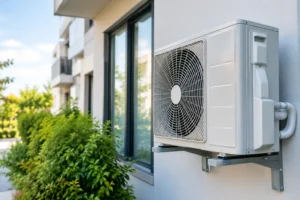
The outdoor unit needs equally careful thought. It should sit on a secure base or suitable wall brackets, with enough clearance for air circulation and engineer access. Its location affects noise, appearance, pipework length and the final cost. A longer run may allow a more discreet position, but can add labour and materials. The best solution balances visual impact with system performance and serviceability.
Discuss condensate drainage before installation day. Water removed from the air has to drain safely away. A gravity drain is usually the simplest option where the route allows it; a condensate pump can solve difficult layouts but introduces another component that needs periodic checking. The drainage route should never be an afterthought.
Confirm permissions and property responsibilities
Most straightforward residential installations can proceed without formal planning permission, but there are exceptions. Listed buildings, conservation areas, leasehold flats and properties with restrictive covenants may have additional requirements. Landlords should also ensure tenants understand access arrangements and who is responsible for cleaning filters and reporting faults.
For commercial premises, consider the landlord’s consent, building management rules, working hours, external appearance and any health and safety requirements. A reliable contractor will flag these questions early, when they are easier and less expensive to resolve.
What should happen on installation day?
A well-managed installation is organised from arrival to handover. Engineers should protect floors and work areas, confirm the agreed locations with you and explain if an unforeseen issue changes the plan. Small adjustments are sometimes necessary when walls, services or access do not match the survey, but these should be discussed before extra work is carried out.
Pipework should be neatly routed, insulated and securely fixed. Cable runs, trunking and external finishes should look considered rather than improvised. Where walls are drilled, the entry point should be sealed against weather and insects. Outdoor brackets or bases must be level, secure and appropriate for the load.
The technical work that cannot be seen matters just as much. Refrigerant pipework must be pressure tested, evacuated and charged in line with the manufacturer’s requirements. Skipping these steps can lead to poor cooling, reduced efficiency, leaks and shortened equipment life. This is one reason a fast, unusually cheap installation can prove costly later.
Your handover and commissioning checklist
Do not let the visit end with a remote control handed over at the door. Commissioning is the point at which the installer verifies performance and shows you how to use the system efficiently.
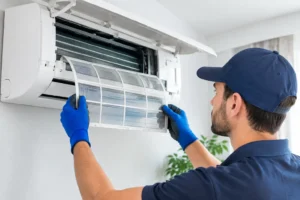
Before the engineers leave, ask them to demonstrate cooling, heating if fitted, fan settings, timers and any Wi-Fi controls. You should understand how to remove and clean accessible filters, what normal operating sounds are like and when to call for support. Keep product manuals, warranty information, commissioning records and certificates in a safe place.
Your handover should cover at least these essentials:
- Confirmation that the system has been tested in its operating modes.
- A walkthrough of the controller and energy-saving settings.
- Advice on filter cleaning and recommended servicing intervals.
- Details of warranty registration and what could affect cover.
- Clear contact details for faults, repairs and maintenance support.
For business owners and facilities managers, request a record of installed equipment models and locations. This makes future maintenance quicker and helps when planning budgets or arranging access for engineers.
Plan for maintenance from the start
Air conditioning does not need constant attention, but it does need routine care. Filters collect dust, outdoor coils can become obstructed and drainage components need checking. Neglect can reduce airflow, increase running costs and eventually cause avoidable faults.
How often your system needs professional maintenance depends on usage. A bedroom unit used through warm spells may have different needs from a retail system running for long hours each day. Your installer should recommend a sensible schedule based on the equipment and its workload, not a one-size-fits-all plan.
Choosing an installer is ultimately about confidence after the fitting as well as on the day itself. Essex Air Conditioning provides surveys, clear advice and professional installation support so you can make a practical decision, enjoy dependable comfort and know exactly who to call when your system needs attention.