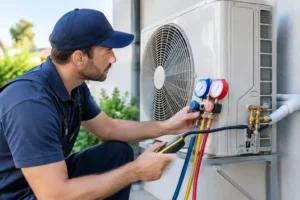
If you have ever looked at your wall-mounted unit in January and wondered, can air conditioning heat a room, the short answer is yes – many systems can. But whether it will heat the room well, cheaply and consistently depends on the type of system you have, the temperature outside and how the room itself holds heat.
This is where a lot of confusion starts. Many people still think of air conditioning as cooling only. In reality, most modern split systems installed in homes, offices and small commercial spaces are heat pump systems. That means they can cool in summer and provide warm air in winter. For many properties, that dual function is one of the main reasons to install air conditioning in the first place.
Can air conditioning heat a room effectively?
Yes, if the unit is designed as a reverse cycle or heat pump system, it can heat a room effectively. In many cases, it can do so more efficiently than direct electric heaters because it transfers heat rather than generating it in the same way as a resistive element.
That said, effectiveness is not the same as suitability for every situation. A correctly sized, properly installed system in a well-insulated room can provide reliable, comfortable heat. An undersized unit in a draughty extension with poor insulation may struggle, especially during colder spells.
This is why heating performance should always be judged in context. The question is not only can air conditioning heat a room, but also how large the room is, how often doors are opened, how much glazing there is and whether the system was selected with year-round use in mind.
How air conditioning heats a room
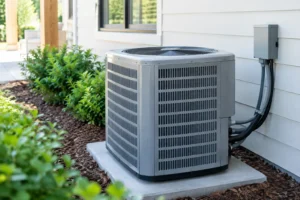
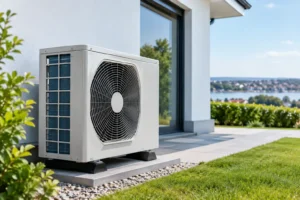
When a system is in heating mode, it works by drawing heat energy from the outdoor air and transferring it indoors. Even when the air outside feels cold, there is still usable heat energy available. The system absorbs that heat through the outdoor unit and releases it inside through the indoor unit.
To the user, it feels straightforward. You select heat mode, set the target temperature and warm air is blown into the room. Behind the scenes, the refrigerant cycle reverses so the system moves heat in the opposite direction to cooling mode.
This matters because it explains why modern air conditioning can be an efficient heating option. Instead of simply turning electricity into heat, the system uses electricity to move heat from one place to another. That is why many air source heat pump systems are attractive for both domestic and commercial properties.
When it works well
Air conditioning heating tends to work very well in spaces that are used regularly and need steady, controllable comfort. Bedrooms, lounges, home offices, retail spaces, salons and small offices often suit this approach.
It is especially useful where you want fast response. A good wall-mounted system can bring a room up to temperature quite quickly, which is helpful if you do not want to heat an entire building through a central system. For landlords and business owners, it can also be practical in individual rooms or zones where usage varies during the day.
Another advantage is control. Most systems allow precise temperature settings and timer functions, so you are not simply turning heat on and hoping for the best. You can manage comfort more accurately and avoid overheating the space.
When it may be less effective
There are trade-offs. Air conditioning can heat a room, but it is not a perfect answer for every building or every winter condition.
If the property has poor insulation, single glazing, draughts or high ceilings, heat can escape quickly. In those cases, the unit may run harder and take longer to maintain comfort. The system may still work, but it will not perform as efficiently as it would in a more thermally stable room.
Outdoor temperature also plays a part. Modern equipment can still provide heat in cold weather, but performance can reduce as temperatures drop. In the milder winter conditions often seen across Essex, this is usually manageable with the right specification. However, system quality and correct sizing matter far more than many people realise.
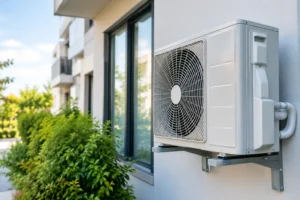
There is also the issue of airflow. Warm air from an indoor unit is delivered from a fixed point on the wall or ceiling. If the room layout is awkward, very open plan or split across different areas, the heat may not spread as evenly as a wet central heating system with multiple radiators.
Is it cheaper than other electric heating?
Often, yes. Compared with portable electric fan heaters or old-style electric panel heaters, an air conditioning heat pump can be more economical to run because of how it transfers heat.
But running costs are never one-size-fits-all. Your tariff, thermostat setting, insulation levels and hours of use all affect the outcome. A premium system that is correctly installed and maintained will usually deliver better efficiency than a cheap unit chosen on output alone.
This is one reason professional design matters. The right unit should match the room and the expected use, not just fit the wall space. A low upfront price can become expensive if the system is underpowered, noisy or inefficient in heating mode.
Can all air conditioning units heat a room?
No. Some older or basic systems are cooling only. If you are unsure, check the remote control or product specification. If there is a heat mode, often shown as a sun symbol, the system is designed to provide heating as well as cooling.
Most modern split systems supplied for homes and commercial spaces in the UK are heat pump models, but it is never worth assuming. We regularly speak to customers who expected heating to be available, only to find the unit they inherited with the property was cooling only or no longer performing as it should.
If your system should heat but does not seem to be doing so properly, the issue may not be the technology itself. It could be a fault, poor maintenance, incorrect settings or a refrigerant-related problem. A professional inspection can usually identify the cause quickly.
What affects heating performance most?
The biggest factor is sizing. If the system is too small for the room, it will struggle to maintain temperature. If it is too large, it may cycle inefficiently and deliver less stable comfort. Good installation starts with a proper assessment of the space, not guesswork.
Insulation comes next. Even an excellent unit cannot compensate for a room that loses heat as fast as it gains it. Loft insulation, glazing quality, door seals and general building fabric all influence how well the system performs.
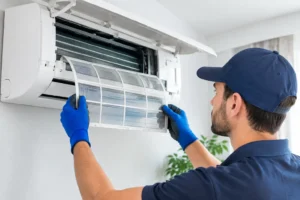
Then there is system condition. Dirty filters, blocked coils or overdue servicing can all reduce output. Maintenance is not just about preventing breakdowns in summer. It plays a direct role in winter heating performance too.
Control settings also matter more than people expect. If the fan speed is too low, the room may feel slow to warm up. If the target temperature is set unrealistically high, the unit may run continuously without improving comfort in a meaningful way. Small adjustments often make a noticeable difference.
Is air conditioning heating right for your property?
For many homes and businesses, yes. If you want one system that can cool in summer and heat in winter, modern air conditioning is a practical solution. It is particularly attractive for extensions, loft conversions, garden rooms, offices, server rooms with adjacent workspace, shops and properties without the right pipework or layout for conventional heating upgrades.
For larger buildings or properties with complex heating demands, it may be one part of a wider solution rather than the whole answer. That is why a proper survey matters. What works brilliantly in a single office in Rayleigh may not be the best setup for a large open-plan commercial unit in Chelmsford.
The key is to look at how the space is used, what level of comfort is expected and what the building can realistically support. Reliable heating is not just about the unit itself. It is about design, installation quality and aftercare.
The practical answer
So, can air conditioning heat a room? Absolutely – if the system is a heat pump model, correctly specified and properly maintained. In many cases it provides efficient, responsive and convenient heating, especially in the sort of everyday spaces where comfort and control matter most.
If you are considering a new system or you are not sure whether your current unit is heating as it should, getting clear advice from an experienced local contractor will save time and money. The best result usually comes from choosing equipment that suits the room, the building and the way you actually live or work in it.
A good heating system should feel straightforward once it is in place, and that starts with making the right choice before the weather turns cold.