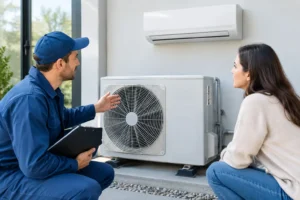
A bedroom unit that no longer cools before bedtime, an office system that struggles through a warm afternoon, or repair bills that keep returning are all reasons to ask: when should aircon be replaced? The right answer is not simply based on age. A well-maintained system can provide reliable comfort for many years, while a poorly sized or repeatedly repaired unit may be better replaced sooner.
For homeowners, landlords and business owners in Essex, the decision should come down to performance, running costs, repair history and the condition of the existing installation. A professional assessment can show whether a targeted repair will restore dependable operation or whether investing in a newer, more efficient system is the sensible long-term choice.
When Should Aircon Be Replaced Rather Than Repaired?
Most air conditioning systems have an expected working life of around 10 to 15 years. This varies considerably. A lightly used domestic split system that receives regular servicing may last longer, whereas a hard-working commercial unit in a shop, server room or busy office may reach the end of its useful life earlier.
Age alone is not a reason to replace air conditioning. If an older unit is cooling effectively, operating quietly and has only needed routine maintenance, a repair may still represent good value. The balance changes when faults become frequent, parts are difficult to obtain, or the system cannot deliver the comfort it was installed to provide.
Replacement is usually the stronger option when one or more of the following issues applies:
- The system is more than 10 years old and needs a major component, such as a compressor, fan motor or control board.
- Breakdowns are becoming regular, particularly during periods when cooling or heating is most needed.
- Electricity use has increased without a clear change in how the property is used.
- Rooms take much longer to reach the set temperature, or never feel evenly comfortable.
- The unit is noisy, leaks water, freezes up or produces persistent unpleasant smells after cleaning and servicing.
- The refrigerant type or replacement parts are becoming expensive or unavailable.
One fault does not automatically mean the system has failed. A blocked drain, dirty filters, worn capacitor or minor refrigerant issue can often be resolved cost-effectively. It is the pattern of repairs, combined with the age and efficiency of the equipment, that matters most.
7 Signs Your Aircon Is Nearing the End of Its Life
1. Repairs are no longer occasional
A reliable air conditioning system should not demand repeated callouts. If the same fault returns or different components are failing in quick succession, the equipment may be reaching a point where further repairs only delay replacement.
As a practical rule, consider the cost of the repair against the value and remaining life of the system. Spending a modest amount to fix a relatively young unit can make complete sense. Spending a significant sum on a major repair for an ageing system is harder to justify, especially where a new unit would reduce energy use and come with a manufacturer warranty.
2. Cooling or heating performance has dropped
Air conditioning is often installed for both summer cooling and efficient heating in cooler months. When the unit runs for long periods but rooms remain stuffy, warm or cold, there may be a fault, an airflow restriction or an issue with the original system design.
Before replacing anything, an engineer should check filters, indoor and outdoor coils, refrigerant levels, pipework, condensate drainage and electrical controls. In some cases, servicing or a repair restores performance. If the system is fundamentally undersized for an extended room, altered office layout or increased heat load, replacement with correctly specified equipment is the better answer.
3. Your energy bills keep rising
Older air conditioning units can use considerably more electricity than modern equipment, particularly if components are worn or maintenance has been missed. An unexplained increase in electricity consumption is worth investigating, even if the system appears to be working.
Modern inverter-driven units adjust their output to maintain the desired temperature rather than repeatedly switching at full power. This can improve efficiency, reduce temperature swings and make the system quieter in day-to-day use. Savings depend on operating hours, tariff, insulation and the size of the property, so they should not be treated as guaranteed. However, for frequently used units, efficiency can be a compelling reason to upgrade before a full breakdown occurs.
4. The unit is becoming noisy or disruptive
A little fan noise is normal. Rattling, grinding, buzzing, banging or excessive vibration is not. Noise can result from loose parts, worn bearings, a failing fan motor, damaged mounting points or an ageing compressor.
Some of these faults are repairable. Yet if noise comes with reduced performance and recurring faults, replacing the unit may provide a more dependable and far quieter solution. This is particularly relevant in bedrooms, meeting rooms, treatment spaces and small offices where comfort includes a peaceful environment.
5. There are leaks, odours or poor air quality concerns
Water dripping from an indoor unit is often caused by a blocked condensate drain, which can usually be cleared. Leaving it unattended can lead to staining, damp and damage to ceilings or furnishings. Persistent moisture issues, corrosion or repeated drainage failures warrant a closer inspection.
Musty smells can be linked to dirty coils, filters or drainage systems. A thorough clean and service may resolve the issue, but an older system with ongoing hygiene problems may not be worth keeping. Air conditioning should improve indoor comfort, not create a concern for occupants, tenants or customers.
6. Replacement parts are difficult to source
As equipment ages, manufacturers may discontinue certain components. It is sometimes possible to locate compatible parts, but the cost and delay can make an older unit impractical to maintain. This is a key consideration for businesses that depend on stable temperatures, such as salons, offices, retail premises and IT rooms.
A planned replacement gives you control over timing. Waiting for an obsolete part to fail can mean an urgent installation during the hottest period of the year, when the lack of cooling causes the greatest disruption.
7. Your property or requirements have changed
An air conditioner that was suitable five years ago may no longer be right for the space. A converted loft, home office, new conservatory, extra staff, new equipment or changes to opening hours can all alter the cooling and heating demand.
Adding another unit can sometimes be the most cost-effective option. In other situations, replacing the existing arrangement with a multi-split or more suitably sized system will give better coverage and a neater installation. A site survey is essential because capacity, indoor unit position, airflow and pipe routes all affect the result.
Repair Versus Replacement: What Should You Compare?
The cheapest immediate option is not always the most affordable over the next few years. Compare the quoted repair cost with the system’s age, recent repair history, expected running costs and the likelihood of another significant fault. Also consider downtime. For a landlord, a failed system can affect tenant comfort. For a business, it can affect staff wellbeing, customer experience and the usability of the premises.
It is also worth looking beyond the indoor unit. Outdoor condensers, pipework, electrical supply and controls all need to be assessed. Reusing sound pipework may be possible in some installations, but it depends on compatibility, condition and the requirements of the new equipment. A reputable contractor will explain what can safely remain and what should be upgraded rather than offering a one-size-fits-all answer.
Why a Professional Survey Matters
Choosing a replacement based solely on the capacity of the old unit can lead to the same problems again. An experienced engineer should assess the room size, ceiling height, glazing, insulation, sun exposure, occupancy, heat-producing equipment and how the space is actually used.
Correct sizing matters. An undersized unit may run continuously and struggle in hot weather. An oversized unit can cool too quickly, cycle inefficiently and fail to distribute air comfortably. The best installation balances capacity, efficiency, positioning and practical access for future maintenance.
Essex Air Conditioning provides free surveys and no-obligation quotations so customers can make a clear decision based on the condition of their current system and the needs of the property. That is particularly useful where a repair appears possible but replacement may offer better value over time.
Can Regular Maintenance Delay Replacement?
Yes, regular maintenance can make a meaningful difference. Cleaning filters and coils, checking drainage, testing electrical connections and confirming the system is operating correctly helps preserve efficiency and allows small issues to be dealt with before they become expensive failures.
Maintenance cannot reverse normal wear in an ageing compressor or make outdated equipment as efficient as a modern system. It can, however, give you more time to plan replacement properly rather than reacting to a breakdown. For commercial sites, planned servicing is also a sensible way to protect business continuity.
If your aircon is still reliable, maintain it well. If it is unreliable, inefficient or no longer right for the space, arrange an assessment before the next spell of hot weather turns a manageable decision into an urgent problem.