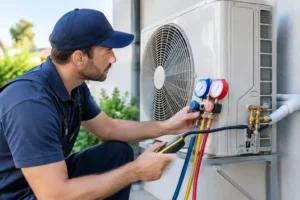
When your AC stops cooling on a hot day, the first question is usually not technical – it is financial. Air conditioning repair cost can vary quite a bit depending on what failed, how quickly you need help, and whether the system has been maintained properly. That is why the most useful starting point is not a single flat number, but a clear look at what actually drives the price.
For homeowners, landlords, and business operators, the real concern is usually the same. You want the problem fixed quickly, you want a fair quote, and you do not want to pay for work that does not need doing. A dependable contractor should be able to diagnose the issue, explain the repair in plain terms, and tell you whether it makes sense to repair the unit or think about replacement.
What affects air conditioning repair cost?
The biggest factor is the fault itself. A clogged drain line, failed capacitor, faulty thermostat, or worn contactor is usually far less expensive than a refrigerant leak, fan motor failure, or compressor problem. Two systems can show the same symptom – poor cooling, warm air, strange noise – but the repair bill can be very different once testing begins.
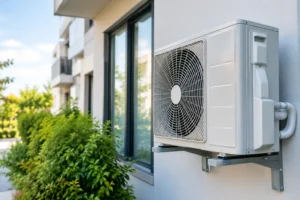
System type matters too. A small residential wall-mounted split system is typically simpler and faster to diagnose than a larger multi-zone or commercial setup. If your property relies on several indoor units, more controls, or specialized parts, labor time and part cost often go up with that complexity.
Age also plays a role. Older systems can be more expensive to repair because parts are harder to source, performance issues tend to overlap, and one fault can reveal another. A newer unit may still need repair, but the work is often more straightforward, especially if the issue is isolated and replacement parts are readily available.
Then there is access. If a technician can reach the outdoor unit easily and the indoor equipment is unobstructed, that helps keep labor efficient. If the equipment is mounted in a difficult location, above a suspended ceiling, or tied into a busy commercial area where access must be managed carefully, the job may take longer.
Typical air conditioning repair cost ranges
There is no honest universal price for every repair, but there are broad ranges that help set expectations. Minor repairs such as replacing a capacitor, fixing a basic electrical issue, or clearing a blockage often fall on the lower end. Mid-range repairs may include thermostat replacement, fan motor work, sensor faults, or control board issues. More expensive repairs usually involve refrigerant leaks, coil problems, compressor issues, or major electrical faults.
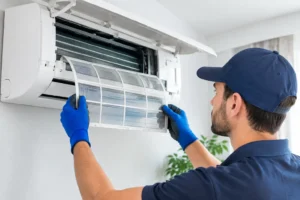
Diagnosis is often a separate part of the visit. That is not a bad sign – it is usually the mark of a professional service process. Proper fault-finding takes time, tools, and experience. A contractor who skips testing and jumps straight to replacing parts can end up costing you more.
Emergency timing can also change the price. If you need immediate attendance outside normal hours, you should expect a higher callout charge. For a business where downtime affects staff, stock, or customers, that added cost may still be worthwhile. For a homeowner with a non-critical issue, scheduling within standard hours can keep costs more manageable.
Why the same symptom can lead to different quotes
One reason customers get confused by repair pricing is that AC symptoms are not specific. If the system is blowing but not cooling, the cause could be a thermostat setting, low refrigerant, a dirty coil, a failed fan, a sensor issue, or a compressor fault. The visible symptom is the same. The repair path is not.
This is why a credible quote starts with diagnosis, not guesswork. An experienced technician will check electrical readings, operating pressures, airflow, controls, and component condition before recommending a repair. That process protects you from paying for the wrong fix.
It is also why comparing prices without comparing scope can be misleading. One quote may cover testing, parts, labor, and commissioning. Another may only cover the part itself, with extra charges added later. The lowest number is not always the lowest final bill.
Repair or replace – when does each make sense?
This is where cost becomes a judgment call, not just a line item. If the repair is modest and the system is otherwise reliable, repair is usually the sensible choice. If the unit is relatively new, has been serviced regularly, and the fault is isolated, there is rarely a reason to rush into replacement.
But there are cases where repair stops being good value. If the system is older, uses outdated refrigerant, breaks down repeatedly, or has a major component failure, replacement may be the more cost-effective route. A large repair bill on an inefficient unit can be hard to justify when a newer system would run more efficiently and offer better reliability.
For landlords and business owners, this decision often comes down to risk as much as price. A repair may be cheaper today, but if it leaves you exposed to another failure during peak season, that short-term saving may not hold up. Reliable performance matters, especially where occupant comfort or day-to-day operations depend on it.
Maintenance has a direct impact on repair cost
One of the clearest ways to control air conditioning repair cost is with regular maintenance. Systems that are cleaned, tested, and serviced routinely tend to suffer fewer major breakdowns. Small problems are caught earlier, airflow stays consistent, and components do not have to work as hard.
Neglected units usually cost more over time. Dirt buildup can strain motors, blocked drainage can cause shutdowns, and poor airflow can affect system pressures and temperature control. What starts as a maintenance issue can easily turn into a repair issue.
For commercial properties, preventive servicing is often the difference between planned cost and disruptive cost. It is easier to schedule maintenance than to deal with a breakdown during trading hours, in a server room, or in a workspace where cooling is important for staff and customers.
What to ask before approving a repair
A good contractor should make the decision easier, not more confusing. Before approving work, ask what fault has been found, what part or repair is required, whether there are any related issues, and whether the quoted cost includes labor and testing. It is also fair to ask whether the repair is expected to restore full performance or simply keep the system going for the short term.
For older units, ask the more important question too: is this repair good value based on the age and condition of the system? A trustworthy answer may not always be the one that leads to the biggest immediate invoice. If replacement is the smarter investment, you should be told that clearly.
This matters even more if you manage multiple properties or business premises. Standardizing how repairs are assessed can help control long-term costs. It also reduces the temptation to approve repeated short-term fixes on systems that really need a wider plan.
Choosing a contractor matters as much as the fault
The cost of a repair is only part of the value. The quality of diagnosis, the standard of workmanship, and the honesty of the recommendation matter just as much. Poor repairs can create repeat failures, higher energy use, and more disruption later.
A local contractor with real experience in both residential and commercial systems is often better placed to respond quickly and assess the situation properly. In areas such as Southend on Sea, Rayleigh, Canvey Island, and across Essex, that local coverage can make a real difference when a fast response is needed and you want direct communication rather than a call center process.
Essex Air Conditioning works with customers who want practical advice as much as technical skill. That means clear fault diagnosis, straightforward quotes, and repairs that are carried out with long-term performance in mind rather than the quickest temporary fix.
If you are facing an AC problem now, the best next step is simple: get the system checked properly before the issue gets worse. A small repair handled early is often the most affordable outcome, and even when the fix is larger, clear advice gives you control over the decision. Comfort, uptime, and cost all improve when you know exactly what you are paying for.