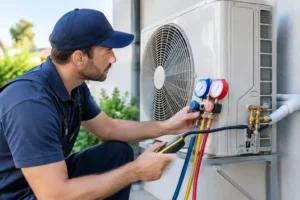
If your air conditioning seems to be cooling well enough, it is easy to assume nothing needs attention. That is usually the point where small issues start turning into expensive ones. So, what is air conditioning service? In simple terms, it is a professional inspection, clean, test and tune-up of your system to keep it working safely, efficiently and reliably.
For homeowners and businesses alike, air conditioning service is not just about fixing faults when something goes wrong. It is about protecting performance before problems interrupt your comfort, your working environment or your running costs. A properly serviced system should cool consistently, use energy more efficiently and face less strain during warmer periods when you need it most.
What is air conditioning service and what does it include?
Air conditioning service is planned maintenance carried out by a qualified engineer. The exact work can vary depending on the type of unit, its age, how heavily it is used and whether it serves a home, office, retail space or larger commercial setting. Even so, most professional servicing visits cover the same essential areas.
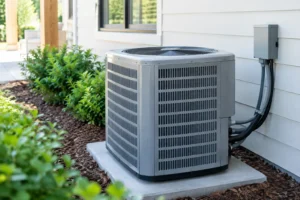
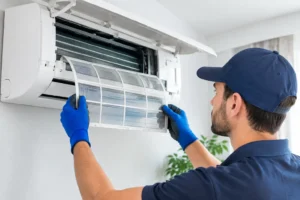
A technician will usually inspect the indoor and outdoor units, clean key components, check airflow, test controls and assess overall operation. Filters are cleaned or replaced where needed, coils are checked for dirt build-up, condensate drains are inspected for blockages and electrical connections are tested for safety and reliability. Refrigerant levels may also be checked if there are signs of poor cooling performance.
That matters because air conditioning systems are made up of working parts that collect dust, deal with moisture and operate under regular pressure. Left alone for too long, even a good system can lose efficiency. A simple issue such as a blocked filter or dirty coil can make the whole unit work harder than it should.
Why servicing matters more than most people realise
A lot of customers think servicing is optional if the unit still turns on and produces cool air. In reality, performance can decline long before total failure happens. The system may take longer to reach temperature, struggle to hold a consistent setting or use more electricity than it did when first installed.
Regular servicing helps catch those changes early. That can mean identifying a fan motor under strain, spotting signs of a refrigerant issue, finding dirt that is restricting airflow or noticing wear on electrical parts before they fail. These are the kinds of problems that often start small but become disruptive if they are ignored.
There is also the question of air quality. In both domestic and commercial spaces, the condition of the filters and internal components affects the air moving through the room. Dust, debris and moisture build-up can reduce system hygiene and create unpleasant odours. In workplaces, poor maintenance can also affect staff comfort and customer experience.
For many businesses, that is reason enough not to leave servicing to chance. An uncomfortable office, retail unit or server room can quickly become a practical problem, not just a comfort issue.
What happens during an air conditioning service visit?
A proper service visit should be more than a quick visual check. It should follow a methodical process designed to assess condition, improve performance and reduce risk.
The engineer will usually begin by checking how the system is operating. That includes listening for unusual noises, measuring temperature output and reviewing whether controls and settings are responding correctly. If there are signs of weak performance, the engineer will investigate what is causing it rather than simply noting that the unit still runs.
Cleaning is a major part of the service. Filters often trap dust and need regular attention. Evaporator and condenser coils can also collect dirt, which reduces heat transfer and makes the system less efficient. The drain line or condensate pump may need checking as well, especially if there is any sign of water leakage or slow drainage.
Electrical safety is another key area. Connections, terminals and components are inspected because loose or worn electrical parts can cause faults or breakdowns. Motors, fans and moving components are also reviewed for wear. If a part looks likely to fail soon, a good contractor will tell you clearly rather than wait for a breakdown callout later.
In some cases, testing refrigerant pressure is appropriate, but it depends on the system and whether there are signs of a leak or reduced cooling. Refrigerant is not something that should need routine topping up without cause. If levels are low, the real issue is finding out why.
How often should air conditioning be serviced?
It depends on the type of property and how heavily the system is used. For most homes, an annual service is a sensible minimum. If the unit is used heavily through the summer or for year-round climate control, more frequent checks can make sense.
For commercial systems, twice-yearly servicing is often the better standard. Offices, shops, salons, restaurants and other business premises tend to place greater demand on their systems, and downtime can be more disruptive. A unit serving a small meeting room has different demands from one running every day in a busy commercial environment.
Usage patterns matter. So does the surrounding environment. A unit in a dusty setting or one exposed to more airborne particles may need more regular attention than a system in a cleaner, lower-demand space.
The right schedule is not always one-size-fits-all, which is why a professional assessment is useful. A dependable contractor will recommend servicing based on real operating conditions, not guesswork.
Air conditioning service versus repair
This is where many people get confused. Servicing and repair are related, but they are not the same thing.
Air conditioning service is preventative. It is carried out while the system is still operating, with the aim of keeping it in good condition and reducing the likelihood of faults. Repair work happens when something has already gone wrong. That could be a failed part, a leak, a control problem, poor cooling performance or a unit that will not start at all.
A service visit may uncover a repair need, and that is often a good outcome because the issue has been found before it causes a complete breakdown. But a proper service should not be mistaken for a repair appointment, just as a breakdown callout is not a substitute for planned maintenance.
The distinction matters because customers often delay servicing until performance drops off. By then, the cost and inconvenience can be much higher than if the issue had been found earlier.
What are the signs your system needs servicing?
Even if you do not follow a fixed maintenance schedule, your system often gives you clues. Rooms may take longer to cool, airflow may feel weaker, energy bills may rise without an obvious reason or the unit may start producing unusual smells or noises.
Water leaks are another common sign that attention is needed. Sometimes it is a simple drainage issue, but it still needs proper inspection. If you notice inconsistent temperatures between rooms, frequent cycling on and off, or a system that seems to be running constantly, servicing is a sensible next step.
None of those symptoms automatically mean a major fault. In many cases, the cause is manageable if dealt with promptly. That is one of the main advantages of routine servicing. Problems are usually easier and less costly to resolve when they are caught early.
Is air conditioning servicing worth the cost?
For most customers, yes. The real question is what the alternative costs. Skipping servicing can mean lower efficiency, higher electricity use, poorer comfort and a greater chance of breakdowns. If a unit fails during a hot spell or in the middle of a busy trading period, the inconvenience can outweigh the cost of maintenance very quickly.
There is also the long-term value of protecting the system itself. Air conditioning is an investment, whether it serves a single room at home or an entire commercial premises. Regular servicing helps extend working life and supports more reliable operation over time.
That said, expectations should stay realistic. Servicing does not make an old or badly installed system perform like a brand-new one. It improves the condition and operation of what you already have. If a system is undersized, nearing the end of its life or suffering from repeated faults, servicing may help manage performance, but replacement could still be the more cost-effective route.
Choosing the right contractor for air conditioning service
Not all servicing is equal. A low-cost visit that skips proper checks may offer little more than surface cleaning. What you want is an experienced contractor who understands both domestic and commercial systems, carries out a thorough inspection and explains any findings clearly.
That is especially important if you are responsible for a business premises, rental property or multiple units. Reliability, response times and honest advice matter just as much as technical ability. A good local contractor should be able to tell you what your system needs now, what can wait and what may become a problem if ignored.
For property owners across Essex, that practical, straightforward approach tends to matter more than sales language. Customers want the system to work properly, the advice to be clear and the costs to make sense.
Air conditioning service is, at its core, routine professional care for a system that you rely on more than you may realise. If your unit is keeping your home comfortable, protecting a workspace or supporting customers and staff, giving it regular attention is not an extra. It is part of keeping the property running as it should.