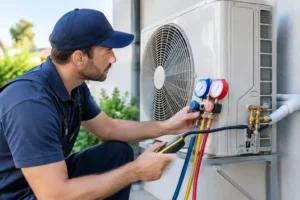
If your air conditioning only gets attention when it stops cooling, you are usually paying more than you need to. A system that is serviced at the right interval runs more efficiently, is less likely to break down in peak season, and generally lasts longer. So, how often should AC be serviced? For most homes and small commercial spaces, once a year is the minimum. In heavier-use environments, twice a year is often the better choice.
That simple answer is a good starting point, but it is not the full picture. The right service schedule depends on how the system is used, the type of property, the age of the equipment, and how hard it has to work through the year.
How often should AC be serviced in the UK?
In most UK properties, an annual service is the standard recommendation. That applies to many residential systems, small offices, shops and other spaces where air conditioning is used regularly but not under constant heavy demand.
A yearly service gives an engineer the chance to inspect the unit, clean key components, check operating pressures, test performance, and spot wear before it becomes a failure. It is the most practical way to keep the system efficient and reliable without over-servicing equipment that is lightly used.
For systems in constant operation, twice-yearly servicing is usually more appropriate. This is common in server rooms, busy retail units, offices with long operating hours, salons, restaurants and commercial settings where comfort or temperature control directly affects the business. One visit before the warmer months and another later in the year is often the right balance.
If you are responsible for a rental property or a commercial premises, there can also be compliance and record-keeping reasons to keep maintenance more structured. In those cases, the question is not only how often should AC be serviced, but whether the schedule properly supports reliability, hygiene and legal obligations.
Why annual servicing is usually the minimum
Air conditioning systems do not need to fail dramatically to cost you money. A partially blocked filter, dirty coil or small refrigerant issue can quietly reduce performance for months. The unit still runs, but it takes longer to cool the room, uses more electricity, and puts extra strain on major components.
That is why annual servicing matters. It is preventative rather than reactive. You are not waiting for a breakdown in the middle of a warm spell or during working hours when the room needs to stay comfortable.
Servicing also helps protect the manufacturer warranty on many systems. Some warranties require regular professional maintenance to remain valid. Skipping service visits to save money can become expensive if a later repair is not covered.
There is also the indoor air quality side. Dust, dirt and moisture inside an air conditioning unit can affect how clean the air feels and can lead to unpleasant odours if left too long. In homes, that affects comfort. In businesses, it affects staff, customers and the overall environment of the space.
When once a year may not be enough
Not every system has the same workload. A wall-mounted unit in a spare room used occasionally is very different from a cassette unit running every day in a busy office.
You should consider more frequent servicing if the system runs for long hours, cools heat-heavy spaces, or supports areas where downtime is a real problem. Premises with lots of people, electronic equipment, cooking activity or sun exposure usually place more demand on air conditioning. In those cases, a six-month schedule is often the safer and more cost-effective choice.
Older systems can also benefit from more regular checks. As components age, performance can drift and minor faults become more likely. A newer system in good condition may comfortably suit annual servicing, while an older unit nearing the later part of its working life may justify closer attention.
Properties near busier roads or dustier environments can be another example. Filters and coils can collect contamination faster than expected, especially where doors open frequently or ventilation conditions are poor.
Signs your AC needs servicing sooner
Even if you already have a routine schedule, there are times when waiting for the next planned visit is not sensible.
If the unit is taking longer to cool the room, blowing weaker airflow, making unusual noises, producing unpleasant smells or showing signs of leaking water, it should be checked sooner. Rising energy bills without a clear explanation can also point to a system that is no longer operating efficiently.
Short cycling is another warning sign. If the unit is turning on and off too frequently, that can indicate anything from airflow problems to controls issues. Left alone, repeated short cycling can place unnecessary stress on the system.
Some customers assume these symptoms mean they need a replacement. Sometimes they do, but often the issue is maintenance-related rather than terminal. A proper inspection will tell you whether the problem is a straightforward service matter, a repair, or a sign that replacement is becoming the sensible long-term option.
What is included in an AC service?
A proper air conditioning service should be more than a quick visual check. The aim is to assess how the system is operating, clean the parts that affect performance, and identify issues early.
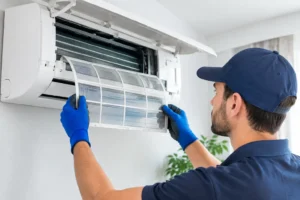
That typically includes cleaning or checking filters, inspecting coils, checking refrigerant levels or system pressures where appropriate, testing controls, examining electrical connections, checking the condensate drain, and confirming the unit is heating or cooling as it should. The engineer should also look for signs of component wear and any developing faults.
For commercial clients, the maintenance approach may be broader, especially where there are multiple indoor units, outdoor condensers, or more complex control arrangements. A planned maintenance contract often makes sense in those settings because it creates a clear schedule and reduces the chance of forgotten servicing.
Residential and commercial servicing are not always the same
Homeowners often ask the question in simple terms because they want a straightforward answer and a sensible cost. For a typical domestic air conditioning system, annual servicing is often right, provided the unit is not used heavily all year.
Commercial settings are different. Usage tends to be more demanding, and the consequences of poor performance are wider. If staff are uncomfortable, stock is affected, or customer areas become unpleasant, the cost of delay quickly exceeds the cost of routine maintenance.
That is why businesses often move to twice-yearly servicing even when a domestic owner might not need to. It is less about theory and more about reducing operational risk.
The cost of skipping servicing
It is understandable that some property owners see servicing as optional, especially if the system appears to be working. The problem is that air conditioning rarely goes from perfect to failed in one step.
Performance usually slips first. Running costs rise. Small faults develop into bigger ones. Then the breakdown happens when the system is needed most.
A neglected unit may also have a shorter lifespan. If a system that could have lasted many more years ends up needing early replacement, missed servicing has not saved money. It has simply moved the cost further down the line and made it larger.
For landlords and business owners, there is also the reputational and practical side. Tenants, staff and customers notice when the indoor environment is uncomfortable. Reliable cooling is not a luxury in many spaces. It is part of keeping the property functional.
So, what service schedule makes sense?
For most domestic systems, book a professional service once every 12 months. If the unit is used heavily for both cooling and heating, or if it is older and showing signs of reduced performance, every six months may be more suitable.
For most commercial systems, start from a twice-yearly schedule unless the usage is particularly light. If the equipment supports critical areas or runs for long hours, more structured planned maintenance may be the better route.
The best schedule is the one that matches actual use rather than guesswork. A lightly used unit does not need the same attention as a hard-working system in a busy premises, but every air conditioning system benefits from routine professional care.
If you are unsure where your property sits, the safest approach is to have the system assessed and build the maintenance schedule from there. A dependable local contractor can advise based on the equipment, the environment and how the space is used. For homeowners and businesses across Essex, that kind of practical advice is what turns maintenance from an extra cost into sensible protection for comfort, efficiency and long-term value.
A well-serviced air conditioning system does not demand attention. It simply gets on with the job, quietly, efficiently and when you need it most.