A south-facing lounge can feel wonderfully bright in March, then become the room everyone avoids by mid-afternoon in July. Keeping cool south-facing rooms comfortable is not simply a matter of buying the most powerful portable fan. It means controlling the heat before it enters, moving warm air out effectively and, where needed, fitting air conditioning that is properly sized for the space.
For homes, rental properties, offices and shops in Essex, the right solution depends on the room’s glazing, use, layout and the hours people need it to remain comfortable. A well-planned system should reduce heat without creating cold draughts, excessive noise or unnecessary running costs.
Why south-facing rooms overheat
In the UK, south-facing windows receive strong direct sunlight for a large part of the day. The issue is not only the outdoor air temperature. Solar energy passes through glass and is absorbed by floors, furniture and internal surfaces, which then release that heat back into the room. This is why a room can still feel stifling at 7pm after a hot afternoon.
Large patio doors, roof lanterns, conservatories and modern open-plan extensions can intensify the effect. So can dark flooring, limited opening windows and rooms above kitchens or utility areas. In commercial premises, computers, lighting, refrigeration equipment and a steady flow of people add further internal heat.
A fan can make occupants feel cooler by moving air across the skin, but it does not lower the room temperature. Once the fabric of the building has stored heat, opening a window may offer little relief if the air outside is equally warm or still.
Start by stopping heat at the glass
The most cost-effective way to improve a hot room is often to reduce solar gain before it builds up. External shading performs best because it stops sunlight before it passes through the glass. Awnings, exterior blinds, shutters and suitable planting can all help, provided they do not make the room too dark or restrict practical use of doors and windows.
Internal blinds and curtains are still worthwhile, particularly when closed before the sun reaches the window. Light-coloured, reflective backing is generally more effective than heavy dark fabrics. For large glazed areas, professionally specified solar-control film may reduce glare and heat, though it should be chosen carefully. Some films alter the appearance of glass, reduce winter solar warmth and may not be appropriate for every glazing unit.
Shade alone rarely solves the problem in a heavily glazed extension or a room used as a home office throughout the day. It does, however, reduce the cooling load, which can allow a smaller, quieter and more economical air conditioning unit to do the work.
Improve ventilation without bringing more heat inside
Night-time ventilation can be highly effective after a warm day. Opening windows on opposite sides of a property, where safe to do so, encourages crossflow and helps purge accumulated heat. Closing windows and blinds early the following morning then keeps more of that cooler air inside.
This approach has limits. Ground-floor security, road noise, pollen, humidity and warm overnight temperatures can make open windows unsuitable. A single south-facing room with no route for cross-ventilation may receive little benefit at all.
Extractor fans are designed primarily to remove moisture and odours, not to cool living spaces. They may assist in kitchens, bathrooms and small commercial areas, but they are not a replacement for a considered ventilation or cooling design. Where a property feels stuffy even outside the hottest months, it may need an assessment of airflow as well as temperature control.
Air conditioning for cool south facing rooms
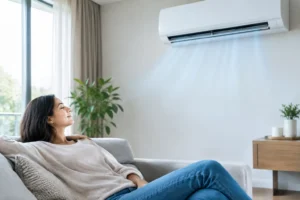
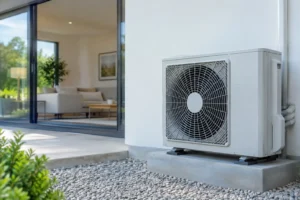
For dependable comfort during hot weather, a fixed split air conditioning system is usually the most effective option. An indoor unit quietly removes heat from the room and transfers it to an outdoor unit. Unlike a fan, it actively lowers indoor temperature. Most modern systems can also provide efficient heating in cooler months, which makes them useful beyond a short summer heatwave.
The key word is correctly sized. Oversizing is not a shortcut to faster comfort. A unit that is too large may reach its target temperature quickly, cycle on and off more often and remove less moisture from the air. One that is too small can run continuously without bringing the room under control. Both outcomes can affect comfort and operating costs.
A professional survey considers more than floor area. It should account for ceiling height, glazing size and direction, insulation, occupancy, appliances, heat from neighbouring spaces and whether doors are normally open. An open-plan kitchen-diner may need a different approach from a compact bedroom with one south-facing window.
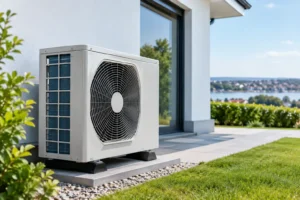
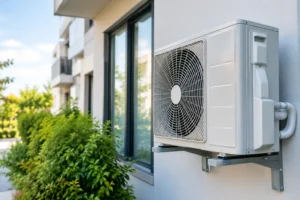
Indoor unit position matters as well. It should distribute treated air across the occupied area without blowing directly onto a sofa, desk or bed. The outdoor unit needs clear airflow and an appropriate location that respects access, noise and the appearance of the property. Good installation is as important as selecting a premium system.
Portable units and fixed systems are not equal
Portable air conditioners can provide short-term relief, particularly in a small room where a hose can be fitted securely to a window. They are easy to buy and do not require permanent installation, but they are generally noisier and less efficient than a split system. The window opening around the hose can also allow warm air back into the room.
For a tenant or someone needing a temporary option, a portable unit may be sensible. For a south-facing bedroom, conservatory, office or retail area that overheats every year, a fixed air conditioning system is normally the better long-term investment. It offers quieter operation, more precise control and a more polished finish.
Make the system economical to run
Air conditioning costs are shaped by the building and the way the system is used, not just the unit’s efficiency rating. Set a realistic temperature rather than forcing the system to work against extreme settings. A target around 22-24°C is comfortable for many people and avoids the shock of stepping from a cold room into summer heat.
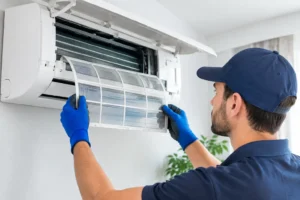
Keep windows and external doors closed while cooling is running, then use blinds or curtains to limit direct sun. Clean filters regularly so air can pass through freely. Leaves, dust and obstructions around an outdoor unit can also reduce performance.
Annual maintenance helps protect efficiency, hygiene and reliability. It gives a technician the opportunity to inspect electrical connections, check drainage, clean components and identify a small issue before it becomes a loss of cooling on the hottest day of the year. For businesses, planned maintenance also supports a more predictable working environment for staff and customers.
When a survey is worth arranging
If one room is consistently too hot while the rest of the property is comfortable, a single-room split system may be all that is required. If several rooms overheat, or you want heating and cooling across a whole home or workplace, a multi-split system may be more suitable. The best answer depends on use, layout and budget rather than a one-size-fits-all package.
A survey is particularly valuable where there are large bi-fold doors, roof glazing, loft rooms, conservatories or changing commercial occupancy. It replaces guesswork with a clear recommendation on capacity, unit placement and installation requirements. Essex Air Conditioning can assess these factors and provide a no-obligation quote for a system that suits the property.
Comfort in a sunny room should not depend on waiting for the weather to change. Control the sunlight, manage airflow and choose professionally sized cooling where it is needed, and a south-facing space can remain one of the best rooms in the building.