A bedroom that is still 28°C at midnight, a south-facing office with afternoon sun, or a busy salon full of people presents the same question: is aircon versus electric fans really a fair comparison? Both can make a room feel more bearable, but they work in fundamentally different ways. The right choice depends on whether you need temporary relief from moving air or dependable temperature control.
For many Essex homes and businesses, a fan is a sensible short-term purchase. But when heat is affecting sleep, staff comfort, equipment or customers, professionally installed air conditioning is usually the more effective long-term answer.
Aircon versus electric fans: the key difference
An electric fan does not cool the room. It moves air across your skin, helping perspiration evaporate and making you feel cooler. This can be very effective when the air is reasonably dry and you are sitting or sleeping within the fan’s airflow. Move away from it, however, and the relief quickly fades.
Air conditioning actively removes heat from indoor air and transfers it outside. A modern split air conditioning system can lower and maintain the temperature of a room, rather than simply creating a cooling sensation. It also removes moisture from the air during cooling, which matters on close, humid days when a fan may feel as though it is just circulating warm air.
That distinction is especially noticeable in bedrooms, loft rooms, conservatories, kitchens and commercial premises with heat-producing equipment. A fan can improve comfort in the moment. Air conditioning changes the room conditions themselves.
Cooling performance in real Essex properties
British summer temperatures are not uniformly high, which is why fans remain popular. On a mildly warm evening, a quiet pedestal or desk fan may be all that is needed. It is inexpensive to buy, easy to move and needs no installation. A fan can also help distribute cooler air from an air-conditioned room.
The problem arrives during a sustained hot spell. Brickwork, roofs and glazing absorb heat through the day, then release it slowly after sunset. By bedtime, opening a window may bring in little relief, particularly near busy roads or in built-up areas. A fan will still move that warm air around, but it cannot draw heat out of the room.
A correctly sized air conditioning system can maintain a set temperature even as outdoor conditions change. It is not simply about making a room feel cold. Most people are comfortable at a moderate setting, often around 21-24°C, depending on the activity and the building. Good system design considers room size, sun exposure, insulation, occupancy and heat from appliances, rather than relying on a one-size-fits-all unit.
Running costs: cheap to operate versus better results
Fans have a clear advantage in electricity use. Most domestic fans use comparatively little power, so running one for several hours generally costs far less than operating an air conditioning system. If you only need occasional personal cooling, that is a meaningful benefit.
Air conditioning uses more electricity because it is doing more work: extracting heat, circulating conditioned air and controlling humidity. The actual cost depends on the unit’s efficiency, its capacity, your electricity tariff, the outdoor temperature and how the space is used. An oversized, poorly positioned or neglected system will waste energy. A properly specified modern system, used sensibly, is far more economical than many people expect.
It is also worth considering the cost of ineffective cooling. Lost sleep can affect work and wellbeing. Overheated offices can reduce concentration and make staff or customers uncomfortable. In a server room, treatment room, gym or retail space, heat may create a direct operational issue. A fan may be cheaper per hour, but it is not necessarily the lower-cost solution if it does not solve the problem.
To keep air conditioning costs under control, choose an efficient system sized for the room, close blinds before strong sun reaches the glass, keep doors and windows closed while cooling, and have the equipment maintained. Small changes in usage make a real difference.
Comfort, humidity and air quality
Cooling is only one part of comfort. Humidity plays a major role in how a room feels. When indoor air is humid, sweat evaporates more slowly and the body struggles to cool itself. That is why a fan can feel less useful on muggy days, even when it is running at full speed.
Air conditioning reduces humidity as it cools, helping rooms feel fresher at a moderate temperature. This can be valuable in bedrooms, where a lower and more stable temperature supports better sleep, and in workplaces where people need to remain comfortable for a full day.
Most installed systems also filter recirculated air. Filters need regular cleaning and maintenance, but they can help reduce airborne dust and particles within the room. A fan has no comparable filtration function and can stir settled dust if it is not kept clean.
Neither option replaces good ventilation where ventilation is required. Kitchens, bathrooms, commercial areas and occupied spaces may need appropriate extraction or fresh-air provision. Air conditioning and ventilation should be considered together where the building and its use demand it.
Noise, space and day-to-day practicality
A fan is quick to deploy, but it is not always quiet. At higher speeds, the constant rush of air and motor noise can be distracting in a bedroom, meeting room or treatment space. Some people also dislike air blowing directly on them for long periods.
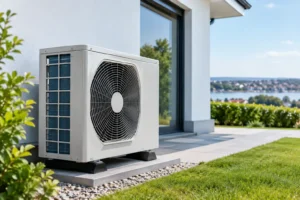
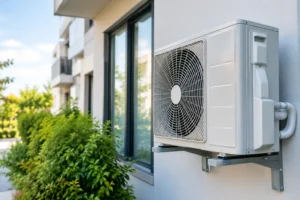
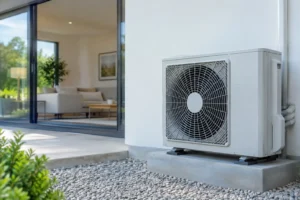
Wall-mounted split air conditioning units are designed for permanent use and many modern indoor units operate very quietly at low fan speeds. The outdoor unit handles the noisier part of the cooling process. Positioning still matters, both for performance and consideration of neighbours, which is one reason a professional survey is worthwhile.
Portable air conditioning units sit somewhere between the two options. They can cool a small area, but they are usually louder than a fitted split system and require a hose to vent hot air through a window or wall opening. They can be useful where installation is impossible, but they are rarely the best choice for regular cooling of a bedroom, office or shop.
When an electric fan is the right choice
A fan is a practical choice when cooling is occasional, the room is only mildly warm, or you need personal comfort at a desk or beside the bed. It is also useful for renters or for rooms where a permanent installation is not currently possible.
Use it safely: place it on a stable surface, keep cables out of walkways, avoid covering it, and clean the grille and blades regularly. During cooler early mornings or evenings, a fan can help pull fresher outside air through an open window. Once the outdoor air becomes hotter than indoors, closing blinds and windows may be more effective.
When air conditioning is worth the investment
Air conditioning becomes the stronger option when heat is frequent, rooms are difficult to cool, or comfort has a clear impact on daily life or business performance. Typical examples include hot bedrooms, garden offices, loft conversions, south-facing living rooms, shops, salons, clinics and small offices.
It also offers year-round value. Many modern air conditioning systems are heat pumps, meaning they can provide efficient heating during cooler months as well as cooling in summer. That flexibility changes the calculation for homeowners and businesses that want one system to support comfort across the year.
For landlords and commercial property operators, a fixed system can also make a space more attractive and usable. The key is to specify it properly. A free survey should establish the heat load, indoor and outdoor unit locations, drainage route, electrical requirements and how the room is actually used. This avoids the common mistake of choosing equipment based on price alone.
Making the right choice for your property
There is no need to dismiss fans. They are low-cost, flexible and useful for short periods of personal cooling. In fact, a fan and air conditioning can work well together, with the fan helping distribute cooled air in a larger room.
However, if your aim is consistent temperatures, lower humidity and reliable comfort through the hottest days, air conditioning is in a different category. For homes and businesses across Essex, Essex Air Conditioning can assess the space, recommend a suitable premium system and provide clear, no-obligation advice. The most useful next step is to focus on the room that causes the greatest discomfort, then choose a solution that will still perform when the next heatwave arrives.