A bedroom unit that clicks, hums or suddenly ramps up at 2am quickly stops feeling like a comfort upgrade. This quiet aircon buying guide explains what genuinely makes a system quieter, what figures to compare and why professional design matters as much as the unit itself.
For homes, rental properties and workplaces across Essex, quiet cooling is usually achievable without paying for unnecessary features. The right answer depends on the room, how and when it is used, and where the indoor and outdoor units can be installed.
What counts as quiet air conditioning?
Air conditioning sound is measured in decibels, shown as dB(A). Because the scale is logarithmic, a small numerical difference can be more noticeable than it looks. A unit rated at 19 dB(A) on its lowest fan setting can be very discreet in a bedroom. At 35 dB(A), it may still be acceptable for a living room or office, but the sound will be more apparent when the space is otherwise quiet.
Do not judge a system by one low figure on a brochure. Manufacturers commonly quote the quietest available indoor setting, not the level produced when the unit is cooling hard on a hot afternoon. Ask for the indoor sound pressure level across its fan speeds, including the normal operating range. A good installer should explain what those numbers mean for your room rather than simply pointing to the lowest one.
Outdoor units matter too. Their sound level can affect patios, neighbouring gardens, bedrooms with open windows and commercial premises close to homes. The specification may show sound power as well as sound pressure. Sound power describes the equipment itself; sound pressure is what is measured at a stated distance. They are not interchangeable, so compare like for like.
Start with the room, not the quietest model
The quietest-rated air conditioner is not automatically the quietest choice once installed. An undersized system has to work at high output for long periods, increasing fan and compressor noise while struggling to hold the target temperature. An oversized system can cool a small room too quickly, cycle inefficiently and create uneven comfort.
Correct sizing considers more than floor area. Ceiling height, south-facing glazing, insulation, the number of occupants, computers and kitchen equipment all add heat to a room. A loft bedroom in a warm Essex property may need a different solution from a shaded ground-floor lounge of the same size.
This is why a survey is valuable. It establishes the cooling load, identifies practical pipe routes and checks whether the proposed unit position will put airflow or vibration where it is least welcome. For a shop, salon or office, the survey should also account for doors opening regularly and busy periods when occupancy rises.
Choose inverter technology
Most quality modern split systems use inverter-driven compressors. Rather than repeatedly switching fully on and off, they adjust their output to meet demand. Once the room has reached temperature, the system can run steadily at a lower level.
That generally means lower operating noise, more consistent comfort and reduced energy use. It also avoids the noticeable starts and stops associated with older fixed-speed equipment. Inverter technology is not a substitute for proper sizing, but it is a strong starting point when quiet operation is a priority.
Check the modes you will actually use
Sleep, quiet or night modes can reduce fan speed and limit compressor output. These are useful in bedrooms, nurseries and guest rooms, particularly overnight when the cooling load falls. They should be treated as a benefit, not the sole reason to select a model.
A quiet mode may slightly reduce the speed at which the room cools. On very hot evenings, a correctly sized unit may need to operate above its lowest setting at first. The best result is a system that reaches a comfortable temperature before bedtime, then maintains it quietly through the night.
A quiet aircon buying guide to placement
Where the units sit has a major effect on how they sound. An indoor wall-mounted unit should be positioned so air can circulate freely across the room, without blowing directly onto a bed, desk or sofa. A poorly placed unit can create a draught, leading occupants to change settings repeatedly and run the fan harder than necessary.
Avoid installing an indoor unit directly above the head of a bed if another sensible position is available. The unit may be technically quiet, yet the gentle movement of air and occasional changes in fan speed can still be distracting at close range. In a home office, place it where it can cool the workspace without directing airflow towards papers, screens or the person sitting at the desk.
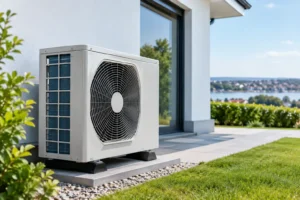
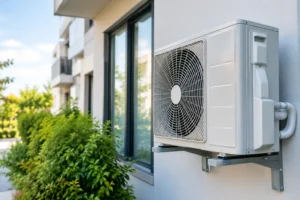
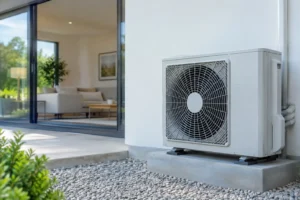
Outdoor unit placement deserves the same care. A solid, level base or suitable wall brackets help prevent vibration transferring into the building. Keep the unit clear of loose panels, fences and tight corners that can reflect or amplify sound. Good airflow around the condenser is essential, so do not box it in simply to hide it.
If the outdoor unit must be close to a boundary, a quieter model, thoughtful orientation and a professional assessment are particularly important. Acoustic screening can sometimes help, but only when it is designed to preserve the clearances needed for ventilation and future servicing.
Split systems are usually quieter than portable units
For a permanent room-by-room solution, a fixed split air conditioning system is normally the quieter option. The noisiest components are located outside, while the indoor unit circulates cooled air at a relatively low level. It is also more efficient and generally provides better temperature control.
Portable air conditioners can be useful for temporary needs or situations where a fixed installation is not possible. However, because the compressor is in the room, they are often noticeably louder. Their hose arrangements can also affect security, appearance and efficiency. They should not be compared directly with a properly designed wall-mounted split system.
For several rooms, a multi-split system may allow multiple indoor units to connect to one outdoor condenser. This can reduce the number of outdoor units, although it is not always the best value or the quietest arrangement for every property. Pipe lengths, capacity sharing and how many rooms need cooling at the same time should all be considered.
Look beyond the headline decibel rating
When comparing quotations, ask each contractor to set out the proposed indoor and outdoor model numbers, their sound ratings, cooling capacity and intended locations. This makes it possible to compare the complete design rather than choosing on a vague description such as quiet air conditioning.
Pay attention to the noise at medium and high fan speeds as well as minimum speed. Consider whether Wi-Fi control, timers and sensors will help you run the system more quietly. For example, scheduling a bedroom to cool before you go upstairs can reduce the need for rapid cooling once you are trying to sleep.
Build quality also affects the experience over time. A premium unit with a well-fitted condensate drain, secure pipework and correctly mounted outdoor condenser is less likely to develop rattles, vibration or water noises. Cheap installation can undermine a good piece of equipment.
Installation quality makes the difference
A quiet system relies on competent installation and commissioning. Pipework needs secure fixing, electrical connections need correct protection, and the refrigerant circuit must be pressure-tested and evacuated before commissioning. These steps support performance, reliability and quieter operation.
An experienced installer will also set the system up properly, test drainage and show you how to use the controller. That final handover matters. Many noise complaints are improved simply by selecting an appropriate fan setting, using sleep mode and avoiding an unnecessarily low temperature setting.
Essex Air Conditioning can assess the room, discuss suitable equipment and provide a clear, no-obligation quotation for a system designed around comfort rather than a one-size-fits-all recommendation.
Keep it quiet after installation
Even a carefully selected air conditioner needs routine maintenance. Clogged filters restrict airflow, causing the indoor fan to work harder. A blocked drain, loose cover or deteriorating mounting can introduce sounds that were not present when the system was new.
Clean user-accessible filters as advised for your model, particularly during periods of frequent use. Arrange professional maintenance to inspect the indoor and outdoor units, check drainage, clean heat exchangers where required and identify wear before it becomes a disruption. If you hear a new rattle, persistent buzzing, grinding or water noise, arrange a repair rather than turning up the television and hoping it goes away.
Before choosing, picture the system operating on the hottest night of the year, not just sitting quietly in a showroom. A correctly sized inverter split system, installed in the right position and maintained properly, gives you the best chance of cool rooms and undisturbed sleep.