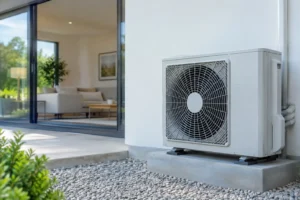
A room that never quite reaches the temperature you set, despite the air conditioning running for hours, is more than an inconvenience. It can be one of the first signs of a refrigerant problem. Knowing how to spot refrigerant leaks helps homeowners and businesses act before reduced performance becomes an expensive repair or a complete system failure.
Refrigerant is the fluid that carries heat out of your property. Your system does not use it up during normal operation, so a low refrigerant charge usually means there is a leak somewhere in the sealed circuit. The right response is not simply to add more gas. A qualified engineer must locate and repair the leak, then test and recharge the system correctly.
The clearest signs of a refrigerant leak
A leak can be slow and subtle, particularly on a system that has been installed for several years. In many cases, customers first notice a change in comfort rather than an obvious fault code. Looking for a pattern of symptoms is more useful than relying on one sign alone.
Your air conditioning is no longer cooling properly
Weak cooling is the most common warning sign. Cool air may still come from the indoor unit, but it feels less crisp than usual, takes much longer to lower the room temperature, or only provides relief close to the unit.
It is worth checking the simple causes first. A blocked filter, incorrect temperature setting, dirty coil or open windows can all reduce performance. However, if the filters are clean, the unit has been serviced and the problem persists, a refrigerant leak becomes more likely.
For businesses, the change may show up as staff complaints in one office, meeting room or retail area while the rest of the premises remains comfortable. For homeowners, it often becomes obvious during a warm spell, when the system cannot keep up with a demand it previously handled without difficulty.
Ice or frost appears on the pipework or indoor unit
Frost on the copper refrigerant pipes, indoor coil or outdoor unit is a strong reason to arrange an inspection. When refrigerant levels are low, pressure inside the system can fall and the evaporator coil can become too cold. Moisture in the air then freezes on its surface.
You may see ice around the larger insulated pipe leading into the outdoor unit, or water dripping from the indoor unit after the ice has thawed. Do not chip or scrape ice away, and do not keep running the system in the hope it will clear. Continuing to operate an iced-up unit can put unnecessary strain on the compressor.
Frost does not always mean a refrigerant leak. Restricted airflow from a dirty filter or failed fan can produce similar symptoms. That is why an engineer should test the system rather than make assumptions from appearance alone.
You can hear hissing, bubbling or unusual noises
A refrigerant leak may create a faint hissing sound near pipe joints, valves or the indoor and outdoor units. A bubbling or gurgling sound can also occur when refrigerant and oil move through the pipework differently because of a low charge.
These noises can be difficult to identify in busy commercial premises or near an outdoor condenser, and they are not definitive on their own. Still, a new or persistent sound combined with poorer cooling should be treated seriously. Make a note of when it occurs and which unit it seems to come from, then provide that information to the attending engineer.
Energy bills rise while comfort falls
When a system is short of refrigerant, it must run for longer to achieve the same result. This can increase electricity use, especially in shops, offices and homes where air conditioning operates for much of the day.
A higher bill alone does not prove a leak. Seasonal temperatures, longer opening hours and changes in occupancy all affect energy use. The more telling pattern is increased running time alongside weaker cooling, frost, noise or repeated system faults.
There is oily residue around connections
Refrigerant itself is not always easy to see, but it circulates with compressor oil. At some leak points, particularly flare connections and pipe joints, that oil can leave a greasy mark or attract dust. An oily residue around pipework is therefore worth reporting.
Do not try to tighten fittings yourself. Air conditioning pipework operates under pressure, and an incorrect adjustment can worsen the leak or damage a connection. It also risks releasing refrigerant into the atmosphere.
The unit displays a fault code or shuts down
Modern air conditioning systems often monitor pressures and temperatures. If readings move outside the expected range, the system may show an error code, run intermittently or shut down to protect key components.
Record the code, if one is displayed, but avoid repeatedly resetting the unit. Resetting may temporarily remove the warning while leaving the underlying issue unresolved. A qualified technician can interpret the code alongside pressure readings and other test results.
Why topping up refrigerant is not a repair
A system with a confirmed leak needs more than a recharge. Adding refrigerant without repairing the source may provide short-term cooling, but the gas will escape again. The fault can return quickly, operating costs can rise and the compressor may be put at risk.
There is also an environmental and legal reason to take leaks seriously. Many refrigerants have a high global warming potential. Under UK F-Gas requirements, refrigerant handling, leak checks and repairs must be carried out by appropriately certified professionals. For larger systems, regular leak checking obligations may apply depending on the refrigerant and charge size.
A proper repair normally involves identifying the leak, repairing or replacing the affected component, pressure testing, evacuating moisture and air from the circuit, then recharging the system to the manufacturer’s specification. The engineer should also confirm that the unit is cooling correctly before leaving site.
How engineers find a refrigerant leak
Finding a small leak is often more involved than finding a visible damaged pipe. Experienced engineers use suitable detection methods based on the system, suspected location and severity of the issue.
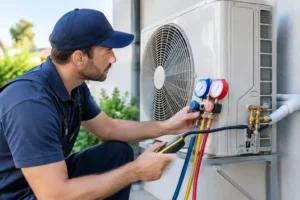
An electronic leak detector can identify refrigerant gas around joints, valves, coils and components. A pressure test using oxygen-free nitrogen can help establish whether the circuit is holding pressure. In some circumstances, a UV dye may be used to make the source easier to locate. Visual checks remain valuable too, particularly for corrosion, damaged insulation, rubbed pipework and oily deposits.
The aim is to repair the actual fault, not guess. On older systems, the condition of the coil, pipework and compressor may affect whether repair offers good value. A clear engineer’s assessment should explain the options, expected cost and likely long-term reliability.
What you should do if you suspect a leak
If the system is still operating but performance has clearly deteriorated, switch it off when practical and book an inspection. This is particularly sensible if there is ice on the unit, repeated fault codes or a noticeable hissing noise. Turning it off can help prevent further stress on the compressor.
Before the visit, note when the issue began, whether it affects every indoor unit and any warning lights or codes. For a workplace system, tell the engineer about recent changes to operating hours, room layouts or ventilation arrangements. These details can speed up diagnosis.
Do not use DIY sealants, attempt to recharge the system from a canister or remove covers around electrical components. Apart from safety concerns, these actions can contaminate the system and make a professional repair more difficult.
Preventing refrigerant leaks where possible
Not every leak is preventable. Age-related corrosion, component failure and accidental damage can happen even with a well-installed system. However, professional installation and routine maintenance reduce the chance that a small issue develops unnoticed.
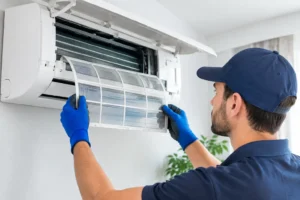
During planned maintenance, an engineer can inspect pipework, check operating pressures and temperatures, clean coils, assess insulation and look for signs of oil residue or corrosion. This matters for domestic wall-mounted units and is especially valuable for commercial systems with several indoor units, longer pipe runs or demanding daily use.
In Essex, where warm offices, south-facing rooms and busy customer areas can place real demand on cooling equipment, early attention is usually less disruptive and more cost-effective than waiting for a total loss of cooling. Essex Air Conditioning can assess suspected refrigerant leaks, explain the findings clearly and carry out the appropriate repair work.
If your system is taking longer to cool, icing up or behaving differently from normal, trust that change. Booking a professional inspection promptly gives you the best chance of protecting comfort, controlling energy costs and keeping your air conditioning working when you need it most.