A stuffy meeting room at 3pm, recurring condensation on windows or a persistent odour near the toilets are not minor workplace annoyances. They can indicate that fresh air is not reaching the building as intended. So, do offices need ventilation servicing? In most cases, yes. Whether an office has simple extractor fans, mechanical ventilation with heat recovery or a combined air conditioning and fresh-air system, planned servicing helps protect air quality, staff comfort and the equipment itself.
The right level of maintenance depends on the system, how the office is used and the number of people in it. A small office with opening windows has different needs from a busy, sealed-plan workplace. What does not change is the need to make sure ventilation is clean, operating correctly and capable of supplying adequate fresh or purified air.
Do offices need ventilation servicing to meet their duties?
UK workplace rules require employers to provide an adequate supply of fresh or purified air in enclosed workplaces. This does not mean every office must have a particular type of mechanical ventilation, nor does it impose one fixed service interval for every system. It does mean businesses must be able to show that their workplace arrangements are suitable and kept in effective working order.
For naturally ventilated offices, that may involve checking that windows can be safely opened, vents have not been blocked and rooms do not become uncomfortable or stale when fully occupied. For mechanically ventilated offices, it means maintaining fans, filters, grilles, ducts, controls and any associated air handling equipment.
A system that was suitable when installed can become inadequate over time. Filters load with dust, fan belts and bearings wear, dampers stick, condensate drains block and controls can be altered without anyone noticing. A service visit identifies these issues before poor ventilation becomes the new normal for staff.
Air conditioning inspections are sometimes confused with ventilation servicing. They are related, but not identical. An air conditioning system may cool or heat recirculated air without bringing in enough outside air. Likewise, a dedicated ventilation system may deliver fresh air without providing cooling. Both need the appropriate maintenance plan.
What is included in office ventilation servicing?
A proper service is more than a quick look at a ceiling grille. The engineer should assess whether the system is running as designed and whether its condition could affect airflow, hygiene or reliability.
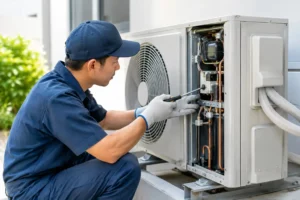
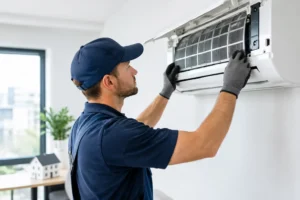
For a typical mechanical ventilation system, servicing may include inspecting and cleaning accessible supply and extract grilles, checking fan operation, examining electrical connections and controls, replacing or cleaning filters where appropriate, and confirming that air pathways are not obstructed. The condition of ducts, dampers and access panels should also be considered, particularly in older buildings or properties that have been altered several times.
Heat recovery ventilation units need particular attention. Their filters, heat exchanger, condensate arrangement and fan performance all influence how effectively they recover energy while delivering fresh air. Neglecting filters can reduce airflow, increase electricity use and make the unit work harder than necessary.
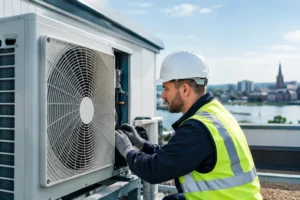
Where ventilation is connected to air conditioning, maintenance should also account for coils, condensate trays, pipework and refrigerant equipment. This is especially relevant in offices where cooling is relied upon through warm Essex summers. A comfortable temperature is useful, but it should not mask poor fresh-air provision.
Filters are a small component with a large effect
Filters protect both occupants and equipment, but only when they are changed or cleaned at the correct point. A heavily loaded filter restricts airflow. Staff may notice rooms feeling stuffy, while the fan may consume more energy trying to overcome the resistance.
Changing filters too often is unnecessary expense; leaving them too long can undermine the entire system. The sensible approach is to inspect them on a planned schedule and replace them based on condition, system design and the office environment. A building beside a busy road, warehouse or construction site may need more frequent attention than a quiet office location.
Signs your office ventilation needs attention
Employees will often notice the effects of poor performance before a system fails completely. Repeated complaints about stale air, tiredness, lingering smells or rooms that feel too warm when occupied should be taken seriously. These are not proof of one specific fault, but they are good reasons to arrange an assessment.
Other warning signs include visible dust around supply grilles, unusual fan noise, weak airflow, condensation or mould around cold surfaces, and controls that no longer appear to respond. In toilet areas and kitchens, slow clearing of moisture and odours can point to underperforming extract ventilation.
Higher absence levels alone should not be blamed on ventilation, as many factors affect health and attendance. However, well-maintained ventilation is a practical part of creating a better indoor environment. It helps dilute carbon dioxide, moisture, odours and airborne contaminants generated by normal occupancy.
For facilities managers, sudden increases in energy costs can also justify an inspection. Dirty filters, failing fans and incorrect controls can make a system operate for longer or less efficiently than required. Maintenance is often less costly than waiting for a breakdown, particularly where a failed unit disrupts an occupied office.
How often should office ventilation be serviced?
There is no universal answer, but annual servicing is a sensible baseline for many office ventilation systems. Busy workplaces, sites with high dust levels, spaces with long operating hours and systems that support critical internal rooms may need more frequent checks. Filter inspections may be required several times a year even where the main service is annual.
A maintenance schedule should be based on the manufacturer’s guidance, equipment type, operating hours, building risk and past findings. A lightly used office with a simple extract fan may only need periodic inspection and cleaning. A large office with air handling units, heat recovery, multiple zones and cooling equipment needs a more structured programme.
Some related equipment has separate compliance requirements. For example, larger air conditioning systems can require Energy Performance of Buildings inspections, while fire dampers and smoke-control components need their own testing arrangements. These obligations should not be treated as a substitute for routine ventilation servicing. Each item has a different role in keeping the building safe and functional.
The business case: comfort, efficiency and fewer disruptions
Office ventilation maintenance is sometimes postponed because the system still switches on. That is a risky benchmark. Equipment can run while delivering poor airflow, using too much electricity or creating avoidable wear on components.
Planned servicing gives business owners a clearer view of system condition and likely future costs. It also reduces the chance of an urgent callout during a busy working week, when staff may need to be moved from uncomfortable rooms or work interrupted to allow repairs.
There is a balance to strike. Not every system requires an extensive duct clean at every visit, and an engineer should not recommend work simply because it is available. Ductwork should be inspected and cleaned when its condition, contamination risk or airflow performance warrants it. The aim is practical maintenance that matches the office, not a one-size-fits-all package.
For landlords, a maintained ventilation system can also prevent disputes when tenants report comfort or air-quality concerns. Clear service records demonstrate that equipment has been inspected and that recommendations have been acted on where needed.
Choosing the right support for your workplace
Before booking maintenance, identify what equipment serves the office. Many businesses know they have air conditioning but are unsure whether it provides fresh air, recirculates internal air or works alongside separate extract and supply fans. A professional survey can clarify this quickly and identify any gaps in maintenance.
Ask for servicing that includes meaningful checks, written findings and clear recommendations in plain English. You should understand what has been inspected, what needs attention now and what can be planned for later. This makes budgeting easier and prevents minor faults being allowed to become costly repairs.
For offices across Essex, Essex Air Conditioning provides practical ventilation and air conditioning support designed around the building and the way it is used. The priority is straightforward: keep systems reliable, maintain good workplace comfort and address concerns before they interrupt your business.
If your office feels stale, noisy, humid or unexpectedly expensive to run, do not wait for a complete failure to investigate. A timely ventilation check can turn a vague staff complaint into a clear, manageable maintenance plan.