A desk fan can make a warm room feel more bearable, but it cannot lower the temperature of the air. That distinction matters when choosing cooling for a south-facing bedroom, busy office or retail space. This aircon fan comparison sets out what each option can realistically deliver, what it costs to run, and when proper air conditioning becomes the sensible investment.
Aircon Fan Comparison: The Core Difference
A fan moves air across the skin. As perspiration evaporates, your body loses heat and feels cooler. It is a simple, effective solution when someone is in the direct airflow, particularly during a mildly warm day or overnight in a well-ventilated room.
Air conditioning actively removes heat from the indoor air and transfers it outside. A correctly specified system can bring a room down to a chosen temperature, circulate filtered air and remove excess moisture. Everyone in the room benefits, not only the person sitting in front of the unit.
This is why fans and air conditioning are not direct like-for-like products. A fan is a low-cost way to improve personal comfort. An air conditioning system is a temperature-control solution for a whole room or defined area.
What happens during a humid Essex heatwave?
Humidity is often the deciding factor. When the air already contains a great deal of moisture, sweat does not evaporate as readily. A fan may still provide some relief, but its effect can be limited when a bedroom feels sticky at night or an office becomes uncomfortable by mid-afternoon.
Air conditioning removes moisture as it cools. The room therefore feels fresher as well as cooler. For households with young children, older relatives or people who struggle to sleep in the heat, this can make a noticeable difference to wellbeing during prolonged hot spells.
Fan vs Air Conditioning: Cost and Running Costs
A portable or pedestal fan is inexpensive to buy and uses relatively little electricity. For short periods of personal cooling, it remains one of the most economical choices available. It is easy to move between rooms, requires no installation and is useful during the few warmer days when a room is not genuinely overheating.
Air conditioning has a higher upfront cost because it is a fixed system designed around the property. The equipment, pipework, electrical supply, siting and professional installation all need consideration. However, modern inverter units are designed to adjust their output rather than running flat out continuously. Once a room reaches the set temperature, the system can reduce its energy use while maintaining comfort.
Running cost depends on the room size, insulation, glazing, target temperature, operating hours and electricity tariff. Setting a unit to an unrealistic temperature on the hottest day will use more energy and may leave the room feeling uncomfortably cold. A sensible setting, usually several degrees below the outdoor temperature, gives a more efficient and comfortable result.
The value of air conditioning is often clearest in rooms used every day. A fan may be enough for an occasional guest bedroom. A home office occupied throughout the working week, a server room or a customer-facing business has a stronger case for reliable temperature control.
Cooling Performance in Real Rooms
The size and condition of the room matter more than many buyers expect. A small fan in a shaded bedroom may work well. In a loft conversion with large roof windows, it may simply circulate hot air. Equally, an undersized air conditioning unit will run for longer without reaching the desired temperature, while an oversized unit can cool too quickly and manage humidity less effectively.
Professional sizing takes account of room dimensions, ceiling height, window direction, glass area, insulation, heat-producing equipment and occupancy. A kitchen, for example, gains heat from cooking. An office with several computers and staff can become warm even when the outdoor temperature is moderate.
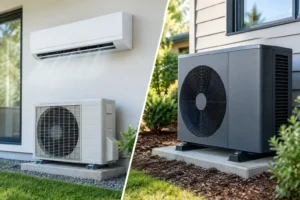
For one room, a wall-mounted split air conditioning unit is often the most effective fixed option. It consists of a quiet indoor unit and an outdoor condenser, connected by discreet pipework. Multi-room systems can cool several bedrooms, meeting rooms or work areas from one outdoor unit, although each property needs a survey to establish the best layout.
Are portable air conditioners a middle ground?
Portable air conditioners can be useful where a fixed installation is not possible or immediate cooling is required. They do remove heat, unlike a fan, but they are usually noisier and less efficient than a professionally installed split system. Their exhaust hose must also vent through a window or suitable opening, which can allow warm air back into the room.
They can be a practical short-term answer for renters or temporary spaces. For regular use in a bedroom, office or commercial premises, a fixed system generally offers quieter operation, stronger performance and a neater long-term result.
Noise, Sleep and Everyday Comfort
Noise can turn a seemingly good cooling option into a poor one. Fans create constant air movement and motor noise, which some people find soothing but others find distracting. At higher speeds, large pedestal fans can be intrusive in a quiet bedroom or meeting room.
Modern wall-mounted air conditioning units are designed for low-noise operation indoors, especially when set to a lower fan speed or night mode. The noisier equipment is located outside. Exact sound levels vary by model and output, so equipment selection matters where bedrooms, neighbours or quiet workspaces are involved.
Air movement is another personal preference. Some people dislike a fan blowing directly onto them for hours, particularly overnight. Air conditioning can distribute cooled air around the room without a harsh draught when the louvres are correctly positioned. The aim is stable, even comfort rather than a blast of cold air from one corner.
Air Quality and Maintenance Considerations
A fan does not clean the air. It can move dust around the room, particularly if the blades and guard are not cleaned regularly. This is rarely a major issue in a clean home, but it is worth considering in busy commercial spaces or for occupants with allergies.
Air conditioning units use filters to capture airborne particles as air passes through the system. They still need routine cleaning and maintenance to keep airflow strong and hygienic. Neglecting filters can reduce performance, increase running costs and affect indoor air quality.
Fixed air conditioning also needs periodic professional servicing. This checks cooling performance, electrical components, condensate drainage and the condition of the system. A properly maintained unit is more reliable in summer, when a breakdown is most inconvenient, and can continue to perform efficiently for years.
When a Fan Is the Right Choice
A fan remains the right answer when the need is occasional, personal and budget-led. It is useful for a single occupant in a small room, for helping air circulate in the evening, or as a temporary measure while improving shading and ventilation. Closing blinds before the sun reaches a room, opening windows when outdoor temperatures fall and reducing heat from appliances can also make a fan more effective.
It is less suitable when the room regularly reaches uncomfortable temperatures, humidity is high, sleep is disrupted or productivity drops. It cannot protect heat-sensitive equipment, provide an accurate set temperature or cool several occupied areas consistently.
When Air Conditioning Is Worth It
Air conditioning is worth considering when comfort needs to be dependable rather than occasional. Homeowners commonly choose it for loft bedrooms, extensions and home offices. Landlords may see value in making top-floor flats more attractive and comfortable. Businesses benefit where hot indoor conditions affect staff concentration, customer experience, stock or IT equipment.
Many systems also provide efficient heating in cooler months. This can add value beyond the summer, particularly in rooms that are difficult to heat with an existing system. It does not replace a full assessment of the property, but it is a useful benefit to discuss before choosing equipment.
For homes and businesses across Essex, the best decision starts with the room, not the product. Essex Air Conditioning can assess heat gain, usage and installation options through a free survey, then provide a clear no-obligation quote for a system that fits the space.
If a fan keeps you comfortable for the handful of warm days each year, keep it simple. If heat is affecting sleep, work or customers, a correctly designed air conditioning system provides the control a fan cannot.