Your air conditioning stops without warning, the room starts warming up, and you find a switch in the consumer unit has moved to OFF. Knowing how to reset aircon breaker protection safely can restore power after a one-off electrical trip, but it should never mean repeatedly forcing a faulty system back on.
A breaker trips to protect people, wiring and equipment. The right response is calm and methodical: check for obvious danger, reset the circuit once correctly, then pay close attention to what happens next. If it trips again, the air conditioning system needs professional investigation.
What an aircon breaker does
Most fixed air conditioning systems are supplied from a dedicated circuit at your consumer unit, commonly called the fuse box. That circuit is protected by a miniature circuit breaker (MCB), an RCD, or an RCBO that combines both types of protection.
An MCB generally trips when the circuit is overloaded or there is a short circuit. An RCD or RCBO can trip when it detects electrical current leaking to earth, which may point to damaged wiring, moisture, a failing component or an insulation fault. The device has done its job by disconnecting the supply before the problem can worsen.
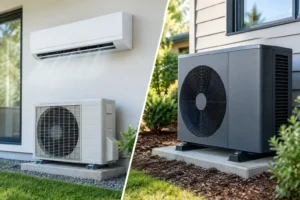
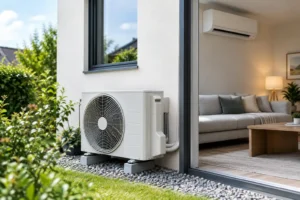
Some systems also have a local isolator switch near the outdoor condenser. This is used to safely isolate the unit for servicing. It is not normally the same thing as the breaker in the consumer unit, so checking both locations can avoid confusion.
Before you reset the aircon breaker
Do not touch the consumer unit or local isolator if there is a smell of burning, visible scorching, buzzing, heat around the switchgear, water ingress, or a damaged cable. Leave the circuit off and arrange an electrician or qualified air conditioning engineer immediately.
It is also sensible to wait a few minutes before restarting the system, particularly after a power interruption. Air conditioning compressors should not be repeatedly started and stopped in quick succession. The delay allows pressures within the system to settle and gives built-in protection controls time to reset.
Check whether other appliances or lights have also lost power. If they have, the problem may involve a wider circuit or the main RCD rather than the air conditioning unit alone. If only the aircon circuit is off, the fault is more likely to be connected to that circuit or equipment.
How to reset aircon breaker protection safely
You do not need to remove the consumer unit cover or handle wiring. The safe reset procedure only involves the front-facing switches.
- Turn the air conditioning system off at its controller, remote or wall thermostat. If accessible, turn the local outdoor isolator to OFF as well.
- At the consumer unit, identify the breaker labelled for air conditioning, AC, condenser or a similar description. A tripped breaker may sit in a middle position rather than fully at OFF.
- Move the breaker firmly all the way to OFF first. This step matters because many breakers will not reset from their tripped position unless they are fully switched off.
- Move it back to ON. If an RCD has tripped, reset that device in the same way, provided there are no signs of danger and you are confident which circuit is involved.
- Wait five to ten minutes, then restore the local isolator if you turned it off. Switch the air conditioning on and select a normal cooling or heating setting. Give the system time to start rather than changing settings repeatedly.
A successful reset is not proof that there is no fault. It only tells you that the protection has remained closed for the moment. Stay nearby for the first few minutes and check that the indoor unit operates normally, the outdoor unit starts when required, and no unusual noises or smells develop.
If the breaker trips again
If the breaker trips immediately when you reset it, leave it off. If it trips when the air conditioning calls for cooling or heating, turn the system off and do not make further reset attempts. Repeated tripping is a warning, not an inconvenience to work around.
The cause can range from relatively straightforward to more involved. A dirty or restricted outdoor coil can place extra strain on a system, while a blocked indoor filter can affect airflow and performance. However, electrical trips may also be caused by a failing compressor, fan motor, capacitor, contactor, PCB, damaged cable, loose connection or water entering an outdoor component.
It depends on when the trip occurs. A trip the instant power is restored can suggest an electrical fault on the supply side or within a component that is permanently energised. A trip only when the outdoor unit starts may indicate a compressor, fan or starting component problem. A trip during heavy rain, or after a period of damp weather, can point towards moisture affecting electrical connections or insulation.
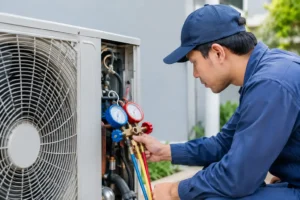
These are not faults to diagnose by opening the air conditioning unit. Modern systems contain high-voltage electrical parts and, in many cases, refrigerant circuits that should only be handled by properly qualified technicians.
Checks you can make without taking anything apart
A few simple observations can help an engineer identify the issue faster. Look at the indoor filter and clean it if it is visibly dusty, following the manufacturer’s instructions. Make sure the outdoor unit is free from leaves, packaging, garden furniture or other obstructions that restrict airflow. Do not spray water into the electrical sections or remove panels.
Note what the system was doing when it tripped. Was it cooling during a hot afternoon, heating on a cold morning, or starting after being unused for weeks? Record any error code shown on the controller, along with whether the breaker stayed on until the outdoor unit attempted to run.
For a business premises, it is also worth considering whether any recent electrical work, building alterations or water leaks occurred nearby. A clear timeline helps avoid unnecessary downtime and makes fault-finding more efficient.
When to call a professional
Arrange a professional repair visit if the breaker trips more than once, the air conditioner will not restart, or you notice reduced performance alongside the trip. Call promptly if the system causes lights to flicker, makes a buzzing sound, smells hot, or trips the main RCD affecting other circuits.
Landlords and commercial property managers should be particularly cautious. Repeatedly resetting a circuit to keep a tenant area, office or shop cool can create a larger failure at the worst possible time. It is usually more cost-effective to isolate the problem early and have the equipment tested properly.
A qualified engineer can inspect the electrical supply, terminals, insulation resistance, control components and system operation under load. This identifies whether the issue lies with the fixed wiring, the protective device or the air conditioning equipment itself. Essex Air Conditioning provides responsive repair support for homes and businesses where a system fault needs a clear, dependable diagnosis.
Avoid these common mistakes
Never hold a breaker in the ON position, replace it with a higher-rated device, or bypass an RCD. Those protections are sized and installed to limit risk. Altering them can damage the system, invalidate electrical safety measures and create a serious fire or shock hazard.
Avoid resetting the breaker over and over because the room is uncomfortable. One careful reset after checking for danger is reasonable. A second trip means the protection is responding to a condition that needs to be found and corrected.
If your system runs normally after the reset, keep an eye on it over the next day or two. If the fault returns, switch it off and book a repair rather than waiting for a complete breakdown. A prompt inspection can protect your comfort, your equipment and the electrical installation that keeps it running.