A cold morning does not have to mean switching on the boiler just to warm one room. Many homeowners ask, can aircon heat homes as well as cool them? With the right modern system, the answer is yes. Reverse-cycle air conditioning can provide effective, responsive heating while also giving you cooling during warmer weather.
For homes in Essex, where winters are often cool and damp rather than consistently severe, an air-to-air heat pump can be a particularly practical option. However, whether it is the right choice for your property depends on the rooms you want to heat, your insulation, your existing heating arrangement and how you use the space.
Can aircon heat homes in winter?
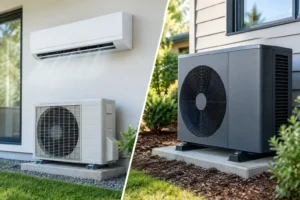
Most modern wall-mounted air conditioning systems are heat pumps. In cooling mode, they remove heat from inside your home and release it outdoors. In heating mode, the process reverses: the outdoor unit absorbs available heat from the outside air and transfers it indoors.
This can sound surprising when it is cold outside, but even chilly air contains usable heat energy. The system uses electricity to move that heat, rather than producing all of it directly as an electric heater does. That is why a quality air conditioning system can deliver more heat energy than the electrical energy it consumes.
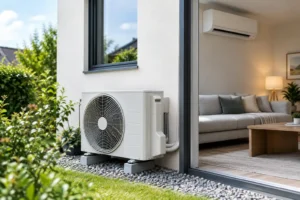
In practical terms, a correctly specified unit can heat a bedroom, lounge, home office, conservatory or garden room quickly and comfortably. It supplies warm air directly into the space, so you do not need to wait for a whole central-heating circuit to warm up before feeling the benefit.
Why heat-pump air conditioning is efficient
The efficiency of heating air conditioning is often described using a seasonal efficiency rating, commonly called SCOP. A system with a SCOP of 4, for example, may deliver around four units of heat for every unit of electricity used across a typical heating season.
Actual performance changes with outdoor temperature, system design and how the unit is operated. Efficiency reduces as temperatures fall because the system has less ambient heat to collect. Even so, modern premium systems are designed to operate at low UK winter temperatures and can remain an efficient source of heat for much of the year.
This is different from a standard plug-in electric radiator. A radiator converts electricity directly into heat, broadly at a one-to-one rate. An air conditioning heat pump moves heat, which gives it the potential to provide considerably more warmth per unit of electricity.
That does not automatically mean it will always cost less than gas central heating. Gas remains relatively economical per unit of heat in many homes, and your electricity tariff matters. The strongest case for aircon heating is often targeted comfort: heating the occupied room quickly, avoiding the need to heat unused areas, and reducing reliance on less efficient electric heaters.
Where air conditioning heating works best
Air conditioning is especially useful in rooms that are used at particular times of day. A home office may need warmth for the working day but little heating in the evening. A garden room may be too cool in winter and too hot in summer. A loft conversion, extension or south-facing bedroom can benefit from both fast heating and summer cooling.
It can also be a sensible choice for properties without gas, spaces served by older electric heating, and rooms that central heating struggles to reach. Landlords may find it attractive for self-contained flats or annexes where all-year comfort is important, provided installation and tenant use are considered carefully.
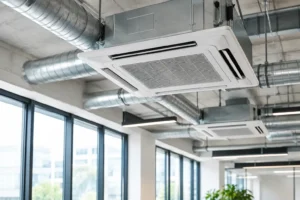
For a larger house with several frequently used rooms, a multi-split air conditioning system can heat different areas independently. Each indoor unit has its own controls, allowing occupants to set temperatures room by room. This is convenient, but it requires careful design to ensure capacity, unit locations and outdoor equipment are right for the property.
The factors that affect warmth and running costs
A heat-pump air conditioning system should never be selected on room size alone. A room’s heat loss is just as important as its floor area. Large windows, poor loft insulation, draughts, high ceilings and exposed walls can all increase the heating capacity required.
Before recommending a system, an experienced installer should assess the room, its orientation, how it is used and where the indoor and outdoor units can be positioned. A free survey is valuable because an undersized unit may struggle on colder days, while an oversized unit can cycle unnecessarily and reduce comfort.
Running costs will depend on your electricity price, the temperature you select and the amount of heat escaping from the room. Setting the system to 21°C and expecting it to overcome open doors or poor insulation will cost more than maintaining a well-insulated room at a sensible temperature. In most cases, a steady setting around your normal comfort temperature is more effective than repeatedly turning the unit up very high.
Outdoor placement also matters. The external unit needs clear airflow and should be installed where it can be safely serviced. It will make some operational noise, particularly when working hard in heating mode, so considerate positioning is important for both your household and neighbours.
Can aircon replace a boiler?
It depends on the home and your expectations. Air conditioning can provide excellent primary heating for individual rooms, smaller homes and well-planned zones. It may also reduce how often you need to run your central heating system. But it does not provide hot water for taps, baths or showers, and it is not always the simplest full-house replacement for a wet central-heating system.
Many homeowners choose a blended approach. They keep their boiler for hot water and whole-house background heating, then use air conditioning to warm occupied rooms quickly and efficiently. This gives them greater control, particularly in spring and autumn when firing up the whole heating system can feel unnecessary.
If your aim is to replace a boiler entirely, an air-to-water heat pump and radiator or underfloor-heating design may be more suitable. Air-to-air systems are still worth considering, but the decision should be based on your property layout, hot-water needs and budget rather than a one-size-fits-all claim.
What to expect from heating mode
When you switch an air conditioning unit to heating mode, it may not blow warm air immediately. The system can take a few minutes to prepare, and it may occasionally enter a defrost cycle in cold, damp weather. During defrosting, the outdoor unit clears accumulated frost and the indoor unit may pause or reduce heat output briefly. This is normal operation, not necessarily a fault.
You may also notice that warm air rises. For the best results, keep internal doors closed where practical, avoid blocking the airflow from the indoor unit and use the fan setting recommended by your installer. Modern units are generally quiet, but higher fan speeds will be more noticeable when rapid warm-up is needed.
Installation and maintenance matter
The quality of installation has a direct effect on heating performance, energy use and reliability. Correct pipework, condensate drainage, electrical work, unit positioning and commissioning all matter. A professional installation also ensures the system has been sized for the conditions it will actually face.
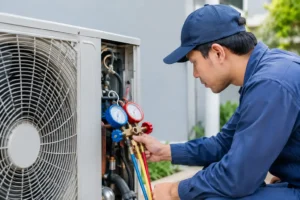
Once installed, regular maintenance helps keep the system working efficiently in both heating and cooling modes. Homeowners can clean or vacuum filters as advised, but professional servicing is important for checking refrigerant performance, electrical connections, drainage and general operation. A neglected system may lose efficiency, become noisier or deliver less consistent heating.
For homes and businesses across Essex, Essex Air Conditioning can assess whether air-to-air heating suits your rooms and provide a clear, no-obligation recommendation based on the property rather than guesswork.
The best next step is to consider the space causing the problem. If one room is cold in winter, overheated in summer or expensive to run with electric heaters, a properly designed air conditioning system could give you a more comfortable answer all year round.