A bathroom mirror that stays steamed long after a shower, persistent condensation on bedroom windows or a stuffy meeting room are not just minor annoyances. They are signs that stale, moisture-laden air is not leaving the property effectively. Well-designed ventilation systems replace it with cleaner outdoor air, helping homes and workplaces across Essex feel fresher, drier and more comfortable throughout the year.
Ventilation is often considered only after mould appears or occupants begin to complain about odours. In reality, it should be part of how a building works every day. Modern homes and commercial premises are increasingly well sealed for energy efficiency, which is beneficial for controlling heat loss but means fresh-air provision needs proper attention.
When ventilation systems are needed
Every occupied building produces moisture and airborne pollutants. Cooking, showering, drying clothes, cleaning, breathing and everyday business activity all add moisture, carbon dioxide, odours and particles to indoor air. Without an effective route out, that air can build up in rooms where people spend the most time.
In a home, the first visible issue is often condensation around windows, cold external walls or inside cupboards. Left unresolved, this can contribute to mould growth and damage finishes, furnishings and stored belongings. Opening windows may provide temporary relief, but it is not always practical during cold weather, rain, high pollen periods or when a property is empty.
Commercial properties have their own pressures. Offices can become uncomfortable when meeting rooms are full, while salons, kitchens, retail premises and workshops may need to manage higher levels of heat, humidity or odours. For landlords and facilities managers, inadequate ventilation can lead to recurring maintenance issues and unhappy occupants. The right system addresses the source of the problem rather than simply masking it.
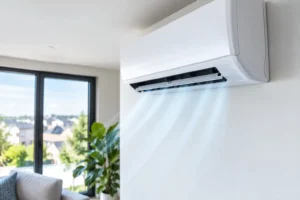
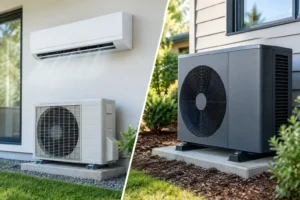
It is worth separating ventilation from air conditioning. Air conditioning controls temperature and can often help remove humidity from the air, while ventilation introduces fresh air and extracts stale air. Many properties benefit from both, particularly busy commercial spaces or bedrooms that become warm and stuffy overnight. The best approach depends on the building, how it is used and the issue that needs solving.
Choosing ventilation systems for your property
There is no single ventilation solution that suits every property. A compact flat with a condensation problem requires a different approach from a detached home, café or multi-room office. A professional survey should consider the size and layout of the building, the number of occupants, existing duct routes, insulation levels and the rooms generating the most moisture.
Local extract ventilation
Extractor fans remain a practical choice for bathrooms, en suites, utility rooms and kitchens. A correctly specified fan removes moisture where it is created, before it spreads to colder parts of the property. Modern models can be fitted with humidistats, timers or continuous low-speed operation, so they respond automatically without relying on someone remembering to switch them on.
The fan itself is only one part of the installation. Ducting length, bends, outlet location and airflow all affect performance. A powerful-looking fan connected to poorly designed ducting may still leave a room damp. Good installation work makes sure extracted air is discharged properly outdoors and that the system is accessible for future servicing.
Continuous mechanical extract ventilation
Mechanical extract ventilation, often called MEV, uses discreet fans and ductwork to continuously remove air from wet rooms. Replacement air enters through planned background ventilators or other suitable air paths. This can be an effective option for homes with regular condensation issues and for properties where intermittent fans are not providing enough consistent extraction.
MEV requires careful commissioning. Too little airflow will not solve the problem, while excessive extraction can create unnecessary heat loss and draughts. The system should be set to the property, not simply installed and forgotten.
Mechanical ventilation with heat recovery
Mechanical ventilation with heat recovery, or MVHR, extracts stale air and uses its heat to warm incoming fresh air through a heat exchanger. It is especially suitable for airtight new-build homes, major refurbishments and well-insulated properties where uncontrolled air leakage is limited.
The attraction is clear: a steady supply of filtered fresh air with less heat wasted than simple extract-only systems. However, MVHR is not automatically the right answer for every existing property. It needs suitable space for ductwork, a well-planned air route and regular filter changes. Retrofitting can be more involved than fitting individual fans, so a survey is essential before deciding whether the investment is justified.
Commercial fresh-air and extract systems
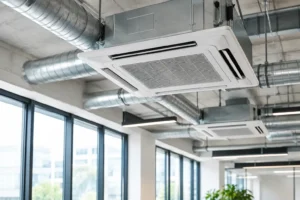
Commercial ventilation may involve fresh-air supply fans, extract systems, heat recovery units or a combination of these. The design needs to reflect how the premises actually operate. A small office may need improved airflow to meeting rooms, while a kitchen or salon may require dedicated extraction to control odours and moisture at source.
Noise matters too. Equipment that is disruptive in a quiet office, bedroom or treatment room is unlikely to be used effectively. Choosing the right fan type, locating equipment sensibly and using appropriate ductwork helps deliver ventilation without creating a new comfort problem.
What a professional survey should establish
Before any work begins, the aim is to identify why the indoor environment is poor. Condensation caused by inadequate extraction is different from water ingress, plumbing leaks or insulation defects. Ventilation can be a major part of the solution, but it should not be used to conceal another building issue.
A useful survey will assess where moisture is produced, where it settles and how air currently moves through the property. It should also examine electrical supply, viable duct routes, external termination points and whether existing grilles or fans are blocked, undersized or badly positioned. In commercial premises, occupancy patterns and peak-use periods are equally relevant.
This investigation allows the contractor to recommend a system with a clear purpose. You should understand what equipment is proposed, where it will be installed, how it will be controlled and what disruption is likely during the work. A straightforward quotation is particularly valuable when comparing a simple fan replacement with a more comprehensive ventilation upgrade.
For homeowners, landlords and businesses in Essex, a free survey and no-obligation quote can remove the guesswork. Essex Air Conditioning can assess practical options and specify a solution that fits the property rather than pushing an unnecessarily complex system.
Installation details that affect performance
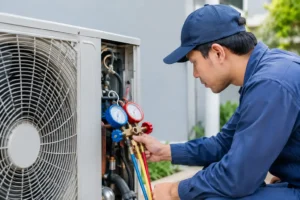
Even high-quality equipment cannot compensate for poor workmanship. Fans need to be securely fitted, ductwork should be correctly sized and supported, and external outlets must be placed to avoid reintroducing extracted air through nearby openings. Where ductwork passes through colder loft spaces, suitable insulation can help reduce the risk of condensation forming inside it.
Controls should also be easy to use. A bathroom fan that runs on after a shower, or a humidity-controlled unit that activates when needed, is often more reliable than a system dependent on manual operation. In workplaces, controls should be explained to the responsible person so settings are not changed in a way that reduces effectiveness.
For larger systems, airflow testing and commissioning are essential. This verifies that each room receives or extracts the intended volume of air. It is the difference between assuming a system works and knowing it does.
Maintaining clean, efficient airflow
Ventilation equipment does not demand constant attention, but it does need maintenance. Dust, grease and lint can build up on grilles, fans and filters, reducing airflow and increasing noise. In kitchens and commercial environments, this can happen more quickly than many property owners expect.
Extract grilles should be cleaned carefully, and any filters should be checked and replaced in line with the manufacturer’s guidance. MVHR filters are particularly important because blocked filters restrict airflow and reduce the quality of incoming air. Outdoor terminals should also remain clear of leaves, debris and nesting material.
A sudden increase in fan noise, weak extraction, lingering odours or fresh condensation are all reasons to arrange an inspection. Regular maintenance helps preserve efficiency, extend equipment life and catch small faults before they become a more disruptive repair.
Act before moisture becomes damage
If windows are regularly wet, mould keeps returning after cleaning or rooms feel stale despite opening them, the property is asking for a closer look. Early action is usually simpler and more cost-effective than repairing damaged plaster, redecorating affected rooms or replacing failed equipment later.
The right ventilation arrangement should work quietly in the background: removing stale air, protecting the building and giving the people inside a healthier, more comfortable place to live or work.