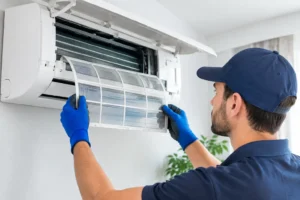
A failed air conditioning system rarely picks a convenient moment. It usually happens on the first properly warm day, during a busy trading week, or just when a bedroom, office or retail space needs to stay comfortable. When that happens, the question becomes immediate – is this a case for aircon repair or replacement?
The right answer depends on more than whether the unit can be made to run again. A repair might restore cooling quickly and affordably. A replacement might save you from repeat callouts, rising energy costs and another breakdown a few months later. The decision should be based on condition, reliability, running costs and how well the system still suits the space.
How to judge aircon repair or replacement
The starting point is simple: look beyond the fault itself. A leaking unit, poor airflow or warm air from the indoor head does not automatically mean the whole system is finished. Equally, getting it working again does not always make repair the sensible option.
In homes and commercial properties alike, the bigger question is value. If the repair cost is modest and the system is otherwise in good condition, repair is often the right move. If the system is ageing, inefficient or becoming unreliable, replacement can be the more cost-effective decision even if the unit can technically be fixed.
That is why a proper assessment matters. An experienced engineer should look at the fault, the age of the system, the availability of parts, refrigerant type, past repair history and the general state of the installation before advising either way.
When repair is usually the better option
A lot of faults are repairable without major disruption. Capacitors fail, fan motors wear, filters clog, drains block and electrical components can develop faults over time. These issues can often be dealt with efficiently if the underlying system is sound.
Repair is generally the better choice when the unit is still within a reasonable service life, has been maintained properly and has not developed a pattern of recurring problems. If the system cools well, suits the room and the repair restores full performance, there may be no reason to replace it early.
This is particularly true for landlords and business owners trying to control short-term costs. If a well-installed unit only needs a straightforward part replacement, a repair can keep the property comfortable without the larger spend of a new installation.
Another factor is urgency. In some cases, getting a repair completed quickly is the best way to restore comfort while planning a future upgrade at a more convenient time.
Signs a repair still makes financial sense
A repair is often worthwhile if the fault is isolated rather than part of a wider decline. One failed component on a relatively modern system is very different from several issues appearing across the unit.
You are usually in repair territory when the system is under around ten years old, parts are readily available, the unit has not needed frequent callouts and energy bills have not noticeably climbed. If the equipment is from a reputable manufacturer and the installation quality is good, there is often plenty of life left after a professional repair.
When replacement is the smarter decision
There comes a point where repair stops being good value. The unit may still run after work is carried out, but that does not mean it will run efficiently or reliably for long.
Older systems tend to become more expensive to own in ways that are not always obvious at first. Parts become harder to source, performance drops, noise can increase and energy use often rises. If the air conditioning is serving a shop, office, server room or busy household, downtime itself can become a cost.
Replacement is often the stronger option when the system is near the end of its expected lifespan, has had multiple repairs, uses outdated refrigerant or no longer meets the needs of the room. Many older installations were sized for a different layout or occupancy level. If the space has changed, fitting another part to an old system may only prolong a poor setup.
There is also the efficiency argument. Newer air conditioning systems are typically quieter, more controllable and less costly to run. For customers using their system regularly through summer and for heating during colder months, that difference can be significant over time.
Warning signs that point towards replacement
Recurring breakdowns are one of the clearest signs. If you are paying for repeat visits every season, repair costs can stack up quickly without ever giving you confidence in the system.
Poor cooling is another. If the unit runs for long periods but struggles to hold temperature, the issue may go beyond a single failed part. The same applies to water leaks that return, persistent electrical faults, unusual noise, or a noticeable decline in air quality and airflow.
A replacement is also worth considering if spare parts are obsolete or disproportionately expensive. There is little sense in investing heavily in an ageing system if the next failure could leave you in the same position again.
Cost matters, but so does total value
It is natural to compare the repair bill with the cost of a new installation. But that comparison can be misleading if you only look at the immediate number.
A cheaper repair is not always cheaper in practice. If it buys you six months before another major fault, you may end up spending more than you would have done by replacing the system earlier. On the other hand, replacing a unit too soon can be unnecessary if a modest repair gives you several more dependable years.
The better way to think about it is total value over the next few years. Consider likely repair spend, energy consumption, expected reliability and whether the current system still suits the property. For a homeowner, that may mean balancing comfort and household costs. For a business, it may mean weighing capital spend against disruption, staff comfort and customer experience.
Age, maintenance and usage all change the answer
There is no single rule that fits every system. Two units of the same age can be in very different condition.
A well-maintained air conditioning system in a lightly used home office may still be a good candidate for repair after many years. A heavily used commercial system in a busy premises may reach the replacement stage sooner because components have simply done more work.
Maintenance history matters here. Systems that have been serviced regularly tend to last longer, run more efficiently and present fewer unpleasant surprises. Units that have been neglected often develop avoidable wear, blocked coils, refrigerant issues and strain on key components. In those cases, what looks like a single fault may be part of wider deterioration.
Why a professional survey makes the decision easier
The problem with making this decision alone is that the obvious symptom is not always the real issue. Warm air from the unit could be caused by something minor. It could also point to a system that is no longer economically viable.
A proper survey should give you a clear picture of what has failed, what it will cost to fix, how likely further issues are, and whether replacement offers better value. That advice should be straightforward, not sales-led.
For property owners in Essex, working with a local contractor who handles repairs, maintenance and full installations makes a difference. You want advice based on what is genuinely best for the system and the building, not pressure towards one outcome.
Choosing the right replacement if repair is no longer enough
If replacement is the right route, the next step is making sure the new system is properly matched to the space. This is where many long-term problems begin or end.
A replacement should not be selected simply because it is similar to the old unit. Room size, heat gain, occupancy, usage patterns and the layout of the property all matter. In commercial settings, opening doors, equipment loads and trading hours can make a big difference. In homes, bedroom comfort, loft conversions and open-plan spaces may call for a different approach from the original installation.
The benefit of replacing at the right time is that you can improve more than reliability. You can also improve efficiency, noise levels, control options and year-round comfort.
Essex Air Conditioning works with customers who need clear, practical guidance rather than guesswork. Sometimes that means carrying out an effective repair. Sometimes it means recommending a replacement before more money is lost on an ageing system.
If you are weighing up aircon repair or replacement, the best decision is usually the one that leaves you with dependable cooling, manageable running costs and no lingering doubt every time the temperature rises.