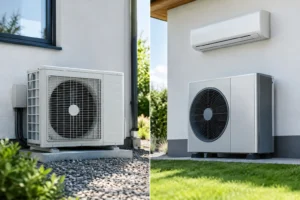
A wall-mounted air conditioning unit can turn a difficult-to-use bedroom, sunny conservatory or warm office into a comfortable space within minutes. However, the best wall mounted aircon units are not simply the most powerful or the cheapest systems available. The right choice depends on the size and layout of the room, how the building gains heat, when you use it and whether you also want efficient heating in colder months.
For properties across Essex, a properly selected split air conditioning system offers quiet cooling, reliable dehumidification and a far more permanent solution than a portable unit. The key is matching the system to the property before installation, rather than choosing a unit based on headline price alone.
What makes the best wall mounted aircon units?
Most domestic and small commercial wall-mounted systems are split units. An indoor unit is fitted high on an internal wall, while a compact outdoor condenser releases the heat removed from the room. The two parts are connected by insulated pipework and electrical cabling.
This design is generally quieter, more efficient and more discreet than portable air conditioners. It also avoids the need to leave a window open for an exhaust hose, which can undermine cooling, security and noise control.
The best system for a particular room will deliver four things: enough cooling capacity for peak summer conditions, low running costs, manageable sound levels and sensible control over temperature and airflow. High-quality inverter systems vary their output to maintain the set temperature rather than repeatedly switching fully on and off. This improves comfort and can reduce electricity use when the unit is correctly sized.
There is no single best make or model for every property. A compact bedroom, an open-plan kitchen and a busy salon all place very different demands on an air conditioning system.
Start with room size, but do not stop there
Cooling capacity is usually measured in kilowatts (kW). As a broad starting point, a well-insulated small bedroom may require around 2.0 to 2.5 kW, while a larger bedroom or modest living room may need 2.5 to 3.5 kW. Larger open-plan spaces, rooms with extensive glazing or commercial areas may require significantly more capacity.
These figures are only a guide. A room’s floor area tells part of the story, but the heat entering it tells the rest. South- and west-facing rooms in Essex can become particularly uncomfortable during prolonged warm spells, especially where large windows, rooflights or conservatories are involved.
A professional survey should also account for ceiling height, insulation, window size, shading, the number of occupants, heat-producing appliances and whether doors are usually open. A home office with computers running all day may need a different solution from a similarly sized guest bedroom.
Undersizing leaves a unit working at full output without ever properly cooling the room. Oversizing can be just as disappointing: the system may reach temperature too quickly, cycle inefficiently and remove less moisture from the air. Accurate sizing protects both comfort and long-term running costs.
One room or several?
For a single bedroom, office or reception area, a single-split system is often the most straightforward option. It pairs one indoor unit with one outdoor unit and gives dedicated control over that space.
Where several rooms need cooling, a multi-split system can connect multiple indoor units to one outdoor condenser. This can reduce the number of outdoor units and keep the outside of the property tidier. The trade-off is that multi-split systems are more complex to design and install, and the outdoor unit must be correctly sized for the connected rooms.
In some larger homes and commercial premises, individual single-split systems may offer better flexibility. If one unit requires maintenance, it does not affect every room. The best arrangement depends on the building, available outdoor space and how independently each room is used.
Efficiency matters beyond the purchase price
Air conditioning is often judged by installation cost, yet the ongoing cost of ownership deserves equal attention. Look for a strong energy rating and a modern inverter compressor. Seasonal efficiency ratings offer a more useful view of expected performance across a typical year than a single maximum output figure.
Features such as programmable timers, Wi-Fi controls and intelligent sensors can also make a practical difference. Being able to cool a bedroom before bedtime, or turn off an office system remotely, helps avoid unnecessary operation. These features are useful only when backed by good habits: setting the thermostat sensibly, keeping windows and doors closed during cooling, and using blinds or shading to reduce solar gain.
Many wall-mounted units also provide heat pump heating. This can be an efficient way to take the chill off a home office, garden room or small commercial space during spring and autumn. It should not automatically be viewed as a replacement for a whole-property heating system. Heat loss, occupancy patterns and existing heating arrangements all need consideration.
Noise levels and placement deserve careful attention
A quality indoor unit on a low fan setting can be very quiet, which is why wall-mounted air conditioning is well suited to bedrooms. Still, published noise figures should be considered alongside the proposed position. Airflow directed at the bed, desk or sofa can feel uncomfortable even when the unit itself is quiet.
Indoor units work best when mounted high on a clear wall with enough room for air to circulate. They should not be boxed in by furniture, curtains or shelving. A technician can normally position the unit to throw cooled air across the room rather than directly onto the people using it.
Outdoor unit placement is equally important. The condenser needs clear airflow, a secure base or wall brackets, and access for future servicing. It should be positioned with consideration for bedrooms, neighbouring properties and the practical route for pipework. The shortest route is not always the best route if it creates avoidable noise, visual impact or difficult maintenance access.
For flats, leasehold properties and some commercial sites, permission from the freeholder or managing agent may be required before installation. Planning restrictions can also apply in certain circumstances, particularly for listed buildings or properties in conservation areas. This should be checked before work is scheduled.
Why professional installation is essential
A wall-mounted system is not a plug-in appliance. It requires correct refrigerant pipework, condensate drainage, electrical connection, pressure testing and commissioning by an appropriately qualified engineer. Poor installation can cause leaks, reduced efficiency, water damage, excess noise and premature component failure.
The indoor unit must be fixed securely and level so condensate drains correctly. Pipework needs careful insulation and routing, while the outdoor unit must be stable and have suitable clearances. Once fitted, the system should be tested thoroughly and the controls explained clearly.
At Essex Air Conditioning, a free survey gives homeowners and business owners the opportunity to discuss the room, preferred unit position, expected use and budget before receiving a no-obligation quote. It is the most reliable way to avoid paying for capacity or features that do not suit the property.
Maintenance keeps a good unit performing well
Even the best wall mounted aircon unit will lose performance if it is neglected. The washable filters in the indoor unit should be cleaned regularly, particularly in homes with pets or in busy workplaces. Dirty filters restrict airflow, reduce efficiency and can affect indoor air quality.
Professional maintenance should check the condition of the indoor and outdoor coils, drainage, electrical components, refrigerant circuit and overall operation. This helps identify small issues before they become a breakdown during the hottest week of the year.
For landlords and commercial operators, planned maintenance also supports reliability for tenants, staff and customers. A system that cools consistently is far easier to manage than an emergency repair callout when a server room, retail space or top-floor office overheats.
Choosing with confidence
The best choice is usually a quiet, correctly sized inverter split system from an established manufacturer, installed in the right location and maintained properly. Brand reputation matters, but the survey, design and workmanship matter just as much.
Before making a decision, think about the room at its hottest, not simply how it feels on an average day. A clear assessment of heat gain, noise expectations, outdoor unit location and future maintenance will lead to a system that provides dependable comfort year after year.