If your rooms feel sticky even when the temperature looks reasonable, humidity is usually the culprit. A common question we hear from home and business owners is: can air conditioning reduce humidity? The short answer is yes – but how well it does that depends on the system, the setting, the room, and the condition of the equipment.
Air conditioning is not just about cooling the air. A properly sized and well-maintained system also removes moisture as it runs, which is one of the main reasons an air-conditioned space feels fresher and more comfortable than one that is simply cooler.
Can air conditioning reduce humidity in everyday use?
Yes, it can. When warm indoor air passes over the cold evaporator coil inside an air conditioning system, moisture in that air condenses into water. That water then drains away, leaving the air drier before it is circulated back into the room.
This is why a good air conditioning system often makes a noticeable difference during muggy weather. You are not only lowering the temperature. You are also reducing the amount of moisture suspended in the air, which helps the room feel less clammy.
In practical terms, lower humidity can make a property more comfortable, help reduce condensation on windows and surfaces, and create a better indoor environment for sleeping, working, or serving customers. For many properties, especially in warm and humid spells, that moisture removal is just as valuable as the cooling itself.
How air conditioning removes moisture
The process is straightforward, even if the engineering behind it is more involved. Your system draws in warm air from the room. That air passes across a cold coil, where heat is removed. As the air cools, its ability to hold moisture drops, and some of that moisture turns into liquid water.
That collected water flows into a condensate tray and out through a drain. The system then sends the cooled, drier air back into the space.
This is why you may see water dripping from an external condensate pipe or collecting through a drain line. In most cases, that is a normal sign that the unit is removing humidity as intended.
Not every system removes moisture with the same efficiency. Some are designed with better humidity control than others, and installation quality plays a major part. If the unit is badly sized or poorly positioned, performance can suffer even if the equipment itself is sound.
Why your property can still feel damp with the AC on
This is where the answer becomes more nuanced. While air conditioning can reduce humidity, it does not automatically solve every damp or sticky feeling indoors.
One common issue is an oversized system. Many people assume a more powerful unit is always better, but an oversized air conditioner can cool a room too quickly and switch off before it has had enough running time to remove much moisture. The air reaches the target temperature, but the humidity stays higher than it should.
A second issue is short cycling, where the system turns on and off too frequently. That can happen because of incorrect sizing, thermostat placement, or mechanical faults. Again, the result is reduced moisture removal.
Poor maintenance is another frequent cause. Dirty filters, blocked coils, clogged drains, or low refrigerant levels can all affect how well the system works. If an air conditioning unit is not operating efficiently, its ability to remove humidity can drop as well.
Then there is the building itself. If a property has poor insulation, uncontrolled ventilation, leaks, or a persistent damp problem, air conditioning may improve comfort without fully dealing with the root cause. In those cases, the moisture is being introduced faster than the system can reasonably remove it.
What humidity level should you aim for?
For most homes and commercial spaces, indoor relative humidity between 40% and 60% is generally considered comfortable. Once levels climb above that, rooms can begin to feel stuffy, windows may collect condensation, and mould risk can increase in certain areas.
If humidity drops too low, the air can feel dry and uncomfortable. That is less common in the UK than excess moisture, but it can happen in tightly controlled environments.
The ideal target depends on the property and how the space is used. A bedroom, office, shop floor, server room, salon, or restaurant all have slightly different comfort and operational demands. This is why system selection matters. A domestic unit that works perfectly in a bedroom may not be the right answer for a busy commercial setting with high footfall and regular door opening.
Can air conditioning replace a dehumidifier?
Sometimes yes, sometimes no.
If your main issue is seasonal humidity during warmer weather, a well-specified air conditioning system may be enough on its own. It cools the room and removes a useful amount of moisture at the same time, which makes it a very practical solution for day-to-day comfort.
If the problem is persistent dampness, condensation caused by poor ventilation, or moisture in a space that does not need much cooling, a dedicated dehumidifier may be the better tool. This often applies to basements, storage areas, utility rooms, or properties with underlying building issues.
In some cases, the best approach is a combination of measures. That could include air conditioning for comfort cooling, improved ventilation for fresh air movement, and a separate dehumidification strategy where moisture loads are unusually high.
A proper assessment matters here. There is no benefit in fitting a system that cools well on paper but leaves the property uncomfortable in real use.
Signs your air conditioning is not reducing humidity properly
A few warning signs tend to appear when moisture removal is underperforming. Rooms may still feel sticky even when they are cool. You may notice a musty smell, condensation on windows, or slow drying of laundry indoors. In commercial spaces, staff or customers may comment that the air feels heavy rather than fresh.
There may also be visible clues around the unit. Water leaks, blocked drains, unusual cycling patterns, weak airflow, or a sudden drop in performance can all point to maintenance or installation issues.
If you are seeing those signs, it is worth having the system checked. In many cases, the fix is not complicated, but leaving it too long can lead to higher running costs and a less reliable unit.
Installation and maintenance make the biggest difference
Humidity control is not only about buying an air conditioner. It is about choosing the right type of system, sizing it correctly, and keeping it in good working order.
A professional survey should look at room size, heat gain, insulation, occupancy, equipment loads, and how the space is actually used. That is especially important in Essex properties where layout, glazing, and occupancy can vary widely between homes, retail units, offices, and larger commercial sites.
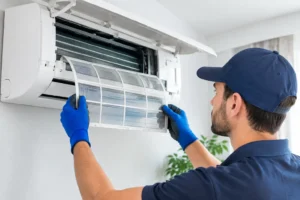
Once installed, regular maintenance helps preserve performance. Filters need cleaning or replacing. Coils need to stay clean. Drain lines should remain clear. Refrigerant levels and electrical components need checking. These routine steps help the system cool properly and continue removing moisture efficiently.
For landlords and business owners, maintenance is also about avoiding disruption. A unit that struggles through summer humidity is more likely to cause complaints, discomfort, and avoidable repair costs.
Is air conditioning worth it for humidity control?
For many people, yes. If you want a space to feel cooler, cleaner, and less muggy, air conditioning is one of the most effective options available. The key point is that comfort is not only measured in degrees. A room at a modest temperature can still feel unpleasant if humidity is too high.
That said, expectations should be realistic. Air conditioning can reduce humidity very effectively when it is correctly designed for the property and maintained properly. It is not a cure-all for every damp issue, nor should it be used to mask structural problems or poor ventilation.
What it does offer is consistent, controllable improvement in indoor comfort. For homes, that can mean better sleep and less condensation. For businesses, it can mean a more pleasant environment for staff and customers, along with better conditions for equipment and stock in some settings.
If your property feels sticky, stale, or uncomfortable, the answer may not be to simply turn the temperature lower. Often, the real improvement comes from getting humidity under control with a system that is designed and installed properly. That is where informed advice makes all the difference.