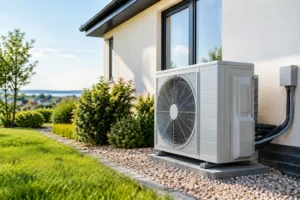
A south-facing top-floor flat can become difficult to live in during a hot spell, particularly when bedrooms hold heat long after sunset. So, can tenants request air conditioning? Yes. A tenant is fully entitled to ask, but a landlord is not usually under a general legal duty to install air conditioning in a rented home.
The outcome will depend on the tenancy agreement, the type of system proposed, the condition of the property and whether both parties can agree a practical arrangement. For tenants and landlords in Essex, the best results usually come from raising the issue early, putting the request in writing and considering a professionally designed solution rather than an improvised one.
Can tenants request air conditioning from a landlord?
Yes. There is no rule preventing a tenant from asking their landlord to provide air conditioning, whether the concern is a hot bedroom, a home office that becomes uncomfortable or a property that regularly overheats in summer. A clear request gives the landlord an opportunity to assess the property and decide whether installation is appropriate.
However, asking is different from requiring. Unlike heating, ventilation, safe electrics and essential repairs, air conditioning is not generally a standard statutory requirement for privately rented homes in England. A landlord does not have to agree simply because a tenant would prefer cooling.
That said, excessive indoor heat can be a genuine housing concern in some homes. If a property has persistent overheating caused by its design, poor ventilation, large areas of glazing or inadequate shading, the landlord should take the concern seriously. The right response may be air conditioning, but it could also involve ventilation improvements, shading, insulation changes or repairs that reduce unwanted heat gain.
Start with the tenancy agreement
Before requesting a fixed system, tenants should check their tenancy agreement. Most agreements prohibit alterations without the landlord’s prior written consent. This normally includes drilling through walls, installing external condenser units, adding new electrical circuits or mounting indoor units.
A portable air conditioning unit is different because it does not permanently alter the building. Even then, tenants should use it carefully. A hose fitted through an open window can create a security issue, while poorly managed condensate can damage flooring or walls. The unit should be suitable for the room size and plugged directly into a suitable socket, rather than an overloaded extension lead.
For a fixed split air conditioning system, written permission is essential before any work begins. Installing equipment without consent could breach the tenancy agreement and leave the tenant responsible for reinstatement costs or damage.
When a landlord may be willing to say yes
Landlords often take a more positive view when a proposal is sensible, specific and adds long-term value to the property. Modern wall-mounted systems can provide efficient cooling in summer and, where appropriate, energy-efficient heating at other times of year. That can make the home more comfortable for current occupants and more appealing to future tenants.
The case is often stronger where there is a clear problem to solve. Examples include a loft conversion bedroom that becomes excessively hot, a home working space with heat-producing equipment, or a flat with limited natural ventilation. A carefully sized system is more likely to be accepted than a request with no detail on capacity, positioning or cost.
Landlords will also consider practical matters. They may need consent from a freeholder or managing agent if the property is leasehold. Flats can have restrictions on external units, noise, drainage routes and changes to the building’s appearance. Listed buildings and homes in protected areas may need additional checks before work starts.
How to make a useful request
A short, polite written request is usually the right starting point. Explain which rooms overheat, when the problem occurs and how it affects day-to-day living. If possible, include indoor temperature readings taken over several hot days. This makes the discussion about the property rather than a general preference.
Then ask whether the landlord would consider a survey and quotation for a fixed system. A professional survey can establish whether air conditioning is suitable, where the indoor and outdoor units could be located, how condensate would drain and what electrical work is required. It also gives the landlord a realistic cost before they make a decision.
Tenants should avoid presenting installation as a fait accompli. The landlord may be open to the idea but wish to select the contractor, approve the equipment or choose a different location for the outdoor unit. A cooperative approach protects both sides and prevents delays.
Who pays for air conditioning in a rented property?
There is no single answer. In many cases, a landlord who sees air conditioning as a property improvement will fund the installation and remain responsible for the asset. This is the cleanest arrangement, particularly where the system will remain in place after the tenant leaves.
Sometimes a tenant may offer to contribute towards the cost, especially if they have a particular need for cooling or want a higher-specification system. If this is agreed, both parties should set out the terms in writing. The agreement should cover who owns the equipment, who arranges servicing, what happens if it fails and whether the tenant must contribute to removal or reinstatement at the end of the tenancy.
A rent increase should not be assumed. It may form part of a new agreement, but it must be discussed and agreed properly rather than added informally because a system has been installed.
Installation needs more than a unit on the wall
Air conditioning should be designed around the space, not selected on headline price alone. An undersized system may struggle during the hottest weather, while an oversized unit can cycle inefficiently and make the room feel less comfortable. Room size, insulation, glazing, ceiling height, orientation and how the room is used all affect the correct specification.
Fixed systems also need safe electrical provision and professional installation. Refrigerant work must be carried out by appropriately qualified engineers, and condensate needs a reliable drainage route. External units should be positioned with consideration for noise, access for maintenance and neighbouring properties.
For landlords, planned maintenance is part of protecting the investment. Filters, coils, drainage and overall performance need checking regularly. A neglected system can lose efficiency, develop odours or suffer avoidable breakdowns just when tenants need it most.
What if the landlord refuses?
A refusal does not necessarily mean the request was unreasonable. The building may not allow an external unit, the landlord may be unable to obtain freeholder permission, or the cost may not be viable at that point. Ask for the reason, as it may identify an alternative worth considering.
For example, a landlord might agree to improved ventilation, solar-control blinds, window restrictors where safe, or a portable unit rather than a permanent installation. These options will not suit every property, but they can reduce overheating without structural work.
If a tenant believes the heat is making the property unsafe or unfit to occupy, they should keep a written record of temperatures and communications, and seek independent housing advice. This is different from a request for an added comfort feature. Serious property-condition concerns should be assessed on their own facts.
Commercial tenants should check their lease
For offices, shops and other commercial premises, the lease is especially significant. It may state who is responsible for cooling equipment, repairs, dilapidations, service charges and landlord approvals for alterations. A business tenant should not assume that a landlord-managed building system can be changed, or that adding a standalone system is permitted.
Overheating can affect staff comfort, customer experience and equipment reliability, so a planned discussion with the landlord or managing agent is worthwhile. A survey can help establish whether repair, replacement, supplementary cooling or improved ventilation is the most cost-effective route.
A well-made request gives everyone a better basis for a decision. If your rented property in Essex is too warm, document the issue, check the agreement and ask for written consent before any installation is considered. Essex Air Conditioning can provide a clear survey and no-obligationquotation, helping tenants and landlords understand what is practical for the building before committing to work.