If you are looking into cooling your house properly, a Chelmsford home aircon survey is the step that makes everything else easier. It is where the job stops being guesswork and starts becoming a clear plan based on your property, your layout and how you actually use each room. For homeowners, that matters because the right system can feel discreet, efficient and reliable, while the wrong one can be noisy, oversized or simply poor value.
A proper survey is not a sales exercise dressed up as technical advice. It should be a practical visit that answers the questions most people have at the start. Which rooms need cooling most? Is heating from the same system worth it? Where will the indoor and outdoor units go? What level of disruption should you expect, and what is the likely cost?
Why a Chelmsford home aircon survey matters
Every home is different, even when houses look similar from the outside. A modern flat with large south-facing windows behaves very differently from a period property with thicker walls and smaller rooms. Loft conversions, open-plan kitchen extensions and garden-facing bedrooms can all create hot spots that need a different approach.
That is why an air conditioning system should not be quoted properly from a few photos alone. Photos can help with first conversations, but they do not tell the full story about ceiling height, insulation, available pipe routes, consumer unit access or the practicalities of placing an outdoor condenser in a sensible location.
A home survey also helps avoid a common mistake – sizing the system by instinct rather than calculation. Bigger is not automatically better. An oversized unit may cool the room quickly, but it can cycle on and off more often, reducing efficiency and comfort. An undersized unit will struggle in hotter weather and can end up running harder for longer. The survey is there to get that balance right.
What happens during the home survey
In most cases, the visit starts with a conversation rather than a tape measure. A good installer will want to know which rooms become uncomfortable, whether you need cooling during the day or at night, and whether quiet operation is a priority. For some households, the main issue is sleeping through summer heat. For others, it is a home office that becomes unusable by mid-afternoon.
After that, the surveyor will inspect the spaces you want to cool and look at the property as a whole. They will usually assess room sizes, glazing, sun exposure, insulation levels and any internal heat loads. In simple terms, they are working out how much cooling power each room is likely to need under real conditions, not ideal ones.
They will also look at installation routes. This is one of the most useful parts of the process because it turns a rough idea into something realistic. Pipework, drainage and electrical connections all need to be planned carefully. In many homes, the best technical option and the best visual option are not exactly the same, so the survey is where sensible compromises are discussed.
The key things your surveyor will check
Room usage and heat gain
Bedrooms, lounges and home offices all place different demands on a system. A bedroom may need very quiet night-time cooling with simple controls. A kitchen-diner may need to cope with solar gain, cooking heat and a lot of open space. A survey should consider how each room is used rather than treating the whole house as one uniform area.
Indoor unit positions
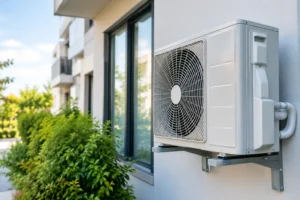
Placement matters more than many people expect. Units should deliver good airflow without blowing directly onto a bed, sofa or desk for hours at a time. The surveyor should also consider how the unit will look in the room and whether there is enough practical wall space to install it neatly.
Outdoor unit location
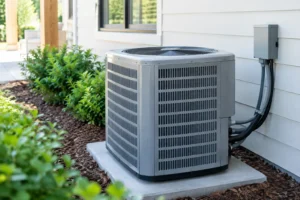
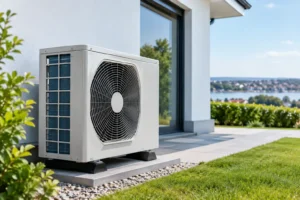
The condenser needs a position that works for performance, access and appearance. It should have suitable airflow, be mounted securely and be placed where maintenance can be carried out safely in future. In tighter residential settings, noise and neighbour considerations should be handled sensibly from the start.
Electrical supply and drainage
Air conditioning is not just a matter of hanging a unit on a wall. The installer needs to confirm that the electrical setup is suitable and that condensate can be drained properly. In some houses this is straightforward. In others, it needs a more considered route to keep the installation tidy and reliable.
What you should ask during a Chelmsford home aircon survey
The survey is not only for the contractor’s benefit. It is your chance to understand what you are buying and why one option may suit your property better than another.
Ask which system type fits your rooms best. For many homes, wall-mounted split systems are the practical choice because they are efficient, compact and cost-effective. In some layouts, a multi-split setup may suit better if you want several indoor units connected to one outdoor unit. That can save outdoor space, but it is not always the cheapest route, so the right answer depends on the property.
It is also worth asking about noise levels, both indoors and outside. Most modern systems are far quieter than people expect, but quiet matters more in bedrooms and close-knit residential streets. A professional survey should deal with that clearly rather than brushing it aside.
You should also ask about running costs. No honest contractor will pretend there is one fixed figure for every house because usage patterns vary. A system used for a couple of hours before bed is different from one cooling a home office all day. Still, you should be given a realistic explanation of efficiency, expected performance and how to use the system well.
Common concerns homeowners have
A lot of people in Chelmsford put off arranging a survey because they assume the process will be intrusive or that air conditioning is only suitable for very large homes. In practice, many domestic systems are far more discreet than expected. A survey often reassures homeowners that a clean, tidy installation is possible without major upheaval.
Cost is another obvious concern, and rightly so. The survey should make the price easier to understand, not more confusing. Costs vary depending on system type, number of rooms, installation complexity and equipment choice. A simple single-room installation is very different from cooling multiple bedrooms and a living area. What matters is getting a recommendation that fits your needs rather than being pushed towards more equipment than you require.
Planning and appearance can also come up, particularly in more sensitive properties or where homeowners are keen to keep external changes to a minimum. This is exactly where an experienced local contractor adds value. They can spot likely issues early and recommend practical positions that work with the property rather than against it.
What a good quote should look like after the survey
Once the survey is complete, the next step should be a clear, no-obligation quotation. It should explain what system is being recommended, where the units are likely to go and what is included in the installation.
A strong quote should not rely on vague wording. It should be easy to see whether electrical work is included, whether condensate pumps are needed, how many indoor units are being supplied and what level of commissioning and handover is part of the job. Clarity at this stage prevents disappointment later.
This is also where experience matters. A dependable contractor will not simply quote the cheapest possible setup to win the work. They will recommend what is appropriate for the property and be honest about trade-offs. Sometimes a lower upfront price means more visible trunking, less flexibility or a poorer long-term result. Sometimes a slightly higher investment gives a neater, quieter and more efficient installation.
Choosing the right local contractor
When booking a home survey, look for a company that understands domestic installations rather than only commercial work. Homes need a different approach. The technical side still matters, but so do appearance, disruption, room comfort and clear communication.
You want a contractor who is comfortable explaining options in plain terms, not hiding behind jargon. The survey should leave you with more certainty, not more confusion. Essex Air Conditioning takes that straightforward approach because homeowners need practical answers, realistic recommendations and workmanship they can trust.
A local team also tends to understand the types of homes found across Chelmsford and the surrounding Essex area. That does not replace a proper survey, but it helps when planning installations that suit common house styles, extensions and residential settings.
A home air conditioning system should feel like a well-judged improvement to your property, not a leap into the unknown. A well-run survey gives you the confidence to decide based on facts, not assumptions, and that is usually the point where the whole project starts to feel simple.