A failing air conditioning system rarely chooses a quiet time to cause disruption. It is usually during a heatwave, a busy trading period or when staff and customers are already feeling the effects of a poorly ventilated space. This commercial aircon replacement guide explains how to recognise when replacement is the sensible option, how to plan the project properly and what to expect from a professional installation.
For businesses across Essex, replacing commercial air conditioning is not simply a case of swapping one unit for another. The right decision can reduce running costs, improve comfort and give your premises a more dependable system for years to come.
When should a commercial aircon system be replaced?
Age matters, but it should not be the only deciding factor. Many well-maintained systems continue to operate effectively for 10 to 15 years, sometimes longer. However, an older unit may become increasingly expensive to run and harder to repair, even if it still produces cool air.
Frequent breakdowns are a clear warning sign. One repair callout may be worthwhile, but repeated faults, refrigerant leaks, electrical issues or failed components can quickly add up. If repairs are becoming regular and the unit remains unreliable, replacement often offers better long-term value.
Rising electricity costs can point to a system that is no longer working efficiently. Older air conditioning equipment typically uses more power to achieve the same result as a modern, correctly specified unit. This is particularly relevant for shops, offices, salons, restaurants, server rooms and other commercial spaces where air conditioning runs for much of the day.
Uneven temperatures also deserve attention. If one area is too cold while another remains warm, the issue may be poor system design, ageing equipment or a change in how the building is used. A growing team, altered layout, new equipment or an extension can all mean the existing system is no longer correctly sized.
Commercial aircon replacement guide: start with a survey
A proper site survey is the foundation of a successful replacement. Choosing a unit based only on the floor area can lead to disappointing performance. Commercial premises have different heat loads, occupancy patterns, ceiling heights and operating hours, all of which affect the capacity and type of system required.
An experienced contractor will assess the rooms being cooled or heated, the amount of glazing, solar gain, insulation, equipment generating heat and the number of people normally present. They should also consider where indoor and outdoor units can be installed, how pipework will be routed and whether the electrical supply is suitable.
This is the point to discuss operational priorities. A quiet office may need low-noise indoor units. A restaurant may need a solution that works alongside its ventilation and extraction arrangements. A warehouse office may need fast, reliable heating as well as cooling. For a landlord, ease of maintenance and tenant comfort may be the main concerns.
A free, no-obligation survey gives you the opportunity to compare practical options before committing to a project. It also helps prevent unexpected changes once installation is under way.
Select the right system for the premises
There is no single best commercial air conditioning system. The correct choice depends on the building, budget and the level of control required.
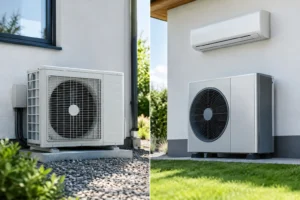
For a small office, retail unit or individual treatment room, a wall-mounted split system can be an efficient and cost-conscious solution. It provides targeted temperature control and is often straightforward to install where there is a suitable external location for the condenser.
Larger premises or buildings with several rooms may benefit from multi-split, VRF or VRV systems. These allow multiple indoor units to operate from fewer outdoor units, with more flexibility across different zones. They can cost more initially, but they are often a better fit where separate offices, meeting rooms or customer areas need individual control.
Ceiling cassette units are popular in open-plan offices, shops and commercial spaces with suspended ceilings. They distribute air in several directions and keep wall space clear. Ducted systems can offer a discreet finish, although they require sufficient ceiling void space and more involved installation work.
Do not focus on purchase price alone. A cheaper system that is undersized, poorly located or difficult to maintain can become more costly over its working life. Premium equipment, fitted correctly, is usually the more dependable investment.
Consider heating as well as cooling
Most modern commercial air conditioning systems are heat pumps, meaning they can cool spaces in summer and provide efficient heating during colder months. This can reduce reliance on older electric heaters and improve comfort in areas that are difficult to heat evenly.
The balance of heating and cooling required matters. A south-facing office with extensive glazing may have significant summer cooling demand, while a draughty retail premises may place more demand on heating in winter. Your replacement system should be designed for both conditions rather than only the problem that prompted the enquiry.
Plan installation around business operations
Commercial replacement work needs careful scheduling. Closing a shop, disrupting clients or leaving staff without a comfortable working environment can carry a real cost. A professional contractor should discuss access, working hours and how to minimise disruption before work starts.
Some installations can be completed outside normal trading hours or in stages. If several systems need replacing, it may be possible to keep parts of the building operational while the work is carried out elsewhere. The right approach depends on the site and the nature of your business.
You should also establish whether any internal redecoration, ceiling alterations, electrical upgrades or external permissions may be needed. For leased premises, the landlord may need to approve outdoor-unit locations, pipework routes or visible changes to the building. Addressing these details early protects the project timetable.
At handover, ask for a clear explanation of the controls, zoning and recommended settings. A system can only deliver its best efficiency when staff know how to use it properly. Constantly changing temperatures or running cooling and heating unnecessarily will increase energy use.
Budget for the full cost, not just the equipment
A transparent quote should cover the equipment, installation labour, pipework, electrical connections, condensate drainage, commissioning and removal of old equipment where required. The final figure will vary according to the system type, access conditions, number of indoor units and complexity of the installation.
Replacement can sometimes reuse parts of an existing installation, but this is not always advisable. Old pipework may be unsuitable for new equipment, contaminated or incorrectly sized. Reusing it can reduce upfront costs in some cases, yet replacing it may provide greater reliability and help protect the manufacturer warranty. This should be assessed on site rather than assumed.
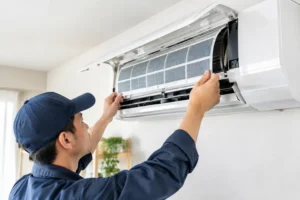
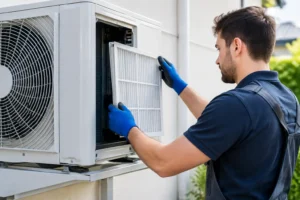
It is also wise to allow for ongoing maintenance. Planned servicing helps maintain efficiency, identifies developing faults early and supports the system’s expected lifespan. For commercial equipment, maintenance is not an optional extra when reliable comfort is part of day-to-day operations.
Check compliance and installation standards
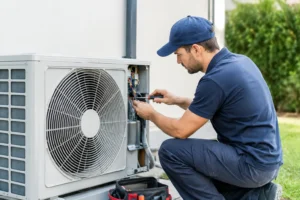
Commercial air conditioning installation involves more than fitting units to a wall. Refrigerant work must be completed by appropriately qualified engineers, and the system should be properly pressure tested, commissioned and documented. Depending on the equipment and refrigerant charge, there may also be specific obligations around leak checks and records.
Electrical safety, condensate drainage and outdoor-unit positioning all need professional attention. Poor drainage can cause internal water damage, while badly positioned condensers may create avoidable noise issues or restrict airflow. These details are often where the quality of workmanship becomes most apparent over time.
Keep all handover documents, maintenance records and warranty information in one place. This is useful for facilities teams, landlords and future repairs, and it makes it easier to demonstrate that the system has been looked after.
Get a replacement that supports the way you work
The best replacement is not necessarily the largest or most expensive system. It is the one that suits your premises, keeps occupants comfortable, operates efficiently and can be maintained without unnecessary disruption. For businesses in Essex, working with a local contractor also means practical support is close at hand when servicing or repairs are needed.
Essex Air Conditioning can assess your current equipment, explain the options in clear terms and provide a no-obligation quote for a system that fits your commercial space. A well-planned replacement gives your business more than cooler rooms – it gives you dependable comfort when your team and customers need it most.