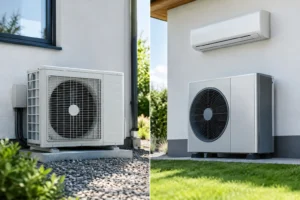
A bedroom that stays warm long after sunset, a south-facing office that becomes difficult to work in, or a shop floor that feels stuffy by midday all call for more than a portable fan. This Daikin split system review looks at what makes the brand a frequent choice for homes and businesses in Essex, as well as the practical points to consider before arranging an installation.
Daikin has a long-standing reputation in air conditioning, and its wall-mounted split systems are widely used for single rooms, small offices, retail spaces and larger properties using multiple indoor units. The appeal is straightforward: effective cooling, efficient heating in colder months, low noise levels and controls that are simple to use. The best result, however, depends as much on the survey, sizing and installation quality as it does on the unit itself.
Daikin split system review: the overall verdict
For most domestic and light-commercial applications, Daikin split systems are a strong option. They are generally quiet, efficient and well suited to the changeable UK climate, where many customers want cooling in summer but also welcome economical heat during spring and autumn.
The brand offers systems across different price points, so there is usually a suitable option whether the priority is a comfortable bedroom, an open-plan living area or dependable climate control for a workplace. Higher-specification models add improved filtration, advanced sensors, smarter controls and particularly high efficiency ratings. More straightforward ranges can still provide excellent day-to-day comfort without paying for features that will not be used.
Daikin is not always the lowest-cost choice at the outset. A cheaper unit may look attractive on a quote, particularly for a room that is only used occasionally. Yet a properly selected Daikin system can offer good long-term value through efficient running, reliable operation and access to trained engineers and replacement parts. The right decision should be based on the room, usage pattern and installation requirements rather than brand name alone.
What a Daikin split system does well
Efficient cooling and useful heating
A split system moves heat rather than producing it in the same way as an electric heater. In cooling mode, it removes heat from the room and releases it outside. In heating mode, it reverses that process. This makes it a practical source of fast, controllable warmth for occupied rooms, particularly when central heating is not yet on or when one area needs to be heated independently.
Modern inverter technology is central to this performance. Rather than continually switching fully on and off, the system adjusts its output to maintain the selected temperature. In practice, that means steadier comfort, lower energy use than a less sophisticated on-off system and less intrusive operation.
Actual running costs will always depend on electricity tariffs, insulation, set temperatures, room size and how long the unit operates. A system set to an extreme temperature and left running with windows open will not perform economically, whatever the manufacturer. A sensible setting, normally around 21-24°C for cooling, makes a noticeable difference.
Low noise for bedrooms and workspaces
Noise is one of the first concerns for homeowners considering air conditioning in a bedroom. Many Daikin indoor units are designed to run quietly at lower fan speeds, which is a real advantage overnight. The outdoor unit also needs careful positioning, both for practical access and to keep sound away from bedroom windows, neighbouring boundaries and quiet seating areas.
Quiet performance should not be confused with no sound at all. Fan speed, demand, outdoor location and the condition of the installation all affect what is heard. A professional installer will discuss these points during a survey, rather than simply choosing the nearest external wall.
Responsive temperature control
A correctly sized split system can cool a room far more effectively than a portable unit. Because the heat is discharged outdoors, it does not rely on a hose through a partly open window. This is particularly useful in bedrooms, loft conversions, garden offices and commercial rooms with high solar gain.
Daikin systems also provide good control over airflow direction and fan speed. That helps avoid the common complaint of cold air blowing directly onto a desk, sofa or bed. Positioning the indoor unit correctly remains essential. Even an excellent system can feel uncomfortable if its air throw is aimed at the main seating position.
Options for different property types
A single-split system connects one indoor unit to one outdoor unit. This is usually the most cost-effective choice for one key room, such as a main bedroom, home office, conservatory or small shop.
A multi-split arrangement allows several indoor units to connect to one outdoor unit. It can be a neat solution for a house with several bedrooms or an office with separate rooms where external space is limited. The trade-off is that multi-split systems are more complex to design and install, and are not automatically the best-value route for every property. In some buildings, individual systems make more sense for flexibility and future servicing.
Points to consider before choosing Daikin
The initial price is only one part of the decision
Supply and installation costs vary considerably. Capacity, pipework routes, electrical work, access equipment, wall construction, condensate drainage and the number of indoor units all affect the final figure. It is sensible to compare like-for-like quotations, including the model range, warranty terms, installation scope and commissioning.
The lowest quote can sometimes omit the details that protect performance and appearance: suitable anti-vibration mounts, a tidy pipework route, correctly sized electrical protection or proper drainage. These are not cosmetic extras. They influence noise, reliability and how well the system performs over time.
Features should match the way you use the room
Wi-Fi control is useful for customers who want to cool a bedroom before bedtime, manage an office outside opening hours or check settings remotely. Advanced air purification and comfort sensors may be worthwhile for regularly occupied rooms. For a rarely used spare room, a simpler unit could be the more sensible investment.
There is no universal ‘best’ Daikin model. A survey should establish the heat load rather than selecting capacity based on floor area alone. Large windows, roof orientation, insulation, occupants, computers, kitchen equipment and ceiling height can all change the calculation.
Maintenance still matters
Daikin systems are dependable, but they are not fit-and-forget appliances. Filters need regular cleaning, especially in rooms with pets, dust or frequent use. Blocked filters restrict airflow, reduce efficiency and can cause unpleasant odours.
Professional maintenance is equally valuable. An engineer can inspect electrical connections, clean the coil and condensate system, check performance and identify issues before they become a loss of cooling or a water leak. For businesses, planned maintenance also supports a more reliable environment for staff and customers during the busiest periods.
Is Daikin right for your property?
Daikin is a particularly good fit when you want a quiet, efficient system from an established manufacturer and expect to use it regularly for both cooling and heating. It is often a sensible choice for family homes, landlords improving a rental property, beauty salons, clinics, offices and retail premises where comfort affects how people sleep, work or spend time.
It may be less compelling when budget is the only deciding factor or where the room has a wider underlying problem, such as poor insulation, inadequate ventilation or significant solar gain through unshaded glazing. Air conditioning can manage heat effectively, but it should be part of a sensible overall approach to the space.
For Essex properties, the most useful next step is a site survey. Essex Air Conditioning can assess the room, discuss the intended use and recommend a Daikin system with the right capacity and installation approach. A clear, no-obligation quotation should give you confidence in the equipment and the work behind it.
A good air conditioning system should fade into the background: the room stays comfortable, the controls make sense and the unit runs quietly when you need it. Choosing the right Daikin model and having it installed properly is what makes that everyday comfort possible.