A few hot nights in a British summer used to feel like an inconvenience. Now, for many households, they are becoming a pattern. Bedrooms stay warm long after sunset, loft rooms turn stuffy by mid-afternoon, and older homes can hold heat far more than people expect. That is exactly why the future of home cooling matters more than it did even five years ago.
For homeowners, landlords and small business owners, cooling is no longer a luxury purchase based on a rare heatwave. It is increasingly part of making a property comfortable, practical and ready for changing weather. The next generation of home cooling will not just be about lowering the temperature. It will be about energy efficiency, better air quality, quieter operation and systems that work harder without wasting money.
What the future of home cooling really looks like
The biggest shift is simple. Home cooling is moving away from bulky, inefficient systems and towards targeted, high-efficiency air conditioning that can cool specific spaces precisely when needed. That matters in the UK, where many properties do not need whole-house cooling in the way some hotter countries do.
Instead, the future is likely to favour flexible systems that match the way people actually live. A bedroom may need cooling overnight. A home office may need it during working hours. A garden-facing extension may need extra support in the afternoon sun. Modern systems are increasingly designed around those real patterns of use.
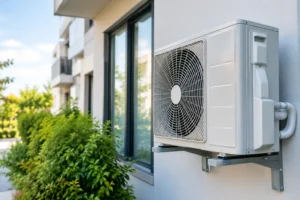
This is where wall-mounted split systems and multi-split installations are likely to continue growing in popularity. They offer strong performance, lower running costs than many people expect, and much better control over individual rooms. For many properties, that makes far more sense than a one-size-fits-all approach.
Efficiency will lead every buying decision
Rising energy costs have changed the conversation. Homeowners are now asking two questions at the same time: will it keep the room cool, and what will it cost to run?
That is shaping the future of home cooling more than any marketing trend. Newer air conditioning systems are becoming more efficient because they use inverter technology to adjust output rather than constantly switching on and off at full power. In practical terms, that means steadier temperatures, less wasted energy and a more comfortable room.
Efficiency ratings will continue to matter, but they should never be looked at in isolation. A highly rated unit that is poorly sized for the room will not deliver the result people expect. Too small, and it will struggle. Too large, and it may cycle inefficiently and cost more than necessary. Proper design and installation will remain just as important as the equipment itself.
For Essex properties, this is especially relevant because housing stock varies so widely. A compact flat, a detached family home and a converted loft space all behave differently in warm weather. Good cooling starts with an honest assessment of the building, not just the brochure.
Smart controls will become standard
One of the clearest changes ahead is the move towards smarter control. Many modern systems already allow users to adjust temperatures by app, set schedules and monitor usage remotely. Over time, that is likely to become standard rather than a premium feature.
The benefit is not gimmick value. It is practical control. If you can cool a bedroom before bedtime rather than running the system all evening, you use less energy. If a landlord can manage settings in a rental property more clearly, costs and misuse can be reduced. If a business owner can programme cooling around opening hours, comfort improves without unnecessary running time.
Smart controls also make maintenance easier. Some systems can flag faults or performance issues earlier, which helps avoid the kind of gradual decline that often goes unnoticed until a unit stops working on the hottest day of the year.
That said, smart features should support reliability, not complicate it. Most customers still want straightforward systems that are easy to operate day to day. The best setups will combine simple user control with intelligent background efficiency.
Cooling and air quality will be treated together
The future of home cooling is not only about temperature. Indoor air quality is becoming part of the same conversation. People are spending more time indoors, and many are more aware of dust, humidity, stale air and general comfort than they were in the past.
Modern air conditioning can help by filtering airborne particles and improving airflow within a room. Some systems also offer better humidity control, which can make a room feel more comfortable even before the thermostat reading changes significantly. In bedrooms, that can make a real difference to sleep quality. In home offices, it can improve concentration and general comfort through the day.
There is a limit, though. Air conditioning is not a full replacement for proper ventilation, and it should not be sold as one. In some properties, the best result comes from looking at cooling and ventilation together. That is particularly true in tightly sealed buildings, extensions and converted spaces where airflow may already be limited.
Noise reduction will matter more than ever
As more homes adopt air conditioning, expectations around sound levels will rise. People do not want a system that keeps them awake, distracts them during meetings or dominates a quiet living space.
Manufacturers are already improving this. Indoor units are becoming quieter, outdoor condensers are being designed with lower noise output, and installation quality plays a major role in how discreet a system feels in use. A well-installed modern unit can be remarkably unobtrusive.
This is one area where cutting corners tends to backfire. Poor placement, weak mounting or the wrong unit for the space can make even decent equipment feel noisy. Future demand will favour systems that are not just powerful and efficient, but calm in the background.
Installation quality will separate good results from disappointing ones
As cooling becomes more common in homes across Essex, more buyers will realise that the installer matters as much as the product. The market will continue to offer a wide range of equipment, but the difference between a system that performs well for years and one that becomes a recurring frustration often comes down to design, sizing and workmanship.
Pipe runs, condenser location, drainage, electrical supply and room layout all affect long-term performance. So does aftercare. A good installation is not simply about getting the unit on the wall and switched on. It is about making sure the system is right for the property and supported properly after handover.
That is why experienced local contractors will continue to have an advantage. They understand the types of homes in the area, the practical limitations of different buildings and the level of support customers expect once the installation is complete.
Maintenance will become part of ownership, not an afterthought
One of the less glamorous parts of the future of home cooling is maintenance, but it may be one of the most important. As more households rely on air conditioning during warmer months, keeping systems clean and efficient will matter far more.
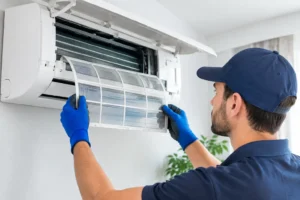
Filters need attention. Components need checking. Refrigerant issues, drainage faults and performance drops need catching early. Without regular servicing, even a premium system can lose efficiency, struggle to cool properly and wear faster than it should.
For homeowners, regular maintenance protects the investment. For landlords and business owners, it also helps reduce the chance of inconvenient breakdowns and emergency callouts. In practice, maintenance is one of the simplest ways to control running costs over the life of a system.
What homeowners should expect over the next few years
In practical terms, customers should expect better efficiency, quieter units, smarter controls and more tailored installations. They should also expect cooling to be discussed more openly as part of home improvement, especially in bedrooms, garden rooms, loft conversions and open-plan living areas.
At the same time, there will be trade-offs. The cheapest option will not always be the best long-term value. The most advanced system may not be necessary for every property. And not every home needs cooling in every room. The right answer depends on the building, how the space is used and what level of comfort the customer actually wants.
That is why surveys and professional advice matter. A sensible recommendation should be based on usage, room size, heat gain, insulation and budget, not guesswork. For customers across Essex, that kind of practical guidance is often what turns cooling from a confusing purchase into a worthwhile upgrade.
Essex Air Conditioning sees this shift clearly. More customers are planning ahead, asking better questions and looking for systems that will serve them well for years rather than simply getting them through the next hot spell.
The homes that stay comfortable in the years ahead will not necessarily be the ones with the biggest systems. They will be the ones with the right system, properly installed, sensibly maintained and chosen with the property in mind.