A south-facing office that becomes unbearable by mid-afternoon, a bedroom that will not cool down at night, or a shop where customers do not want to linger are not problems to solve with another desk fan. Local air conditioning installation gives Essex homes and businesses a properly designed way to control indoor temperature, improve comfort and make every room more usable through the warmer months.
The difference lies in the planning. A quality system is not simply a unit fitted to a wall. It needs to suit the size of the space, how the room is used, the building layout and the level of heat entering through windows, equipment and people. Get those details right at the start and air conditioning can provide quiet, efficient cooling for years.
Why local air conditioning installation is worth getting right
Air conditioning is often bought for cooling, but a modern system can do considerably more. Many systems also provide efficient heating, which can be useful in a home office, garden room, retail unit or meeting room where central heating does not always deliver the right level of comfort.
Choosing a local contractor means the surveyor understands the types of properties found across Essex, from older homes with limited installation routes to modern commercial units with larger open-plan areas. It also makes future support more straightforward. Should you need maintenance, advice on settings or a repair, you are dealing with a nearby team rather than an anonymous supplier.
The cheapest quote is not always the best value. A low price can sometimes reflect an undersized unit, poor-quality equipment, limited commissioning or no clear provision for aftercare. Conversely, the largest system is not automatically the answer either. Oversized equipment may cool a room quickly but cycle on and off more often, affecting efficiency and comfort. Correct sizing is what protects both performance and running costs.
Start with a proper survey, not a guess
A free, no-obligation survey should be the first stage of any installation. It gives you a chance to explain what is not working in the space and what you want from a new system. For some customers, the priority is a cool bedroom during heatwaves. For others, it is keeping staff productive, protecting stock or creating a comfortable setting for clients.
During a survey, an experienced installer will assess the room dimensions, ceiling height, glazing, insulation, orientation, occupancy and heat-producing equipment. A busy kitchen, server room or south-facing conservatory has very different cooling needs from a lightly used spare bedroom.
They should also consider practical installation details. Where can the indoor unit sit for effective air distribution? Is there a discreet route for pipework and electrical connections? Where will the outdoor unit operate safely without creating unnecessary noise or obstructing access? These decisions influence the finished appearance as much as the system’s performance.
For commercial premises, the survey may also need to consider operating hours, different zones within the building and whether individual rooms need separate control. A small office with one consistently warm room may only require a single split system. A restaurant, salon or larger workplace may be better served by multiple indoor units connected to one outdoor unit.
Choosing the right system for your property
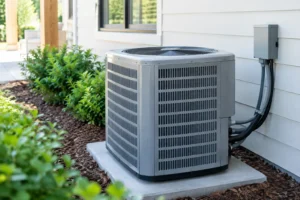
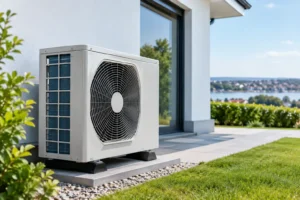
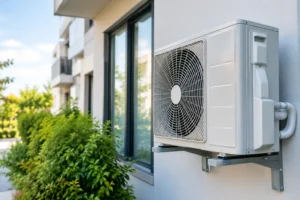
Most domestic installations use a wall-mounted split air conditioning system. It consists of an indoor unit that circulates conditioned air and an outdoor condenser unit that releases heat. They are compact, efficient and suitable for bedrooms, living rooms, loft conversions and home offices.
A multi-split system connects several indoor units to one outdoor unit. This is a practical option where different rooms need independent temperature control, such as bedrooms on different floors or a business with separate offices. It can reduce the number of outdoor units, although the pipework design and installation are more involved.
For larger commercial spaces, ceiling cassettes, ducted systems or floor-mounted units may be more appropriate. The right choice depends on the ceiling void, layout, visual requirements and expected use of the space. A visible wall unit may be ideal in a back office but not necessarily the preferred option in a customer-facing area.
Premium equipment generally offers quieter operation, stronger energy performance, more accurate controls and better long-term reliability. Features such as timers, Wi-Fi control and heating modes can be genuinely useful, but only if they fit the way you use the room. There is little value in paying for functions that will never be used. A straightforward discussion during the survey helps keep the specification sensible and cost-conscious.
What a professional installation should include
Good workmanship is not an optional extra in air conditioning. The refrigeration pipework, condensate drainage, electrical supply, mounting positions and final testing all affect whether the system runs efficiently and reliably.
The installation should begin with clear agreement on the unit positions and pipe route. Indoor units need secure mounting and enough clearance to circulate air properly. Outdoor units should be placed on suitable brackets or a stable base, with attention paid to airflow, drainage and service access. In some properties, appearance and neighbour considerations will influence the best location.
The engineer should install and test the system carefully, then commission it before handover. This process confirms that the equipment is operating as intended and gives you an opportunity to understand the controls. You should know how to change temperature settings, select cooling or heating, clean accessible filters and recognise when professional servicing is due.
Professional installation also means using appropriately qualified technicians to handle refrigerant work safely. It protects your investment and gives you confidence that the system has been fitted to a proper standard, rather than rushed into place as a short-term fix.
Cost, running costs and the decisions that affect both
The cost of an air conditioning installation depends on the system type, number of rooms, capacity required, equipment selected and complexity of the pipework route. Access can matter too. A straightforward ground-floor installation is usually simpler than work requiring long runs, high-level outdoor units or concealed services.
It is sensible to compare quotes, but compare what is included rather than looking at the bottom line alone. Ask whether the price covers the equipment, installation materials, electrical works, condensate drainage, commissioning and handover. Clarifying this early avoids unwelcome surprises later.
Running costs depend on how efficiently the unit is sized, the selected temperature, insulation levels and daily usage. Setting a system to an extreme temperature is rarely necessary. A moderate setting, closed windows and doors, and clean filters allow the equipment to work more effectively. In a business, programming units around opening hours can also prevent wasted energy.
Air conditioning should complement, not replace, sensible building management. Blinds or shading can reduce solar gain, while draught-proofing and insulation help retain cooled or heated air. Small improvements around the room can make a noticeable difference to the load placed on the system.
Looking after your system after installation
A well-installed unit still needs regular care. Filters collect dust over time, and blocked filters can reduce airflow, increase energy use and affect air quality. Homeowners can usually clean accessible filters as instructed, while a professional maintenance visit checks the wider system condition and performance.
For businesses, planned maintenance is particularly valuable. A system failure during a hot spell can disrupt staff, customers and operations when demand for repairs is highest. Regular servicing helps identify wear, drainage issues or declining performance before they become a costly breakdown.
If the system begins making unusual noises, leaks water, produces weak airflow or no longer reaches the set temperature, arrange an inspection rather than continuing to run it. Prompt attention can often prevent a smaller issue becoming more expensive.
A practical route to year-round comfort
The best time to arrange air conditioning is before a heatwave turns a difficult room into an urgent problem. A considered survey gives you time to choose the right equipment, agree a tidy installation plan and budget with confidence.
For homeowners, landlords and businesses across Essex, Essex Air Conditioning provides clear advice, professional installation and ongoing support focused on lasting comfort. Start with the space you want to improve and choose a system designed to do the job properly.