A stuffy meeting room at 3pm is not just an inconvenience. When people feel drowsy, complain of headaches or struggle to concentrate, poor airflow may be part of the problem. Effective office ventilation Chelmsford businesses can depend on helps replace stale indoor air, control moisture and create a more comfortable place for staff and visitors to work.
For office managers, landlords and business owners, ventilation is often overlooked until the building feels uncomfortable or a system fails. A planned approach is usually more cost-effective. It protects the working environment, supports air quality and gives you a clearer picture of whether the existing system is doing its job.
Why office ventilation affects day-to-day performance
Offices naturally accumulate carbon dioxide, heat, odours and moisture as people work through the day. Printers, kitchens, meeting rooms and enclosed internal spaces can all add to the load. Opening windows may help in some smaller buildings, but it is not a dependable solution for every office. Traffic noise, security concerns, weather and the layout of the premises can make it impractical.
A properly designed ventilation system brings in fresh external air and removes stale air at a controlled rate. This matters most in busy or enclosed areas, where air quality can deteriorate quickly. Good ventilation can also reduce condensation and the conditions that encourage mould, particularly in older buildings or spaces with limited natural airflow.
Comfort is closely linked to productivity. Staff should not have to choose between being too warm, sitting in a draught or working in a room that feels airless. The right solution balances fresh air, temperature control and sensible air distribution rather than simply pushing more air into the space.
Signs your Chelmsford office may need better ventilation
The clearest warning signs are often noticed by the people using the building. Persistent stuffiness, lingering food smells, condensation on windows and complaints about tiredness are all worth investigating. So are hot and cold spots, particularly where an open-plan office has been divided into smaller rooms over time.
Meeting rooms deserve particular attention. They can become occupied quickly, often have few opening windows and may be used intensively throughout the day. If a room feels noticeably uncomfortable after a short meeting, the ventilation rate or system layout may no longer suit its use.
Visible mould, damp patches and repeated condensation are more urgent concerns. They do not always originate with ventilation alone – building fabric, leaks and heating patterns can also play a part – but poor air movement can make the issue worse. A professional assessment helps identify the actual cause before money is spent on the wrong remedy.
Choosing the right office ventilation system
There is no single system that suits every workplace. The best choice depends on the size of the office, the number of occupants, how rooms are used, the age of the building and the available routes for ductwork or external units. A free site survey is valuable because it turns assumptions into a practical recommendation.
Mechanical extract and supply ventilation
Mechanical ventilation uses fans and ductwork to remove stale air and deliver fresh air where it is needed. It can be a strong option for offices with internal rooms, limited window openings or regular high occupancy. Supply and extract systems offer more controlled airflow than relying on extract fans alone.
Installation needs to be planned carefully. Ductwork requires space, access for future maintenance and routes that do not disrupt lighting, fire safety measures or the look of the workplace. In some buildings, this can make a full ducted solution more involved than a localised alternative.
Heat recovery ventilation
Mechanical ventilation with heat recovery, often called MVHR, transfers heat from outgoing stale air to incoming fresh air. During colder months, this can reduce the energy needed to warm replacement air. It is particularly worth considering in well-insulated offices where windows are kept closed for much of the year.
The trade-off is that heat recovery systems need good design, quality installation and regular filter maintenance. If filters are neglected or airflow is not commissioned correctly, performance will suffer. It is not simply a fit-and-forget addition.
Air conditioning with fresh-air provision
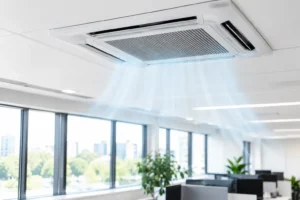
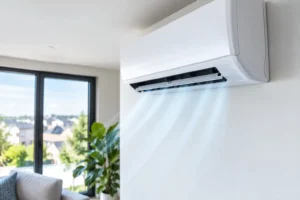
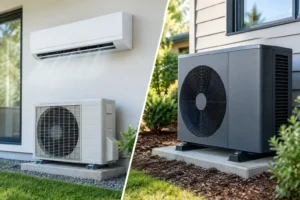
Air conditioning is excellent for controlling temperature, but it is not automatically a ventilation system. Many comfort cooling units recirculate room air rather than bringing in a meaningful volume of fresh outdoor air. Where both cooling and ventilation are required, the design needs to address each function properly.
For Chelmsford offices that become uncomfortably warm in summer, a combined approach can be highly effective. Air conditioning provides reliable cooling, while a dedicated ventilation solution maintains fresh-air levels. This is often more practical than expecting one type of equipment to handle two separate tasks without the right specification.
Compliance, comfort and sensible system design
Workplace ventilation should be considered as part of wider health, safety and building responsibilities. Employers and those responsible for premises need to provide adequate fresh or purified air. The precise requirements vary according to the building, occupancy and work carried out, which is why a site-specific assessment is more useful than a generic recommendation.
A good design starts with how the office actually operates. A quiet office with a handful of staff has very different needs from a busy call centre, clinic, salon, studio or customer-facing workspace. Occupancy can change too. An office that was suitable five years ago may now have more desks, more enclosed meeting rooms and higher heat gains from equipment.
Noise also matters. Oversized equipment or poorly positioned grilles can create distracting fan noise and unpleasant draughts. Conversely, undersized equipment may run constantly without achieving the required airflow. Experienced installers calculate capacity and position components to suit the space, not just the floor area.
Maintenance keeps ventilation working as intended
Ventilation systems need routine attention to remain clean, efficient and reliable. Filters gradually collect dust and airborne particles. Fans, grilles, condensate components and ductwork may also need inspection, depending on the system. Left unattended, restricted airflow can affect comfort, increase energy use and place unnecessary strain on equipment.
For a typical office, planned maintenance allows issues to be dealt with before they interrupt normal working hours. It also gives facilities teams and landlords a useful record of servicing, filter changes and any recommendations made. This is especially helpful in multi-occupied buildings, where responsibility for different parts of the system may be shared.
Staff can support the system between visits by keeping vents clear. Avoid placing storage, furniture or tall displays directly in front of supply or extract grilles. If a room repeatedly feels different from the rest of the office, report it rather than trying to solve the issue by blocking vents or changing controls at random.
What to expect from an office ventilation survey
A professional survey should be straightforward. The engineer will look at the office layout, occupancy, existing equipment and access arrangements. They should ask how rooms are used, when discomfort occurs and whether there are specific concerns such as condensation, heat or odours.
The resulting recommendation should explain what is proposed and why. That includes the likely disruption during installation, maintenance requirements and whether works can be staged around your operating hours. Cost matters, but the cheapest option is not always the best value if it leaves key areas underserved or creates avoidable running costs later.
Essex Air Conditioning provides practical ventilation and climate-control support for businesses across Chelmsford and the wider Essex area. With experienced technicians, a clear survey process and no-obligation quotations, the focus is on a system that fits the premises and supports the people working in it.
Fresh air should be a quiet, reliable part of a well-run workplace. If your office feels stale, humid or difficult to keep comfortable, arranging an assessment is a sensible first step towards a healthier working environment.