You notice a patch of water under the indoor unit, the wall looks damp, or a ceiling cassette starts dripping during the working day. It is no surprise the first question is, why is my air conditioner leaking? In most cases, the leak is not the root problem itself. It is a sign that something in the system is blocked, dirty, damaged or incorrectly installed.
A leaking air conditioner should never be ignored. What starts as a small drip can lead to stained ceilings, damaged plaster, spoiled flooring, mould growth and, in some cases, electrical risk. The good news is that many leaks come from a short list of familiar faults, and an experienced engineer can usually identify the cause quickly.
Why is my air conditioner leaking indoors?
Air conditioning systems naturally produce condensation when they remove moisture from the air. That water is meant to collect in the drain tray and leave the unit through a condensate pipe. If water is escaping into the room instead, something is interrupting that process.
One of the most common causes is a blocked condensate drain. Dust, dirt, algae and general debris can build up over time inside the pipework, especially where routine maintenance has been missed. When the pipe is restricted, the water has nowhere to go and backs up into the unit until it overflows.
A cracked or displaced drain tray can cause the same result. Older systems are more prone to this, particularly if the tray has become brittle or corroded. In ceiling-mounted or commercial systems, even a small split can allow a steady drip that goes unnoticed until damage appears below.
Poor installation is another frequent reason. If the unit is not mounted level, water may not flow properly towards the drain outlet. Instead, it can pool inside the tray and spill over the edge. This is one of those faults that may not show up straight away. A system can appear to work, then start leaking once usage increases during warmer weather.
Frozen evaporator coils can also lead to leaks. When airflow is reduced by a dirty filter, blocked coil, failing fan or low refrigerant, the coil can become too cold and ice may form. Once that ice melts, the amount of water produced can overwhelm the tray and drainage system.
The most likely causes of a leaking air conditioner
Although every property is different, most leaks come down to drainage, airflow or installation issues. The detail matters because the right fix depends on the actual fault, not just the visible water.
Blocked condensate pipe
This is usually the first thing to suspect. A partially blocked pipe might cause occasional dripping, while a full blockage can create a much more obvious leak. If the unit has a condensate pump, the issue may be in the pump or the discharge line rather than the gravity drain itself.
Dirty filters and restricted airflow
When filters are heavily clogged, the system cannot move air properly across the evaporator coil. That can lower the coil temperature too far and cause icing. Once the ice melts, water can escape beyond the tray. This is a very common problem in both homes and small commercial premises where the system has been used regularly but not serviced often enough.
Damaged drain tray
Drain trays do not last forever. Wear, corrosion and vibration can all take a toll over time. In some units the tray can be repaired, but in others replacement is the more reliable option.
Faulty condensate pump
If your system relies on a pump to move water to a suitable drain, a failure there can quickly lead to overflow. Pumps can fail electrically, become jammed with debris or struggle because of poor maintenance. This is especially relevant in offices, shops and rooms where the indoor unit is positioned away from a simple gravity drain route.
Low refrigerant or another system fault
Leaks are not always a simple drainage problem. Low refrigerant can contribute to frozen coils, and that can lead to excess water when thawing occurs. In that case, clearing the water without addressing the refrigerant issue only treats the symptom.
What you can safely check first
If you are asking why is my air conditioner leaking, there are a few sensible checks you can make before booking a repair. The key word is safely. You should not dismantle the unit or interfere with refrigerant components.
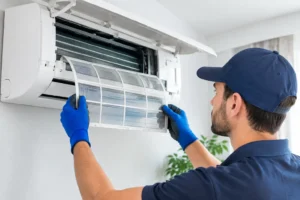
Start by turning the system off. If water is close to electrics, isolate power to the unit if it is safe to do so. Then check the air filter. If it is visibly clogged with dust, that may be contributing to poor airflow and icing.
Look for obvious signs around the indoor unit. Is the front cover sitting properly? Is water dripping from one side more than the other? Has the leak started after a period of heavy use? Those details can help an engineer diagnose the issue faster.
If you can see the end of the condensate drain outside, check whether water is flowing during operation. No visible discharge does not always confirm a blockage, but it can be a useful clue. If your system uses a pump and you no longer hear it working when the unit is running, that may point to pump failure.
What you should not do is try to pierce, bend or aggressively flush hidden pipework without knowing the layout. That can make the problem worse, particularly on fitted domestic systems and commercial cassette units.
When a leaking air conditioner needs professional repair
A one-off drip after an unusually humid day is one thing. Repeated leaking, visible staining, strange noises, icing, weak cooling or a musty smell suggest a fault that needs professional attention.
An engineer will typically inspect the drain line, tray, pump, filters, coil condition, unit level and overall performance. If the system is freezing up, they may also check airflow, fan operation and refrigerant pressures. Proper diagnosis matters because several issues can look similar from the outside.
This is where experience makes a difference. A leaking unit in a home may be inconvenient. In a shop, office, salon or server room, it can interrupt operations, create health and safety concerns and damage finishes or equipment. A quick response helps limit both repair costs and wider disruption.
Can you still use the unit if it is leaking?
Usually, no. Continuing to run a leaking air conditioner can increase water damage and may worsen the underlying fault. If the issue is a blocked drain, more running time means more condensation and more overflow. If the problem involves icing, low refrigerant or poor airflow, continued use may place extra strain on the system.
There are also cases where the leak is not actually clean water. Condensate can pick up dust, dirt and biological growth from inside the system, which is another reason not to let the problem continue unchecked.
How to prevent future leaks
The most effective way to prevent leaks is regular maintenance. That does not just mean cleaning the visible filter once in a while. A proper service checks the full condensate route, internal cleanliness, coil condition, pump function where fitted, and the general operating condition of the system.
For homeowners, annual servicing is often enough, though higher-use systems may benefit from more frequent attention. For commercial sites, maintenance schedules usually need to be more structured because the units run longer and the consequences of failure are greater.
It is also worth remembering that installation quality affects long-term reliability. A correctly sized, properly levelled, well-drained unit is far less likely to develop recurring water issues. If a newer system leaks early in its life, installation should be part of the investigation rather than assuming it is normal wear and tear.
In Essex, where we see a mix of residential wall-mounted units and commercial ceiling cassettes, the pattern is often the same. Systems that receive routine maintenance tend to give fewer surprises in peak season. Systems left untouched for too long are more likely to leak when you need them most.
Why leaks should be dealt with early
Some customers put off calling because the unit is still cooling. That is understandable, but leaking is rarely a fault that improves on its own. Water can spread behind surfaces before it becomes visible, and repeated moisture creates the right conditions for mould and material damage.
There is also the cost question. A blocked drain caught early may be a straightforward repair. The same issue left unresolved can turn into damaged ceilings, spoiled décor, electrical concerns or a more serious system fault if icing and airflow problems are involved. Acting early is usually the more cost-effective option.
If your air conditioner is leaking, the right next step is not to guess – it is to have the system checked properly, the cause confirmed, and the repair carried out before a small drip becomes a bigger problem.