A system that once cooled a room quickly but now runs for hours is not just frustrating – it can add unnecessary cost to every electricity bill. Knowing how to improve aircon efficiency starts with understanding that cooling performance depends on more than the unit itself. Its settings, cleanliness, location, condition and the room around it all play a part.
For homes, offices, shops and rental properties across Essex, the aim is simple: maintain a comfortable temperature without asking the system to work harder than necessary. A few sensible changes can make a noticeable difference, while professional maintenance can prevent the avoidable faults that lead to high running costs and early replacement.
Set the temperature sensibly
Turning an air conditioner down to its lowest setting will not cool a room faster. It simply tells the system to continue running until it reaches an unnecessarily low temperature. During a warm British summer, a setting of around 23-24°C is usually comfortable for most occupied spaces and avoids an excessive gap between indoor and outdoor temperatures.
Every degree lower can increase energy use, particularly in commercial premises where several indoor units may run throughout the day. If a room feels warm at 23°C, look at sunlight, airflow, occupancy and insulation before assuming the temperature setting is the problem.
Use a consistent setting rather than repeatedly switching the unit on and off. Modern inverter air conditioning systems are designed to adjust their output as a room approaches the target temperature. They generally operate more efficiently when maintaining a steady temperature than when recovering from frequent large changes.
Keep filters and coils clean
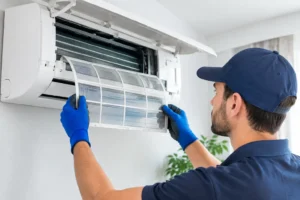
Restricted airflow is one of the most common reasons for poor air conditioning efficiency. Indoor filters collect dust, fibres and airborne particles over time. When they become blocked, the fan has to work harder to move air through the unit, while less cool air reaches the room.
For a typical home system, filters should be checked every month during periods of regular use and cleaned when visibly dusty. In a busy office, salon, shop, kitchen-adjacent area or property with pets, they may need attention more often. Follow the manufacturer guidance for cleaning, and ensure filters are fully dry before refitting them.
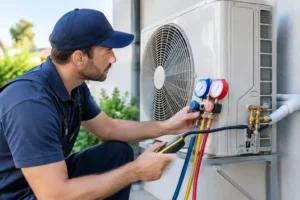
Filters are only one part of the system. The indoor evaporator coil and outdoor condenser coil also need to remain clean and unobstructed. Dirt on either coil reduces heat transfer, so the air conditioner uses more electricity to achieve less cooling. Coil cleaning, electrical checks and safe access to the outdoor unit are best handled as part of planned professional maintenance.
Give the outdoor unit room to work
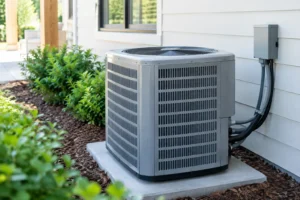
The outdoor condenser releases heat removed from the building. If airflow around it is restricted, that heat cannot disperse effectively and the system loses efficiency. Plants, stored items, fencing and accumulated leaves can all create a problem.
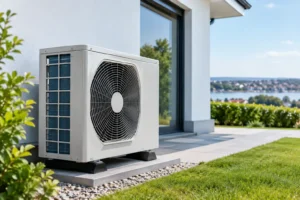
Keep the area around the outdoor unit clear, allowing plenty of open space for air to circulate. Do not cover the unit while it is operating, and avoid directing hot extractor air towards it. A shaded position can be beneficial, but the shade must not block airflow or make future servicing difficult.
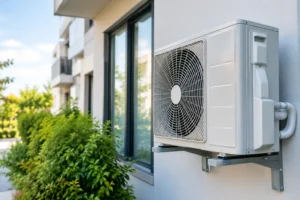
Where a new system is being planned, outdoor unit location should be considered carefully from the outset. It needs suitable clearance, secure mounting, manageable pipe runs and a position that meets noise and access requirements. A free survey helps identify the most practical option for the property rather than choosing a location based on appearance alone.
Reduce heat entering the room
Air conditioning cannot operate efficiently if a room is constantly gaining heat faster than the unit can remove it. South-facing glazing, poor blinds, open doors and heat-producing equipment can place a surprising load on even a well-sized system.
Close blinds or curtains before direct sunlight reaches the room, especially during the afternoon. In offices and commercial spaces, consider solar-control blinds or window film where overheating is a recurring issue. Keep external doors closed where possible, and make sure windows are shut while cooling is in use.
Internal heat sources matter too. Computers, printers, server equipment, cooking appliances and high occupancy can raise room temperatures quickly. If an air conditioner is installed in a space that has changed use since the original installation, it may no longer be correctly sized. A small office converted into a meeting room, for example, may need a different cooling solution once it is regularly occupied by several people.
Use the right mode and airflow settings
Cooling mode is not always the best choice. On humid, mild days, dry mode can remove excess moisture and make a room feel more comfortable without driving the temperature down as far. Fan mode may be sufficient when outdoor conditions are already comfortable, while heat mode can provide efficient warmth during cooler months for systems with heat pump capability.
Airflow direction also affects results. Cool air naturally falls, so directing air across the upper part of the room allows it to circulate before descending. Avoid aiming airflow directly at desks, beds or seating areas just to make the room feel colder. This can create draughts without improving overall comfort.
If your unit has timers, weekly schedules or occupancy controls, use them. Set the system to begin shortly before staff arrive rather than leaving it on overnight, and programme it to reduce output after closing time. The right schedule saves energy without sacrificing comfort when the building is occupied.
Check that the system is correctly sized
An oversized air conditioner can cool a room too quickly, switching on and off more often than it should. This short cycling can reduce comfort, limit effective dehumidification and place unnecessary strain on components. An undersized system has the opposite problem: it may run continuously on hot days without reaching the required temperature.
Correct sizing is based on more than floor area. A competent assessment takes account of ceiling height, room orientation, glazing, insulation, occupancy, equipment heat gains and how the space is used. This is especially important for businesses, where a system selected for a quiet office may not suit a treatment room, retail floor, workshop or busy waiting area.
If your existing unit has always struggled, do not assume it merely needs a regas. Refrigerant is not a consumable and a sealed system should not need routine topping up. Low refrigerant can indicate a leak, which must be properly diagnosed and repaired by a qualified engineer. Adding refrigerant without addressing the cause is not an efficiency solution.
Arrange regular maintenance before performance drops
Many air conditioning faults develop gradually. The system may still cool the room, but it takes longer, makes more noise or uses more energy than it should. Planned maintenance identifies these issues early and keeps the equipment operating closer to its intended performance level.
A professional service can include filter and coil inspection, condensate drain checks, electrical testing, fan assessment, refrigerant circuit checks and a review of controls. It also gives you a chance to raise smaller concerns before they turn into a breakdown during the hottest week of the year.
For homeowners, an annual service is a sensible baseline. Commercial systems may require more frequent visits depending on usage, number of units and the environment. Landlords and facilities managers should also keep maintenance records, particularly where systems serve tenants, staff or customer-facing areas.
Signs your air conditioner is wasting energy
Book an inspection if you notice any of the following:
- The unit runs for longer than usual to cool the same room.
- Airflow feels weak, even at a high fan speed.
- Water is dripping from the indoor unit or there is a musty smell.
- The system is noisier, cycles repeatedly or trips electrical protection.
- Electricity costs have risen without a clear change in usage.
These symptoms do not always mean replacement is needed. A blocked filter, dirty coil, drainage issue or control fault can often be resolved with the right repair. Equally, an older, inefficient unit with recurring faults may cost more to keep running than a modern replacement would over time. The right choice depends on the system’s condition, repair history and how heavily it is used.
Improve aircon efficiency with professional support
The most effective approach combines daily good habits with qualified servicing. Keep filters clean, use realistic temperature settings, reduce unwanted heat gain and give the outdoor unit space to breathe. Then arrange maintenance that checks the parts you cannot safely or easily inspect yourself.
Essex Air Conditioning provides installation, repairs and planned maintenance for residential and commercial customers, helping systems deliver dependable comfort at a sensible running cost. A free survey can also establish whether your current layout, capacity or controls are working against efficiency.
A well-maintained air conditioner should feel quiet, consistent and unobtrusive. If yours is making you think about it every day, it is time to have it checked before a small loss of performance becomes an expensive problem.