A conservatory can feel perfect in April and unusable by the first genuinely hot afternoon in July. Large glazed areas trap solar heat quickly, while colder months can leave the same room draughty and uncomfortable. The best aircon for conservatories is therefore usually not just a cooling unit. It is a properly sized heat pump system that cools efficiently in summer, provides useful warmth in winter and operates quietly enough for a living space.
For most Essex homes, a professionally installed wall-mounted split air conditioning system is the strongest long-term choice. It is more effective, quieter and less costly to run than relying on portable units through every heatwave. However, the right answer depends on your conservatory’s size, orientation, glazing, insulation and how you use the room.
Why Conservatories Need a Different Approach
Conservatories are among the hardest rooms in a property to keep comfortable. Their glass roofs and windows allow sunlight in, but they also create substantial heat gain. A south- or west-facing conservatory may become very warm even when the outdoor temperature is relatively moderate.
Cooling capacity cannot be chosen on floor area alone. A compact conservatory with a solid, insulated roof may need far less output than a similarly sized older glass-roof conservatory in direct afternoon sun. High ceilings, bi-fold doors, poor seals and open-plan layouts can all increase the demand on the system.
That is why a free site survey is more valuable than choosing a unit based on a general online recommendation. An experienced installer can assess the room’s heat load, identify the best indoor unit position and make sure the outdoor condenser has suitable airflow and access for future servicing.
The Best Aircon for Conservatories: Split Systems
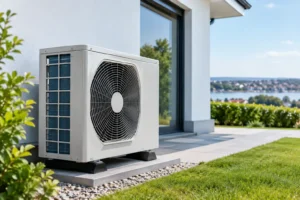
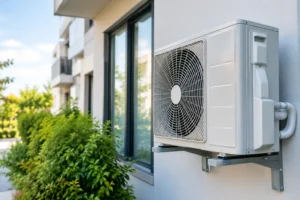
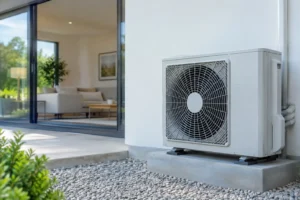
A wall-mounted split system has two main parts: a discreet indoor unit that distributes conditioned air in the conservatory, and an outdoor unit that releases heat outside. The units are connected by insulated pipework and electrical cabling.
This arrangement is particularly well suited to conservatories because it deals with heat rather than simply moving warm air around the room. In cooling mode, it removes warmth and moisture from the indoor air. The result feels more comfortable than a fan, especially on humid days when a conservatory can feel sticky as well as hot.
Modern split systems are also reversible. When the temperature drops, they can provide efficient heating, often at a lower running cost than direct electric heaters. This makes a conservatory more practical for working, dining or relaxing through more of the year.
Why fixed split air conditioning is usually the better investment
A quality split system offers strong cooling performance, low noise levels and precise temperature control. Many units include inverter technology, which adjusts output gradually rather than repeatedly switching fully on and off. That helps maintain a steady temperature and reduces unnecessary energy use.
For a room used as a home office or lounge, quiet operation matters. A correctly specified wall unit can run gently in the background, while a portable unit often produces enough compressor and fan noise to become distracting during calls, television viewing or meals.
Installation is more involved than placing a portable appliance near a window, but the finished result is neater, safer and far more capable. The condensate drainage, refrigerant pipework and electrical supply should be installed properly by qualified engineers.
Portable Air Conditioners: Useful, but Limited
Portable air conditioners can provide short-term relief where a permanent installation is not possible. They may suit a rented property, a very occasional-use room or a customer who needs a temporary solution before larger works are completed.
Their limitations are more noticeable in conservatories. Most require a hose to vent through a partially open window or a purpose-made panel. This allows some warm air back into the room and can reduce efficiency. They are also typically noisier, take up floor space and need regular emptying if the condensate is not set to self-evaporate.
A portable unit should not be viewed as equivalent to a fixed system. It can take the edge off heat in a smaller space, but it is rarely the best choice for a conservatory that is used every day or that regularly becomes excessively hot.
Choosing the Right Capacity
Air conditioning output is commonly measured in kilowatts. While a small conservatory may suit a lower-capacity unit, an installer should calculate requirements from the property itself rather than make assumptions from a room measurement.
A unit that is too small will run hard for long periods without reaching the desired temperature. It may struggle most when you need it most, on bright afternoons with strong sun through the roof. A unit that is significantly oversized can cool the room too quickly, cycle inefficiently and remove less moisture than it should.
The survey should consider the conservatory’s dimensions, glass area, roof type, direction of the sun, shading, insulation, occupancy and connected rooms. For example, a conservatory open to a kitchen or dining area may need a different solution from a self-contained garden room with doors kept closed.
Indoor unit placement matters
The indoor unit should be positioned to distribute air across the room without blowing directly onto where people sit. A high wall position is usually effective, provided there is clear space for airflow and practical access for maintenance.
It should not be hidden behind furniture, fitted too close to the roofline or placed where the airflow is immediately lost through permanently open doors. During a survey, the installer can also plan the most unobtrusive route for pipework to the external unit.
Features Worth Paying For
The most useful air conditioning features are those that improve day-to-day comfort and reduce running costs. Wi-Fi controls can be helpful if you want to cool the conservatory before arriving home or switch it off remotely. A timer and weekly schedule are equally practical for regular routines.
Look for a unit with a good seasonal efficiency rating and a quiet night mode if the room is close to bedrooms. Adjustable louvres are useful for directing airflow away from seating areas, while a quality filtration system can help reduce airborne dust and pollen.
Heating performance is also worth checking. If your aim is to use the conservatory in spring, autumn and winter, select a system designed to provide dependable heat at lower outdoor temperatures, not one chosen only for summer cooling.
Do Not Overlook Insulation and Shade
Air conditioning can transform a conservatory, but it should not be expected to compensate for every building issue. Blinds, roof shading, ventilation and draught reduction can all lower the cooling load and improve comfort.
If the conservatory has an older polycarbonate or fully glazed roof, improving insulation may make a significant difference. This is particularly relevant where the room is cold in winter as well as hot in summer. A well-insulated conservatory needs less energy to cool and heat, allowing the air conditioning system to operate more efficiently.
Keeping doors closed during the hottest part of the day will also help if the conservatory is a separate room. If you prefer an open-plan layout, tell your installer from the outset so the system can be designed around the larger area.
Installation, Maintenance and Running Costs
Professional installation protects both performance and warranty. The outdoor unit needs stable mounting, clear airflow and a location that considers noise, appearance and access. Refrigerant work must be completed by appropriately qualified engineers, and electrical requirements should be checked before installation begins.
After installation, simple habits will keep the system performing well. Clean or wash the indoor filters as recommended, keep the outdoor unit free of leaves and debris, and arrange routine maintenance. An annual service can identify developing faults, check refrigerant operation, clean components and help preserve efficient performance.
Running costs will vary with the unit size, electricity tariff, insulation and the temperatures selected. Setting an extreme temperature does not cool a room faster. A sensible target, usually a few degrees below outdoor conditions, is more comfortable and avoids making the system work harder than necessary.
For homeowners in Essex, the most dependable route is a survey-led recommendation rather than a one-size-fits-all product choice. Essex Air Conditioning can assess the space, explain the suitable options clearly and provide a no-obligation quote for a system designed around how you actually use your conservatory. A properly selected unit can turn a room that is avoided in summer into one you enjoy throughout the year.