A stuffy office is not a minor inconvenience. When temperatures rise, staff concentration drops, equipment works harder and customers can notice the discomfort as soon as they walk in. The best office cooling solutions create a consistently comfortable working environment without leaving a business with excessive running costs or a system that cannot keep up in July.
For offices in Essex, the right answer is rarely a fan in every corner. A properly designed air conditioning and ventilation system gives you reliable temperature control, cleaner airflow and a practical long-term solution suited to the way your workplace is actually used.
What makes an office cooling system effective?
Cooling capacity matters, but it is only one part of the decision. An office can feel uncomfortable even when an air conditioning unit is technically powerful enough, particularly if the system is poorly positioned, airflow is restricted or heat is being generated in concentrated areas.
A successful installation takes account of floor area, ceiling height, window size and orientation, insulation, occupancy and heat-producing equipment. A small office with several computers, a printer and south-facing glazing can need more cooling than a larger, shaded room with fewer people. Meeting rooms also need special consideration because they can go from empty to full in minutes.
Noise is another important factor. Employees need to be able to take calls, hold meetings and focus on their work without a loud unit cycling on and off nearby. Modern commercial systems are designed for quiet operation, but selecting the right indoor unit and location makes a noticeable difference.
Energy efficiency should sit alongside comfort. The lowest-priced unit is not always the most economical choice over its working life. An efficient system with suitable controls can reduce wasted energy while giving staff a more stable temperature throughout the day.
The best office cooling solutions for different workplaces
There is no single system that suits every business. The best option depends on the size and layout of the premises, how many rooms require cooling and whether you need to improve heating and air quality at the same time.
Wall-mounted split air conditioning systems
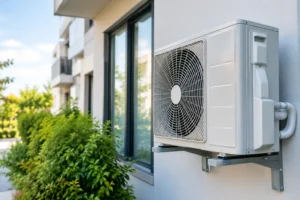
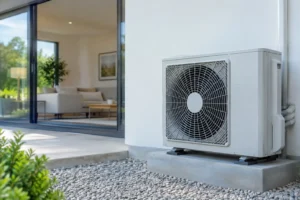
A split system pairs an indoor wall-mounted unit with an outdoor condenser. It is often the most practical choice for a single office, reception area, shop floor or small meeting room. These units deliver targeted cooling quickly and, because most models are heat pumps, they can also provide efficient heating during colder months.
For small businesses, this is usually the strongest balance of performance, installation cost and running efficiency. The main consideration is placement. The indoor unit must distribute air across the room without blowing directly onto desks, while the outdoor unit needs adequate clearance and a suitable position for maintenance.
Multi-split systems for several rooms
Where an office has separate rooms, a multi-split system can connect several indoor units to one outdoor condenser. This gives individual areas their own temperature control, which is particularly useful when a busy open-plan office, a quiet boardroom and a server room have different cooling requirements.
Multi-splits can help preserve the appearance of a building by reducing the number of outdoor units. However, they need careful design. Pipe routes, unit capacity and the likely simultaneous use of each room all affect whether this is the right approach.
Cassette units for open-plan offices
Ceiling cassette units sit flush within a suspended ceiling and distribute air in multiple directions. They are a popular solution for larger open-plan offices, retail spaces and meeting rooms where wall space is limited or a more discreet finish is preferred.
A cassette can cover a broad area evenly, helping to avoid hot and cold spots. It does require sufficient ceiling void space and access for servicing, so it is best considered early in a refurbishment or fit-out project. In the right setting, it provides a tidy, professional result with powerful yet controlled cooling.
Ducted air conditioning for a concealed finish
Ducted systems send conditioned air through concealed ductwork to discreet grilles or diffusers. They work well in higher-specification offices, converted properties and premises where visual impact matters. They can also serve multiple zones when designed correctly.
The trade-off is that ducted air conditioning is normally more involved to install than wall-mounted or cassette options. It needs space for ductwork, access panels and careful balancing. For a new fit-out or major renovation, though, it can be an excellent long-term solution that keeps equipment largely out of sight.
VRF systems for larger commercial premises
Variable Refrigerant Flow, often shortened to VRF, is intended for larger or more complex buildings. It can serve many indoor units across different zones while responding to changing demand. This makes it suitable for multi-storey offices, larger professional practices and premises with a mix of open work areas, meeting rooms and private offices.
VRF systems offer excellent control and efficiency when specified properly, but they are a significant investment. A full survey and accurate load calculation are essential. For a small office, the added complexity may not be justified. For a growing business with varied spaces, it can provide flexibility that simpler systems cannot.
Cooling alone is not always the answer
Air conditioning recirculates and conditions indoor air, while ventilation introduces fresh air and removes stale air. Both can be needed for a healthy, comfortable office.
If staff report tiredness, lingering odours or condensation as well as heat, the issue may be insufficient ventilation rather than cooling capacity alone. Heat recovery ventilation can be particularly useful where a building is tightly sealed. It extracts stale air while recovering some of its heat, helping maintain better air quality without unnecessary energy loss.
Ventilation should also be considered in meeting rooms, kitchens and washrooms, where occupancy and moisture levels can change quickly. A professional survey can identify whether your office needs air conditioning, ventilation improvements or a combination of both.
How to choose the right system before requesting a quote
Start by looking at how people use the space, not just its square footage. Note which rooms become uncomfortable first, the busiest times of day and whether heat comes from sunlight, machinery, computers or people. This gives a contractor useful information before the survey begins.
It is also worth deciding how much individual control your team needs. One open-plan room may work well with a single centrally controlled unit. Several offices or consulting rooms will usually benefit from separate zones so occupants can adjust their own comfort without affecting the whole building.
Think ahead, too. If you are planning to add desks, extend into another room or convert storage space into an office, allow for that in the design. Installing a system that only just meets current demand can create avoidable expense when the business grows.
For tenants and landlords, permission and practical restrictions need checking before work starts. The location of external condensers, lease conditions, noise considerations and the route for pipework can all shape the final design. An experienced contractor will identify these points during the survey rather than after equipment has been ordered.
Running costs, maintenance and reliability
Modern inverter air conditioning systems adjust their output to match the temperature required, rather than operating at full power all the time. This improves efficiency and helps maintain a steadier office temperature. Using sensible set points, closing blinds against direct sun and keeping doors and windows shut while cooling is running will also reduce unnecessary energy use.
Routine maintenance protects that efficiency. Filters collect dust over time, condensate drains need checking and outdoor condensers must remain clear of leaves and debris. Neglected systems can become noisier, less effective and more costly to run. In a commercial setting, planned maintenance also reduces the chance of an unexpected failure during a heatwave.
A maintenance visit should include more than a quick visual check. Refrigerant performance, electrical connections, airflow, drainage and controls all need professional attention. Keeping the system maintained supports comfort, reliability and a longer service life.
Why a professional survey makes the difference
Choosing office air conditioning from a capacity chart or online price alone can lead to a disappointing result. A unit may be undersized, oversized, badly located or unsuitable for the building layout. Oversized equipment can cycle too frequently, while undersized equipment may run constantly without achieving a comfortable temperature.
A free site survey gives you a clear basis for making the right decision. It allows the contractor to assess heat gain, room use, electrical supply, installation access and the best locations for indoor and outdoor equipment. You should receive a straightforward recommendation that explains the system proposed, the expected benefits and the work involved.
For businesses across Essex, Essex Air Conditioning provides professional surveys, installation, repairs and ongoing maintenance designed around the needs of each workplace. The goal is not simply to fit a unit, but to provide dependable comfort that supports staff, visitors and day-to-day operations.
The right office cooling system should quietly do its job in the background: keeping rooms comfortable, helping people work well and giving you confidence when the next spell of hot weather arrives.