A meeting room that feels stuffy by 10am, staff opening windows while the cooling runs, or one desk that is always unbearably warm are not minor workplace irritations. If you are asking, “why is my office too hot?”, the cause may be anything from direct sunlight to an undersized or poorly maintained air conditioning system. Finding the real cause matters because simply turning the thermostat lower can waste energy without making people more comfortable.
A consistently hot office can affect concentration, morale and productivity. It can also lead to higher energy bills, complaints from staff and visitors, and unnecessary strain on your cooling equipment. The right solution depends on how the space is used, how many people occupy it and whether the system is delivering cooled air where it is needed.
Why is my office too hot when the air conditioning is on?
Air conditioning running does not always mean the office is being cooled effectively. A unit may be working hard but unable to overcome the heat entering the building, or it may have a fault that limits its output. Before assuming a replacement is needed, it is worth considering the most common reasons.
The system is too small for the room
Air conditioning is sized around more than floor area. A good design also considers ceiling height, glazing, insulation, room orientation, equipment, occupancy and heat from neighbouring areas. An office with large south-facing windows, several computers and regular meetings produces far more heat than a similarly sized storage room.
If the system was selected only by room dimensions, or if the office has been rearranged since installation, its capacity may no longer be sufficient. The usual signs are that the unit runs for long periods, the room improves slightly but never reaches the set temperature, and conditions worsen on warm sunny days.
Adding capacity can be the right answer, but it should follow a proper survey. Installing a larger unit without assessing airflow and heat gain can create new issues, including cold spots, draughts and unnecessary running costs.
Sunlight and poor shading are heating the space
Solar gain is one of the biggest reasons an office becomes uncomfortable in spring and summer. Glass lets in daylight, but it can also trap a surprising amount of heat. Desks near windows can feel much warmer than the rest of the room, particularly in top-floor offices or spaces facing south and west.
Blinds, solar-control film and external shading can reduce this load significantly. Closing blinds before the hottest part of the day is generally more effective than waiting until the room has already heated up. This does not replace suitable air conditioning, but it gives the system a more manageable job and can reduce energy use.
Airflow is restricted or poorly balanced
Cool air needs a clear route into the room and warm air needs somewhere to go. Blocked indoor units, furniture positioned beneath wall-mounted units, closed vents or incorrectly directed louvres can all stop conditioned air reaching occupied areas.
In larger offices, an airflow imbalance is often the reason one side of the room feels comfortable while another remains warm. The issue may be caused by ductwork, vent settings, a failing fan or changes to the office layout. Portable fans may provide temporary relief, but they do not lower the air temperature. They simply move the existing warm air around.
Filters, coils or drains need attention
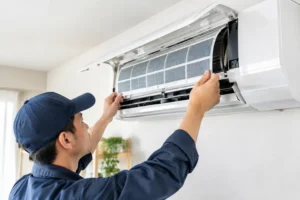
A clogged filter reduces the volume of air moving through an air conditioning unit. Dirty coils can also prevent the system from absorbing and releasing heat efficiently. Both problems make equipment work harder, increase electricity use and can leave the office feeling warm despite the system being switched on.
Routine maintenance is designed to catch these issues early. Filters should be inspected and cleaned or replaced at intervals appropriate to the environment. Offices near busy roads, workshops or areas with higher dust levels may need more frequent attention than a lightly used private office.
The thermostat is in the wrong place
A thermostat only responds to the temperature around it. If it is positioned in direct sunlight, beside a printer, above a heat-producing appliance or close to a door, its reading may not reflect conditions at staff workstations. It can then tell the system to switch off too soon, run too long or cool the wrong part of the room.
Temperature settings can also cause confusion. In cooling mode, a set point of 22°C does not mean the room will instantly become 22°C. It is a target that the system works towards. Constantly changing the temperature setting usually makes comfort less consistent and may encourage the unit to run longer than necessary.
Too many people and devices are creating heat
People, laptops, desktop computers, monitors, printers, servers, lighting and kitchen equipment all add heat to an office. This is especially noticeable in meeting rooms, where occupancy can change quickly. A room that is comfortable for two people may become hot and stale when eight people gather with laptops and the door closed.
A server cupboard or comms room can also transfer heat into adjacent workspaces if it has no dedicated cooling or ventilation. Separating this load from the main office often improves comfort and protects sensitive equipment at the same time.
Ventilation is inadequate
Heat and poor air quality often appear together. An office may feel hot not only because its temperature is high, but because carbon dioxide levels rise as people work in a closed space. The air becomes stale, concentration drops and occupants naturally feel uncomfortable.
Opening windows can help in mild weather, but it is not always a reliable solution. Outside air may be warmer, noisier or affected by traffic pollution. Open windows can also work against air conditioning by allowing cooled air to escape. Mechanical ventilation may be needed where there is no practical way to introduce and extract fresh air consistently.
Checks your team can make before arranging a visit
Start by confirming that the unit is set to cooling mode rather than fan, heating or automatic mode. Check that the set temperature is realistic, the fan speed is not set too low, and doors and windows are closed while cooling is in use. Look for blocked grilles, dusty filters and furniture that may be disrupting airflow.
It is also useful to record when the problem occurs. Does the office heat up only in the afternoon? Is it worse when the meeting room is full? Does one area remain hot while others are fine? These details help identify whether the issue is solar gain, occupancy, distribution or equipment performance.
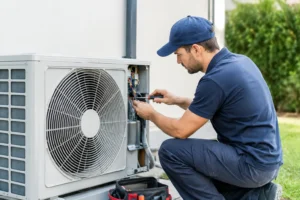
Avoid removing covers, handling electrical components or attempting to top up refrigerant. Refrigerant work must be carried out by a qualified technician, and an unexplained loss of refrigerant can indicate a leak that needs proper diagnosis and repair.
When a hot office needs professional attention
Arrange an inspection if the unit is blowing warm air in cooling mode, switching off unexpectedly, leaking water, making unusual noises or showing an error code. A sudden fall in performance can point to dirty components, a fan problem, refrigerant issues or an electrical fault. Leaving it to run in this condition can increase damage and operating costs.
A professional assessment is also sensible if the system has always struggled during warm weather. In many Essex offices, older equipment was installed before layouts changed, teams grew or additional IT equipment was introduced. A survey can establish the actual cooling load, assess the condition of the existing system and recommend practical options, whether that means repair, maintenance, improved ventilation or additional air conditioning capacity.
Improving comfort without driving up costs
The goal is not to make an office cold. It is to keep the workspace consistently comfortable while using energy sensibly. A moderate, stable setting is usually more efficient than repeatedly lowering the thermostat. Keeping filters clean, maintaining sensible shading and preventing cooled air from escaping through open doors all support better performance.
For offices with varied occupancy, zoning can be particularly valuable. Separate controls for meeting rooms, open-plan areas and private offices prevent empty spaces being cooled unnecessarily while busy rooms overheat. Smart controls can also schedule operation around working hours, though they still need to be matched to a correctly designed system.
Essex Air Conditioning provides surveys, repairs and planned maintenance for commercial spaces where comfort or system performance has become a concern. A clear assessment should explain what is causing the heat, what work is necessary and which improvements are likely to deliver value over time.
A hot office is often a solvable problem, not something staff should simply put up with through every warm spell. Addressing the source of the heat and the performance of the cooling system gives your team a more comfortable place to work and gives your equipment a fair chance to do its job.