A south-facing office that becomes unusable by 2pm, a top-floor bedroom that will not cool down before bedtime, or a server cupboard running hot are no longer occasional problems. Climate resilient cooling is about preparing homes and commercial properties for more frequent heat, without creating unnecessary energy costs or relying on equipment that struggles when it is needed most.
For property owners in Essex, the right answer is rarely simply fitting the largest air conditioning unit available. It is a considered system that suits the room, the building, its occupants and the way the space is used. Good design improves comfort on hot days, protects equipment and gives you practical control over running costs throughout the year.
What climate resilient cooling means in practice
Climate resilient cooling means selecting, installing and maintaining cooling that can cope reliably with warmer summers and changing weather patterns. It considers more than the unit itself. Solar gain through glazing, insulation levels, room layout, occupancy, ventilation and the condition of the electrical supply all affect how well a system performs.
A properly specified modern air conditioning system can remove excess heat efficiently and provide a stable indoor temperature when outdoor conditions are demanding. Many systems can also provide efficient heating in cooler months, making them useful well beyond a short summer heatwave.
Resilience is not about guaranteeing that a building will feel cold in every circumstance. A room with extensive unshaded glass, constant footfall and heat-producing equipment will have different requirements from a well-insulated bedroom. The aim is dependable, manageable comfort, with capacity that reflects real conditions rather than guesswork.
Why overheating is becoming a property issue
Heat affects people, buildings and business operations differently, but the consequences are familiar. At home, prolonged warm nights can disrupt sleep and make upper floors uncomfortable. For landlords, overheating can become a tenant concern, particularly in newer flats with large windows and limited opening ventilation.
In commercial settings, high internal temperatures can reduce staff comfort and concentration. Shops may find that customer dwell time falls, while salons, gyms, clinics and hospitality venues have to protect a consistently comfortable environment to maintain service standards. IT equipment, stock and certain machinery can also be sensitive to excess heat.
Older buildings can present particular challenges. They may retain heat, have restricted routes for pipework or lack adequate ventilation in certain rooms. Newer properties are not automatically protected either. Improved airtightness can be beneficial for energy efficiency, but it also means unwanted heat may stay inside for longer if ventilation and shading have not been planned carefully.
Cooling and ventilation must work together
Air conditioning and ventilation are related, but they do different jobs. Air conditioning primarily manages temperature and, in cooling mode, removes moisture from the air. Ventilation brings in fresh air and helps remove stale air, odours and pollutants.
A cooling system should not be expected to resolve every indoor air quality issue on its own. In offices, kitchens, treatment rooms and other occupied commercial spaces, the ventilation strategy must be appropriate for the building and activity. A site survey can identify whether cooling alone is suitable or whether improved extraction, fresh-air provision or airflow management should be considered alongside it.
Choosing a system that can cope when demand peaks
The first decision is capacity. Undersized equipment may run continuously and still fail to achieve a comfortable temperature during a heatwave. Oversized equipment can cool a small space too quickly, cycle inefficiently and provide less consistent humidity control. Both options can lead to wasted energy and disappointing results.
A professional survey should assess the room dimensions, ceiling height, glazing, orientation, insulation, number of people normally present and sources of internal heat. Computers, catering equipment, lighting and machinery can significantly change the cooling load. For a business, usage patterns matter too. A meeting room used by ten people for short periods requires a different approach from a retail area occupied all day.
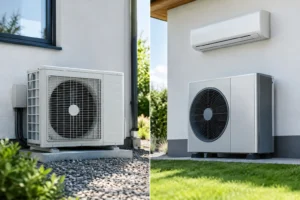
Split systems are often an effective choice for single rooms, extensions, bedrooms, small offices and retail spaces. A wall-mounted indoor unit is paired with an outdoor condenser, delivering targeted cooling with relatively straightforward installation where access allows.
For properties with several areas to cool, a multi-split system may allow multiple indoor units to connect to one outdoor unit. This can be useful where bedrooms, living areas or separate office rooms need independent temperature control. Larger commercial premises may require more complex solutions, such as cassette units, ducted systems or a tailored multi-zone design.
There are trade-offs. A multi-room system can provide flexible control, but it needs careful planning for pipe routes, outdoor-unit location and future servicing access. Ducted systems can offer a discreet finish, although they require sufficient ceiling void space and tend to be more practical during a refurbishment or fit-out than after decoration is complete.
Reducing heat before the air conditioning starts
The most cost-conscious cooling strategy reduces the amount of heat entering a building in the first place. Air conditioning is highly effective, but it should not be asked to compensate for avoidable solar gain all day.
External shading, blinds, curtains and window films can help, depending on the glazing and the building’s appearance requirements. Closing blinds before direct sun reaches the room is usually more effective than reacting once the space is already hot. For commercial properties, shading may also reduce glare on screens and improve customer comfort near windows.
Night-time ventilation can be useful when outdoor temperatures fall, particularly in secure buildings with suitable opening windows. However, this is not a complete answer during warm spells when evenings remain hot, or in noisy, polluted or security-sensitive locations. In those cases, mechanical cooling provides the dependable control that opening a window cannot.
Insulation and draught-proofing should be balanced with planned ventilation. Sealing uncontrolled gaps can improve efficiency, but occupied rooms still need a route for fresh air. This is why climate resilient cooling should be assessed as part of the whole property rather than treated as a stand-alone purchase.
Efficiency is about design, controls and behaviour
Modern inverter air conditioning systems adjust their output to maintain the set temperature rather than repeatedly switching fully on and off. When correctly sized and installed, this can make them far more economical than many customers expect.
The setpoint matters. Trying to maintain an excessively low temperature during a heatwave increases energy use and can create an uncomfortable contrast between indoors and outdoors. In most homes and workplaces, a moderate, stable setting provides better day-to-day comfort. Avoid directing cold airflow straight at desks, beds or seating areas, as this can make occupants feel chilly even when the room temperature is appropriate.
Controls should be simple enough for people to use correctly. Timers, schedules and zoning prevent systems running in empty rooms. Wi-Fi controls can be helpful for businesses that need to prepare a space before opening or for homeowners returning from work, but they are only valuable if settings are reviewed rather than left running unnecessarily.
For landlords and business owners, clear instructions are worth providing. A system is more likely to deliver efficient comfort when users know how to select cooling mode, adjust the temperature sensibly and keep doors and windows closed while it operates.
Maintenance is part of climate resilience
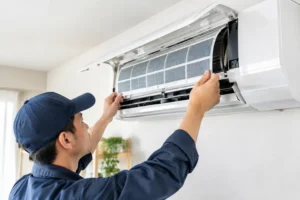
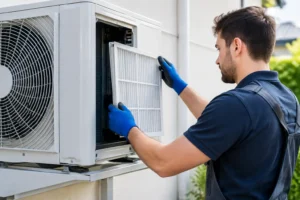
A system that has not been maintained may lose performance just when summer demand is highest. Blocked filters restrict airflow, dirty coils reduce heat transfer and drainage faults can lead to water leaks or shutdowns. Small issues are often less disruptive and less costly to resolve before a period of sustained hot weather.
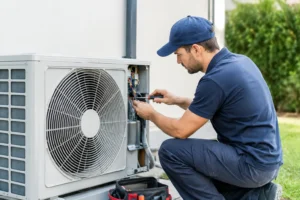
Routine maintenance normally includes checking filters, cleaning key components, inspecting electrical connections, assessing refrigerant performance and confirming that condensate drains correctly. The exact work depends on the system and its use, but regular servicing helps protect efficiency, hygiene and reliability.
Commercial operators should be particularly careful not to leave maintenance until there is a failure. A breakdown in a customer-facing area, office or equipment room can quickly affect operations. Planned visits also give an engineer the chance to spot worn components, airflow issues or controls that need adjustment before they become an urgent callout.
When repair is sensible and when replacement is better
Repair is often the right choice where the system is relatively modern, the fault is isolated and the equipment remains efficient. A qualified engineer can diagnose electrical faults, drainage problems, fan issues and performance concerns without assuming replacement is necessary.
Replacement can be the better long-term decision where a unit is unreliable, inefficient, uses outdated refrigerant or no longer provides enough capacity for a changed space. For example, an office that has added staff and computers since its original installation may need a revised design rather than repeated repairs to an unsuitable system.
The practical question is not simply whether an old unit can be repaired. It is whether it can continue to provide dependable comfort at a sensible running cost when temperatures rise.
A sensible next step for Essex property owners
Climate resilient cooling begins with an honest assessment of the space and its risks. Before choosing equipment, consider where heat builds up, when the room is occupied, how the building is ventilated and what would happen if cooling failed during the hottest week of the year.
Essex Air Conditioning provides free surveys and no-obligation quotations for residential and commercial customers, helping identify an air conditioning and ventilation solution that fits the property rather than forcing a one-size-fits-all answer. Whether the priority is a cooler bedroom, a more productive office or reliable comfort for customers, professional specification gives you a stronger result.
The best time to plan cooling is before the next heatwave makes the decision urgent. A well-designed, maintained system gives a property the breathing room to cope when summer temperatures stop being exceptional.