A sour, damp or musty smell from an air conditioning unit can quickly make a comfortable room unpleasant. If you are wondering why aircon smells, the answer is usually moisture, dirt or a drainage issue inside the system – and leaving it unresolved can affect air quality, comfort and system performance.
The good news is that most odours have a clear cause. Some can be reduced with simple filter care, while others need a professional clean or repair to stop the smell returning. The type of smell, when it appears and whether the system is cooling properly all provide useful clues.
Why aircon smells when it is switched on
Air conditioning works by removing heat and moisture from the air. During this process, condensation forms around the indoor coil and should drain away safely. When moisture remains in the unit, or when dust and organic material collect around damp components, it creates conditions where bacteria and mould can grow.
This is particularly common in systems that have not been used for several months, units operating in humid areas, or air conditioners with overdue maintenance. A wall-mounted split system in a bedroom may develop a stale smell after winter, while a busy office system can pick up odours more quickly because it runs for longer and handles more airborne dust.
The smell may only last for the first few minutes. That does not necessarily mean the issue has gone away. It can simply mean that the airflow has dispersed the odour around the room.
The most common air conditioning smells
Musty or damp smells
A musty smell is the most frequent complaint. It commonly points to mould, mildew or bacteria on the evaporator coil, filters, fan wheel or within the condensate tray. These areas are often out of sight, so a unit may look clean externally while contamination builds up inside.
Dirty filters are often part of the problem. Filters capture dust, fibres and airborne particles, but a clogged filter restricts airflow and can retain moisture. Cleaning reusable filters or replacing disposable ones may improve the smell, but it will not always remove growth already present on internal components.
Sour, stale or ‘dirty sock’ smells
A sharp sour smell, sometimes described as sweaty socks, usually comes from bacterial build-up on the evaporator coil. The coil repeatedly becomes cold and damp during operation. If dust settles on it, bacteria can feed on the material and create a persistent odour.
This needs more than a quick spray through the front grille. A proper coil and drain-tray clean is designed to remove the build-up safely rather than mask it with fragrance. If the smell returns soon after cleaning, the drainage arrangement or the condition of the fan wheel may need closer inspection.
Drainage or sewage-like smells
A smell similar to stagnant water, drains or sewage should be dealt with promptly. The condensate drain may be partially blocked, incorrectly installed or holding standing water. In some properties, poorly positioned pipework can also allow unwanted odours to travel back towards the unit.
Look for dripping water, staining beneath the indoor unit, gurgling sounds or reduced cooling. Do not try to force a blockage through with sharp objects or strong household chemicals. These can damage the drain pipe or cause water to spill inside the property.
Burning, electrical or plastic smells
A burning smell is different from a musty odour and should never be ignored. It may indicate overheating wiring, a failing electrical component, a motor issue or debris near a hot part of the system. Switch the unit off at the controller and isolate the power if it is safe to do so. Arrange a qualified air conditioning technician to assess it before using the system again.
Chemical or sweet smells
A chemical smell can occasionally indicate a refrigerant leak, although refrigerants do not always have a strong odour. It can also come from cleaning products, adhesives or materials near the indoor unit. If the air conditioner is no longer cooling as it should, is hissing, or has oily marks around pipe connections, turn it off and book a professional inspection.
Refrigerant work must be completed by suitably qualified engineers. Topping up refrigerant without finding and repairing the source of a leak is not a lasting solution.
Checks you can make safely
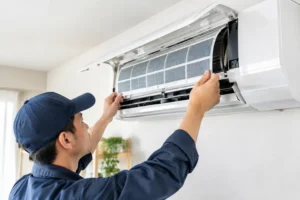
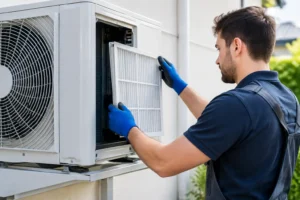
Before arranging a call-out, there are a few sensible checks that may help identify the cause. Switch the air conditioning off first, then remove and inspect the filters in line with the manufacturer’s instructions. If they are dusty, wash reusable filters with lukewarm water and allow them to dry completely before refitting. Replace any filters that are damaged or designed for single use.
Check whether water is dripping from the indoor unit or pooling beneath it. Also look outside at the condensate discharge point, where accessible, to see whether water is draining normally while the system runs. A small amount of condensate is expected during cooling, but indoor leaks are not.
Think about the timing of the odour. A smell that begins only when cooling starts usually suggests an issue around the coil or drain system. An odour present in fan-only mode may point more towards filters, the fan wheel or contaminated ductwork. For ducted commercial systems, smells can also be drawn in from ceiling voids, kitchens, toilets or nearby areas if ventilation and air pathways are not correctly managed.
Avoid using air fresheners as a fix. They may hide the smell temporarily, but they do not clean the source and can make it harder to tell whether the problem is worsening.
When an aircon smell needs professional attention
Book a professional service if the smell continues after the filters have been cleaned, if it returns regularly, or if there are signs of water leakage, poor cooling or unusual noise. These symptoms can indicate internal contamination or a fault that cannot be reached safely through routine owner care.
A thorough maintenance visit can include cleaning filters, the evaporator coil, fan wheel, condensate tray and drain line as appropriate. The technician should also check electrical connections, airflow, refrigerant performance and the overall condition of the system. This approach addresses both the smell and the underlying reason it developed.
For landlords and commercial property operators, persistent air conditioning odours are more than an inconvenience. They can lead to tenant complaints, discomfort for staff and visitors, and avoidable downtime. Planned maintenance is often more cost-effective than repeated reactive call-outs, particularly where several indoor units are in use.
Essex Air Conditioning supports homes and businesses across Essex with practical air conditioning maintenance, repairs and cleaning tailored to the condition of the system. An inspection can establish whether the issue is routine cleaning, drainage correction or a more urgent repair.
How to stop smells coming back
Regular maintenance is the most reliable prevention. How often a system needs attention depends on how it is used. A lightly used home unit may need a professional service annually, while a shop, server room, salon, office or hospitality setting may benefit from more frequent checks due to longer operating hours and higher dust levels.
Keep furniture, curtains and stored items clear of indoor unit air intakes and outlets. Restricted airflow can encourage condensation and reduce the unit’s efficiency. Clean filters at intervals recommended by the manufacturer, especially during periods of heavy use.
If you use cooling mainly in summer, run the system occasionally outside the hottest months where appropriate. This can help identify drainage or airflow problems before the unit is needed every day. Some systems also have a self-clean or drying function that runs the fan after cooling to reduce moisture on the coil. It can be useful, but it does not replace proper cleaning and maintenance.
A smell is a useful warning sign
Air conditioning should make a room feel fresher, not make you reach for the windows. A mild odour after a long period of inactivity may have a straightforward cause, but recurring damp, burning or drainage smells deserve prompt attention. Addressing them early protects comfort, helps maintain cleaner airflow and can prevent a small maintenance issue becoming a more costly repair.