A system that cools a room is no longer the whole story. The most useful aircon technology trends now focus on reducing running costs, improving air quality and giving property owners more control over comfort in every season. For homes, offices, shops and rental properties in Essex, the right upgrade can make a meaningful difference – but not every new feature is necessary for every building.
The best choice still starts with the basics: a correctly sized, professionally installed and regularly maintained system. Technology should support that foundation, not distract from it.
Aircon technology trends that matter most
Inverter systems are becoming the expected standard
Older fixed-speed air conditioning units tend to switch fully on, then off, as a room reaches its target temperature. Inverter-driven systems work differently. They adjust compressor output gradually, delivering only the cooling or heating capacity needed at that moment.
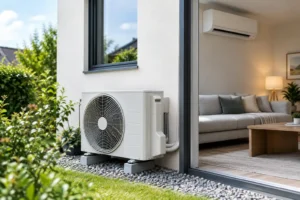
That means steadier room temperatures, quieter operation and typically lower electricity use, particularly where a system runs for long periods. It is one reason modern split systems are well suited to bedrooms, home offices, reception areas and small retail premises.
There is a trade-off. Higher-quality inverter equipment can cost more initially than a basic unit, and savings depend on how often the system is used, how well the space is insulated and whether the unit has been specified correctly. A large system fitted to a small room will still cycle inefficiently, whatever technology it contains.
Heating and cooling from one system
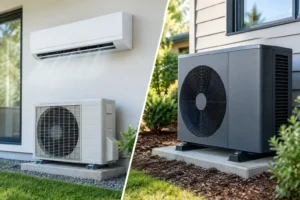
Air-to-air heat pump air conditioning is increasingly being considered as a practical heating option, not just a summer cooling solution. In heating mode, the system moves heat from outdoor air into the building. It can provide responsive warmth during milder weather and can be particularly useful in spaces that need heating only at certain times, such as garden rooms, meeting rooms or high-street premises.
For homeowners, this may reduce reliance on less efficient electric heaters. For businesses, it can provide a flexible way to heat and cool occupied zones without conditioning an entire building at the same level.
It is not necessarily a replacement for every existing heating system. Larger, poorly insulated properties or spaces with high heat loss may need a broader heating strategy. A survey should consider the building fabric, occupancy, room use and expected operating hours before any recommendation is made.
Smarter controls, without unnecessary complication
Wi-Fi controls and app-based scheduling are now common on many quality air conditioning systems. Used properly, they allow users to set temperatures, create weekly schedules and check whether units have been left running after staff have gone home.
For a landlord, this can make it easier to manage comfort in a property between tenancies. For a business owner, scheduling can prevent energy being wasted cooling an empty office at 6am or heating a shop long after closing time. Some systems also offer energy-use information, helping users spot changes in consumption before bills become a surprise.
Smart controls are helpful when they remain simple. A complicated app will not save money if nobody uses it, and remote access should not replace sensible settings at the unit itself. For many properties, a straightforward schedule, sensible temperature limits and clear user guidance deliver more value than every available connected feature.
Better comfort comes from zoning
One of the more practical aircon technology trends is improved zoning. Rather than treating every room or area as though it has the same needs, modern multi-split and commercial systems can provide independent control to separate spaces.
A south-facing meeting room may overheat in the afternoon while a shaded office remains comfortable. A bedroom may need quiet cooling overnight, whereas a living room only needs it in the evening. Zoning lets each area operate according to its real use rather than forcing one temperature across the whole property.
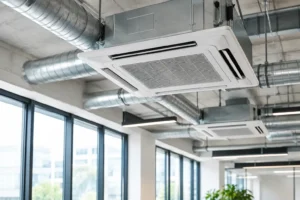
This is especially valuable in mixed-use commercial premises, where a front retail area, stock room and office can have very different heat loads. It can also reduce unnecessary running time, although there are design limits. Multi-room systems need careful pipework planning, sufficient outdoor-unit capacity and proper consideration of where indoor units can be positioned.
Sensors are improving how systems respond
Many modern units use occupancy, temperature and humidity sensors to adjust their output. Some can detect whether people are in the room and reduce activity when a space is empty. Others direct airflow away from occupants to avoid the uncomfortable cold draught associated with poorly set-up air conditioning.
Humidity management is often overlooked. A room can feel sticky even when the temperature looks acceptable on paper. Air conditioning naturally removes some moisture as it cools, and better sensors help the system respond more accurately to changing conditions.
Sensors do have limits. They cannot compensate for open doors, constant solar gain through unshaded glazing or a crowded room with inadequate capacity. They are best viewed as a refinement to good system design, rather than a cure for a poorly planned installation.
Indoor air quality is moving higher up the agenda
Comfort is not only about temperature. Businesses and homeowners are paying closer attention to dust, odours, humidity and stale air, especially in well-sealed modern buildings. Many air conditioning units now include upgraded filtration options and self-cleaning functions that help keep internal components cleaner between services.
Filtration can improve the quality of recirculated air, but it does not replace ventilation. This distinction matters. An air conditioning unit generally conditions the air already in a room, while a ventilation system brings in fresh outdoor air and removes stale indoor air. Some properties need both, particularly busy offices, hospitality spaces and rooms with limited opening windows.
The right approach depends on the use of the building. A small home office may benefit from a quiet wall-mounted system and regular window ventilation. A commercial space with higher occupancy may require a dedicated ventilation assessment alongside air conditioning. Treating these as separate but connected requirements leads to better results.
Cleaner refrigerants and efficient equipment choices
Newer air conditioning systems increasingly use refrigerants with a lower global warming impact than equipment installed years ago. R32 remains common in domestic and light commercial applications, while other refrigerant options are developing across the wider HVAC market.
The key point for property owners is not to select equipment based on refrigerant alone. Availability of qualified service support, equipment suitability, future maintenance requirements and legal compliance all matter. Refrigerant work must be carried out by appropriately qualified engineers, and older systems should be assessed individually rather than replaced simply because something newer exists.
A reliable system that is maintained, correctly charged and still meets a property’s needs may have useful service life left. Replacement becomes more compelling when repair costs rise, performance falls, parts become difficult to source or the building’s use has changed.
Maintenance is still the technology that protects your investment
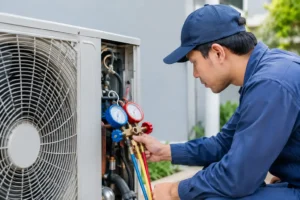
The smartest controls and most efficient compressor cannot overcome blocked filters, dirty coils or a developing refrigerant leak. Regular maintenance remains essential to performance, efficiency and reliability.
For homes, an annual service is often a sensible baseline, particularly before the warmest part of the year. Commercial systems may need more frequent visits depending on operating hours, occupancy and the environment. Kitchens, workshops and busy public-facing premises can place greater demands on equipment than a lightly used domestic unit.
A professional visit should look beyond a quick clean. Filters, electrical connections, drainage, operating pressures, airflow and overall performance all need attention. It is also an opportunity to check that controls are still programmed around how the property is actually used.
Choosing the right upgrade for your property
The most worthwhile investment is rarely the unit with the longest features list. Start with the practical questions: which rooms are uncomfortable, when are they occupied, how is the space used and what is driving current energy costs? A bedroom requiring overnight cooling needs a different solution from a server room, salon or open-plan office.
For many customers, a modern inverter split system with sensible controls is the strongest balance of performance, cost and reliability. Larger premises may benefit from multi-split zoning, central controls and a combined approach to cooling, heating and ventilation. A proper survey is where those decisions become clear.
Essex Air Conditioning provides free, no-obligation surveys to help homeowners and businesses choose equipment that suits the building rather than chasing a trend. The right system should feel straightforward to use, economical to run and dependable when the weather changes.