A salon can feel busy before the first client has sat down. Hairdryers are running, styling tools are heating up, staff are moving between stations and the front windows may be catching the afternoon sun. The best air conditioning for salons is not simply the unit with the highest cooling output. It is a system that keeps clients comfortable, helps your team work at their best and does so quietly without disrupting the experience you have built.
For salon owners, a well-planned system also has to deal with changing occupancy, warm treatment areas and the need to protect product displays and equipment from excessive heat. Choosing the right setup begins with looking at how your salon actually operates, not just its floor area.
What Makes the Best Air Conditioning for Salons?
Comfort is part of the service. A client wearing a colouring gown for two hours will notice a stuffy salon quickly, while a stylist working beside dryers and straighteners can become uncomfortable even sooner. At the same time, cold air blowing directly onto a client during a cut, colour or treatment is not a good result either.
The right air conditioning system should deliver even temperatures across the salon, with controlled airflow rather than a strong draught. It should run quietly enough for consultations, music and normal conversation to continue without distraction. Energy efficiency matters too, particularly where the system will operate through long opening hours over spring and summer.
Ventilation must also be considered alongside cooling. Air conditioning recirculates and conditions indoor air, but salons can benefit from fresh-air ventilation where there are chemical odours, spray products or enclosed treatment rooms. In some premises, the best answer is an air conditioning installation combined with a separate, properly designed ventilation solution.
The Right System Depends on Your Layout
There is no single unit that suits every salon. A compact barber shop, a multi-chair high street salon and a large beauty business with treatment rooms all have different requirements. A professional survey is valuable because it identifies the heat load, the best locations for indoor units and any restrictions around external equipment.
Wall-Mounted Split Systems
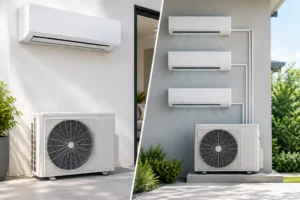
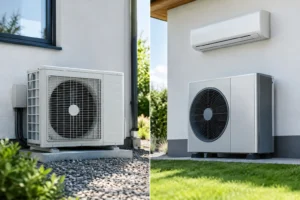
A wall-mounted split system is often an excellent choice for a smaller salon or reception area. It consists of an indoor unit and an outdoor condenser, providing efficient cooling and, on many models, energy-efficient heating for colder months.
These systems are cost-effective, reliable and relatively straightforward to install. However, placement is critical. Installing one directly above a styling chair can create uncomfortable airflow, while a poorly positioned unit may cool the front of the salon but leave the back feeling warm. Correct sizing and careful siting make the difference.
Multi-Split Air Conditioning
Multi-split systems connect several indoor units to one outdoor unit. They suit salons with distinct zones, such as a main styling floor, reception, staff room and one or two treatment spaces. Each indoor unit can be controlled separately, allowing you to avoid cooling rooms that are not in use.
This approach offers a neat solution where outdoor space is limited. The trade-off is that system design is more involved, so the installation should be planned by an experienced contractor rather than treated as a like-for-like unit purchase.
Ceiling Cassette Units
For an open-plan salon with a suspended ceiling, cassette units are often worth considering. They sit within the ceiling grid and distribute air in several directions, helping to cool a larger area more evenly than a single wall-mounted unit.
They are particularly useful where wall space is taken up by mirrors, retail shelving or artwork. Cassette systems can create a cleaner visual finish, although they need sufficient ceiling void space and access for installation and future maintenance.
Ducted Systems
Ducted air conditioning hides most of the equipment above ceilings, supplying conditioned air through discreet grilles. It can be the right choice for premium fit-outs, larger salons or businesses that want the least visible solution.
It is not always necessary for a smaller premises. Ducted systems typically require more building work, more space and a higher initial budget. Where the layout and refurbishment plans support it, though, they offer excellent comfort and a polished appearance.
Get the Cooling Capacity Right
An undersized system will run hard without bringing the salon to a comfortable temperature. An oversized system can cool the room too quickly, cycle inefficiently and create noticeable temperature swings. Neither delivers the calm, consistent environment clients expect.
A proper assessment looks beyond square footage. It should account for the number of styling stations, dryers and heat tools, ceiling height, glazing, orientation, insulation, occupancy and heat from lighting. A south-facing salon in Chelmsford with large front windows may need a very different specification from a shaded unit in Leigh-on-Sea, even if the floor area is similar.
Do not rely solely on a quick online calculator. These tools can offer a rough starting point, but they cannot assess your actual layout, solar gain or working patterns. A free site survey provides a far more dependable basis for choosing the capacity and number of indoor units required.
Quiet Operation Is a Business Essential
Noise levels are easy to overlook when comparing specifications, yet they matter greatly in salons. Clients come for a personal service and may spend considerable time discussing colour, treatments or their next appointment. A noisy indoor unit can make this less pleasant for everyone.
Modern quality systems can operate very quietly at normal fan speeds, but the system must be specified correctly. If a unit is too small for the room, it may need to run at a louder setting for long periods. Positioning also matters: keep units away from consultation areas where possible, and ensure the outdoor condenser is installed with neighbours, nearby flats and adjacent businesses in mind.
Plan for Zones, Not Just One Temperature
The styling floor is rarely the only area that needs attention. Reception can become warm when the entrance door opens frequently. Back rooms may hold stock, laundry equipment or staff facilities. Treatment rooms often need a more closely controlled temperature so clients can relax.
Zoning allows each space to be managed according to its use. This improves comfort and can reduce waste, because you are not cooling an empty room simply to make the busiest area feel right. Individual controls also give staff a practical way to respond to day-to-day changes without adjusting the whole salon.
Installation Details That Protect Your Fit-Out
A salon installation should work around the business, not create unnecessary disruption. Before work begins, agree the route for pipework, condensate drainage and electrical supplies. These details influence both reliability and appearance.
Condensate drains need a suitable fall or a correctly installed pump. Pipework should be neatly contained and, where possible, routed to minimise its visual impact. Outdoor units need stable mounting, clear airflow and accessible positioning for servicing. A low-cost installation that ignores these basics can lead to leaks, noise, poor performance or an untidy finish later on.
If you are refurbishing, involve your air conditioning contractor early. This makes it much easier to coordinate ceilings, lighting, electrical work and décor before the salon is open and trading.
Maintenance Keeps Comfort Consistent
Salon air conditioning works in an environment with airborne hair, dust, product residue and high daily use. Filters can become dirty faster than in a typical office, reducing airflow and making the system work harder. Poor maintenance can also affect indoor air quality and increase the chance of avoidable breakdowns during a heatwave.
Regular maintenance should include filter cleaning, checks of drainage and refrigerant performance, inspection of electrical components and a review of general operation. The ideal frequency depends on use, but a salon with long opening hours should not wait until cooling performance drops before arranging a service.
A maintained system costs less to run, is more likely to deliver its expected lifespan and gives you greater confidence when client appointments are fully booked.
Choose a Contractor Who Understands Commercial Comfort
The best equipment still depends on the quality of the design and installation. Look for a contractor that takes time to assess the premises, explains the options in plain terms and provides a clear quotation rather than pushing a one-size-fits-all solution. They should be able to advise on equipment placement, energy use, noise considerations and maintenance from the start.
For salon owners across Essex, Essex Air Conditioning provides professional surveys, installation, repairs and ongoing servicing designed around the way commercial premises operate. The aim is simple: a system that looks right, runs reliably and helps every client feel comfortable from arrival to checkout.
If your salon feels warm, uneven or difficult to manage during busy periods, a site survey is the most useful next step. It turns a vague comfort problem into a practical plan that suits your premises, budget and future growth.