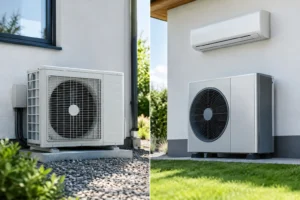
A flat that holds heat long after sunset can quickly become uncomfortable, particularly in top-floor homes with large south-facing windows. The best aircon systems for flats deliver reliable cooling without taking over valuable living space, creating unnecessary noise, or causing issues with neighbours and building management. The right choice depends less on finding the biggest unit and more on matching the system to your rooms, layout and permissions.
For most homeowners and landlords, a professionally installed split system is the strongest long-term option. However, there are occasions when a multi-split system, a discreet ducted solution or even a portable unit makes more sense. Here is what to consider before making the investment.
What makes air conditioning in a flat different?
Installing air conditioning in a flat involves a few practical considerations that do not always apply to a detached home. There may be limited space for an outdoor condenser, restrictions within the lease, close neighbours and shared communal areas to consider. A good system design deals with all of these before installation begins.
The outdoor unit needs a secure, accessible position with sufficient airflow. Depending on the building, this could be on a balcony, terrace, external wall or ground-level area. Its location should minimise visual impact and direct sound away from neighbouring windows and balconies.
If you lease your flat, check the terms of your lease and speak to the freeholder or managing agent before work is arranged. Written consent is commonly required for an external condenser and pipework. Flats do not always have the same permitted development allowances as houses, so it is sensible to check whether planning permission or listed-building consent could be relevant in your area.
A professional survey also considers the route for refrigerant pipework, the electrical supply and safe condensate drainage. These details affect the finish, performance and future serviceability of the installation.
Best aircon systems for flats: the main options
Single-split wall-mounted systems
For one main room, such as a bedroom, living room or home office, a single-split air conditioning system is normally the best solution. It pairs one quiet indoor wall unit with one outdoor condenser. The indoor unit removes heat from the room and transfers it outside, providing consistent cooling that portable units struggle to match.
Modern wall-mounted units are compact, efficient and typically very quiet on lower fan settings. Many also provide heating, dehumidification and air filtration, giving you useful year-round temperature control. This is especially valuable in flats where a room can feel chilly in spring but overly warm once the sun comes through the glass.
The trade-off is that a single split serves one area well rather than the whole property. If the bedroom is the priority, placing the unit there will not necessarily keep a separate lounge cool with doors closed. For many flats, though, targeting the room where you sleep or work offers the best value.
Multi-split systems
A multi-split system connects two or more indoor units to one outdoor condenser. It suits flats with several bedrooms, a separate lounge, or a layout where cooling is needed in more than one regularly used room.
Using one outdoor unit can be a major advantage where balcony or exterior space is limited. Each indoor unit can usually be controlled independently, so you can cool the main bedroom overnight without running units in empty rooms. This improves comfort and helps control running costs.
Multi-splits are more complex to design and install. Pipework routes must be planned carefully, and the outdoor unit must be sized to support the combined demand of the rooms. They have a higher upfront cost than a single split, but can be more practical and neater than installing several separate condensers.
Ducted and concealed systems
Concealed ducted systems distribute cooled air through discreet grilles rather than visible wall units. They can produce a very clean finish in a high-specification refurbishment or a larger flat with suitable ceiling voids.
They are not the default choice for most existing flats. Ductwork requires space, access and more building work, making installation more disruptive and expensive. Where a false ceiling is already part of a renovation, it may be worth considering. Otherwise, high-wall units generally provide the same dependable comfort at a more cost-conscious price point.
Portable and monobloc units
Portable air conditioners can be useful as a short-term measure, particularly where external alterations are not permitted. They require no permanent outdoor condenser, but they are noisier inside the room, take up floor space and usually vent warm air through a window kit.
A monobloc fixed unit may avoid the need for an outdoor condenser, although it still needs wall openings for airflow and will not normally offer the same efficiency or quiet operation as a split system. These options have their place, but for reliable cooling in a permanent home, they are usually a compromise rather than the first choice.
Getting the size right matters more than buying bigger
An oversized air conditioner can cool a room too quickly, then cycle on and off rather than running steadily. That can reduce effective dehumidification, increase wear and make temperatures feel less consistent. An undersized unit will run continuously in hot weather without achieving the comfort you expect.
As a broad guide, a small bedroom may need around 2.5 kW of cooling output, while a larger lounge with wide glazing may require 3.5 kW or more. These figures are only a starting point. Ceiling height, insulation, number of occupants, appliances, window direction and shading all make a difference.
Top-floor flats in Basildon, Southend-on-Sea and across Essex can experience significant solar gain in summer, particularly where loft insulation is limited or rooms have extensive glazing. A proper heat-load assessment prevents guesswork and ensures the proposed system is suited to the space.
Noise, neighbours and outdoor unit placement
A quality air conditioning system should be quiet enough to support sleep and everyday living. Indoor sound levels vary by model and fan speed, but the quietest units can operate at a very low level on night mode. This makes them well suited to bedrooms, provided the unit is correctly selected and positioned.
External noise deserves equal attention in flats. The condenser should not sit directly beneath a neighbour’s window or against a lightweight balcony structure likely to transmit vibration. Anti-vibration mounts, appropriate brackets and a carefully selected location all make a meaningful difference.
Do not judge noise from a brochure figure alone. A survey should assess the surrounding building, likely operating times and the direction in which sound may travel. This is one reason a low-cost installation without a site visit can prove costly later.
Look beyond the purchase price
The system cost is only one part of the decision. Efficient inverter-driven air conditioning adjusts its output to maintain the selected temperature instead of simply switching between full power and off. This usually reduces energy use and provides a more stable, comfortable room environment.
Choose a recognised manufacturer with readily available parts, strong efficiency ratings and a suitable warranty. The best value is not always the lowest initial quote. It is a system that has been correctly sized, carefully installed and maintained so it performs efficiently for years.
If you intend to use the heating mode during cooler months, ask about the system’s heating performance as well as its cooling output. Air-to-air heat pump technology can provide useful, responsive warmth in a bedroom, office or living area, though it should be considered alongside your existing heating arrangement rather than assumed to replace it throughout the flat.
Questions to settle before installation
Before choosing a system, establish where the condenser can go, whether permission is required and which room most needs cooling. Then consider how often each room is used and whether you expect your needs to change, such as working from home more frequently or letting the property in future.
A free survey is the most reliable way to answer these questions. An experienced installer should assess the room dimensions and heat gain, discuss indoor unit locations, inspect potential pipe routes and explain any leaseholder or planning considerations. They should also provide a clear, no-obligation quotation that sets out what is included.
Essex Air Conditioning can design an installation around the realities of your flat, from a quiet bedroom single split to a multi-room system with one carefully positioned outdoor unit. Good workmanship at this stage is what protects the appearance of the property and the performance of the equipment.
The right air conditioning system should feel unobtrusive once it is in place: cool when the room is warm, quiet when you are resting, and efficient enough to use with confidence. Start with a survey of the space and the building rules, and the right option becomes much clearer.