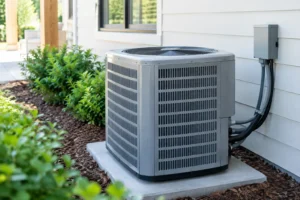
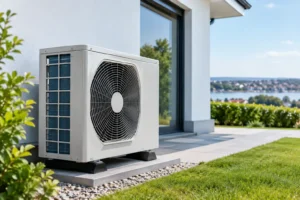
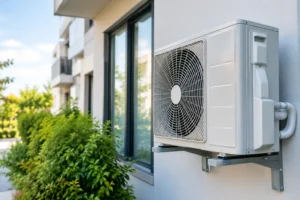
A wall-mounted unit in a bedroom and a full system serving an office block might both be called air conditioning, but they are not the same job. When people compare domestic vs commercial air conditioning, they are usually trying to answer a practical question – what type of system is right for the building, the people using it, and the budget available?
That matters because the wrong choice can create problems that show up quickly. A home system fitted in a busy retail unit may struggle with demand, while an over-specified commercial setup in a small property can add unnecessary cost and complexity. The best result comes from matching the system to the way the space is actually used.
Domestic vs commercial air conditioning – the main difference
The simplest way to understand domestic vs commercial air conditioning is this: domestic systems are designed for smaller private living spaces, while commercial systems are built for larger, more demanding environments with longer operating hours and more complex control requirements.
In a house or flat, air conditioning is usually there to improve comfort. You may want a cooler bedroom in summer, a more pleasant home office, or efficient heating in winter from a modern split system. The usage pattern tends to be predictable, with fewer occupants and less heat generated by equipment.
In a commercial setting, the system often has to do more than keep people comfortable. It may need to support staff productivity, protect equipment, maintain suitable conditions for customers, or deal with rooms that heat up quickly because of lighting, machinery, computers or footfall. A shop, office, salon, surgery or restaurant can all have very different cooling loads, even if the floor area looks similar on paper.
How system design changes from home to business
Domestic installations are usually more straightforward. Many homes are well served by a single split unit or a small multi-split system with indoor units in selected rooms. The layout is simpler, pipe runs are often shorter, and controls are designed for ease of use.
Commercial systems tend to involve more planning from the start. You may be looking at multiple indoor units, larger condensers, ducted systems, cassette units, VRF or VRV arrangements, zoning and centralised controls. The aim is not just to cool a room, but to manage temperature consistently across areas with different demands.
That is where a proper survey makes a difference. In commercial premises, system sizing cannot be based on square footage alone. Ceiling height, occupancy, glazing, opening hours, server equipment, lighting, kitchen appliances and ventilation all affect the final recommendation.
Capacity and usage are where mistakes happen
One of the biggest misunderstandings is assuming that bigger premises simply need bigger versions of domestic units. In reality, commercial air conditioning is not just domestic equipment at a larger scale.
A home unit may only need to cope with evening and overnight use in one or two rooms. A commercial unit may run throughout the working day, across multiple zones, with doors opening regularly and internal heat gains changing hour by hour. That workload affects equipment selection, controls, pipework design and maintenance planning.
Undersizing is a common risk in business settings. The system runs constantly, struggles to hold temperature, consumes more energy than expected and wears more quickly. Oversizing is not ideal either. If the unit is too powerful for the space, it may cycle on and off too often, reducing efficiency and comfort.
Installation costs and long-term value
Domestic air conditioning is usually cheaper to install than commercial air conditioning, but upfront price should never be the only comparison. The better question is what value the system delivers over time.
For homeowners and landlords, value often means comfort, quieter operation, energy-efficient heating and cooling, and a neat installation that suits the property. For businesses, value can also include staff comfort, customer experience, reduced downtime, improved control over different areas and a system that supports daily operations without constant attention.
Commercial projects often cost more because they require more equipment, more labour, more detailed design work and sometimes access planning outside normal business hours. There may also be additional electrical work, drainage considerations or integration with existing building services.
That does not mean domestic systems are always simple or cheap. A listed property, awkward layout or requirement for multiple rooms can add complexity. Equally, not every business needs a large-scale commercial setup. A small office or independent shop may be well served by a modest, carefully designed system.
Control, zoning and flexibility
This is one area where commercial air conditioning usually pulls ahead. In many business environments, different spaces need different settings. A meeting room full of people will warm up faster than a quiet back office. A server room has different priorities from a reception area. A salon or clinic may need reliable temperature control throughout opening hours.
Commercial systems are more likely to offer advanced zoning, central control, scheduling and user permissions. That helps manage energy use while keeping conditions stable. It also reduces the problem of everyone adjusting individual units without coordination.
Domestic users tend to want simpler control. Straightforward handheld remotes, wall controllers and app-based settings are often enough. Ease of use matters more than layers of programming. The right answer depends on the building and the people using it.
Maintenance is not optional in either setting
If there is one point that applies equally to both, it is this: air conditioning needs regular maintenance to perform properly. Filters block up, components wear, refrigerant issues can develop, and small faults become larger ones if ignored.
For domestic systems, maintenance helps protect efficiency, air quality and lifespan. For commercial systems, the stakes are often higher. A breakdown in a home is inconvenient. A breakdown in a business can affect staff, customers, stock, equipment or trading hours.
Commercial maintenance schedules are usually more structured because the system works harder and may form part of wider compliance responsibilities. Businesses also need to think about planned servicing as a way to reduce disruption. Preventative maintenance is almost always more cost-effective than waiting for a failure in the middle of a busy period.
Compliance and responsibility
Another important distinction in domestic vs commercial air conditioning is the level of regulation and operational responsibility involved. Commercial premises often come with more formal obligations around health and safety, maintenance records and, in some cases, refrigerant management depending on the equipment installed.
That does not mean domestic customers can ignore standards. Any installation should still be carried out correctly, safely and by qualified professionals. But in commercial settings, there is usually more scrutiny around documentation, servicing and system performance because the building serves staff, customers or tenants.
This is one reason businesses benefit from working with an experienced contractor rather than simply chasing the cheapest quote. A low installation price can look appealing until problems appear with design, access, reliability or aftercare.
Which type is right for your property?
The answer depends less on the label and more on how the building functions. If you are cooling a house, flat, loft conversion or home office, a domestic system is normally the right fit. It will be selected around room size, insulation levels, layout and personal comfort.
If you are dealing with offices, retail premises, hospitality spaces, healthcare rooms, workshops or multi-zone properties, commercial air conditioning is usually more suitable because it can handle higher demand and more complex control. That said, there are grey areas. A small salon may not need the same system as a warehouse. A large, high-spec home may need a more advanced setup than a typical domestic installation.
This is where a professional survey matters. A good contractor should ask how the space is used, when it is occupied, what heat loads are present and what level of control you need. They should also be clear about trade-offs. For example, a lower-cost option may work well for a small premises, but it may offer less flexibility if the business expands.
In Essex, where properties range from compact flats and family homes to independent shops, offices and mixed-use sites, there is no one-size-fits-all answer. What works well in a detached home in Rayleigh may be completely wrong for a busy commercial unit in Chelmsford or Southend-on-Sea.
Choosing the right contractor matters as much as the equipment
Even the best equipment will underperform if it is badly specified or poorly installed. That is why the conversation should never start and end with brand names or unit prices. It should start with the building, the usage pattern and the outcome you want.
A dependable contractor will explain whether you need a domestic or commercial solution, size it properly, install it neatly and support it with repairs and maintenance when needed. That approach saves money over the life of the system and avoids preventable issues.
If you are weighing up domestic vs commercial air conditioning, the sensible next step is not to guess. It is to get the property assessed properly, ask direct questions and choose a system built around the real demands of the space – not a generic recommendation. The right setup should feel reliable from day one and still make sense years down the line.