A busy shop can become uncomfortable far faster than most owners expect. Sun through the frontage, warm lighting, refrigeration equipment, staff and a steady flow of customers all add heat. This guide to retail cooling systems explains how to choose a solution that keeps customers comfortable, supports staff and protects stock without creating unnecessary running costs.
Why retail cooling needs careful planning
Cooling a retail space is not simply a matter of fitting the largest air conditioning unit available. An oversized system can cool the room too quickly, switch on and off more often and waste energy. An undersized system may run continuously on warm days while failing to keep the shop comfortable.
The right design starts with the space itself. Floor area matters, but so do ceiling height, window size and orientation, insulation, internal lighting, customer footfall and the heat produced by tills, displays and refrigeration. A convenience shop with open refrigerated cabinets will have very different requirements from a boutique, salon or small office-based showroom of the same size.
Retailers also need to consider the customer experience. Warm, stuffy conditions can shorten browsing time and affect how people perceive the business. For staff who work long shifts, a stable indoor temperature can make a noticeable difference to comfort and productivity.
The main types of retail cooling systems
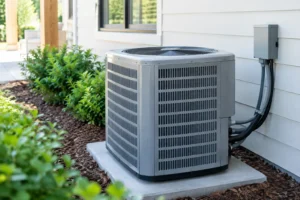
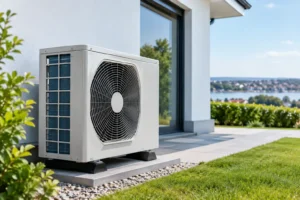
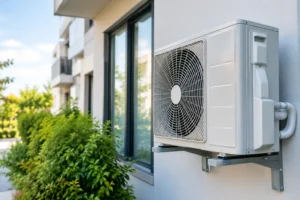
For many independent shops and commercial units, split air conditioning systems are the most practical choice. They use an outdoor condenser connected to one or more indoor units, providing efficient cooling and, in most cases, heating too.
Single-split systems
A single-split system pairs one indoor unit with one outdoor unit. It is often suitable for a small shop, stockroom, treatment room or enclosed office. It can be a cost-effective option where only one defined area needs cooling, but it will not solve temperature issues in a large, open trading area.
Multi-split systems
A multi-split system connects several indoor units to one outdoor unit. This works well for retailers that need separate temperature control in the shop floor, back office and staff room, while keeping the exterior less cluttered. Each indoor unit can usually be controlled independently, although system capacity must be calculated correctly from the outset.
VRF and VRV systems
Variable refrigerant flow systems are designed for larger or more complex premises. They can serve numerous indoor units across different zones and offer strong control over individual areas. They generally involve a higher initial investment and a more detailed design process, so they are most appropriate for larger stores, multi-room premises and commercial sites with changing occupancy patterns.
Ceiling cassettes and wall-mounted units
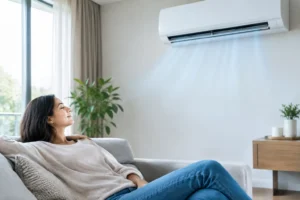
The indoor unit style matters as much as the system type. Wall-mounted units are efficient, accessible for maintenance and popular in smaller shops. Ceiling cassettes distribute air in several directions and can suit open retail floors with suspended ceilings. In spaces where appearance is especially important, concealed ducted systems may be considered, although installation is more involved and requires sufficient ceiling void space.
Cooling capacity is not a guess
It is tempting to choose a unit based on a quick square-metre calculation. That may provide a rough indication, but it is not a reliable basis for purchasing equipment. Two similar-sized shops can have dramatically different cooling loads.
A professional survey should assess solar gain through glass, the number of people normally in the premises, the location of heat-producing equipment and whether doors are frequently open. South-facing frontages in places such as Southend-on-Sea or Chelmsford, for example, may experience considerable heat gain during sunny trading hours. A shop with a constantly opening entrance will also lose cooled air quickly.
The survey should identify where the cool air needs to reach, not merely where an indoor unit can be mounted. Blowing cold air directly onto a till point, seating area or staff workstation can create complaints, while placing units too far from the main heat source may leave warm pockets around the store.
Consider cooling, heating and ventilation together
Modern air conditioning is usually a heat pump system, meaning it can provide cooling in summer and efficient heating in cooler months. For many shops, this offers a more flexible alternative to relying solely on electric heaters or an ageing heating system.
However, air conditioning does not replace ventilation. It recirculates and conditions indoor air; it does not automatically provide sufficient fresh air. Retail units with changing rooms, staff facilities, enclosed storerooms or high occupancy may need dedicated ventilation measures as well. Extract ventilation is particularly relevant where odours, moisture or heat build-up are present.
Door curtains and air curtains can also help in the right setting. An air curtain above a busy entrance creates a barrier that limits the loss of conditioned air, but its performance depends on correct sizing, installation height and airflow direction. It is a useful support measure, not a substitute for properly sized cooling.
Energy efficiency and running costs
The lowest installation price is not always the lowest-cost decision. Energy-efficient equipment from established manufacturers may cost more initially but can reduce electricity use, improve reliability and offer better temperature control over its working life.
Look at the unit’s seasonal efficiency ratings rather than focusing on headline cooling capacity alone. Inverter-driven systems adjust their output to match demand instead of operating only at full power. This is particularly useful in retail, where occupancy and outdoor temperatures vary throughout the day.
Controls deserve equal attention. Programmable timers, sensible temperature settings and zoning can prevent the system from running when the shop is empty or cooling areas that are rarely used. Setting an extremely low temperature does not cool the premises faster. It simply asks the system to work harder, increases energy use and can make customers and staff uncomfortable.
Simple building improvements can reduce demand on the system. Blinds, solar-control film, improved door seals and sensible management of lighting and display equipment can all help. The best results usually come from combining efficient equipment with practical measures that reduce the heat entering the shop.
Installation factors that affect performance
A good system can perform poorly if installation is rushed. Indoor units need clear airflow, correct drainage and a position that suits the layout of the premises. Outdoor condensers need adequate ventilation around them and must be located with noise, access and appearance in mind.
For leasehold retail premises, check the terms of the lease before work begins. Landlord consent may be required for external units, pipework routes or electrical alterations. Listed buildings, conservation areas and certain prominent frontages may also need additional consideration. Planning requirements vary, so early checks prevent delays after a system has been selected.
Electrical capacity should be assessed before installation. Smaller systems may connect to an existing suitable supply, while larger installations may require electrical upgrades. A clear proposal should explain what is included, such as pipework, condensate drainage, electrical work, commissioning and making good around service penetrations.
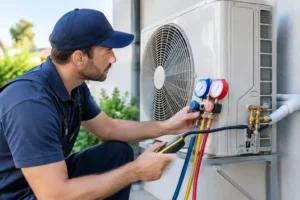
Commercial air conditioning must be installed and handled by appropriately qualified engineers. Refrigerant work is subject to F-Gas requirements, and correct commissioning is essential for efficiency, reliability and manufacturer warranty protection.
Maintenance protects your investment
Retail cooling systems work hardest when customers need them most, often during warm weather and busy trading periods. Waiting until a unit stops cooling is rarely the best maintenance strategy. Dirty filters, blocked condensate drains and neglected outdoor coils can restrict airflow, raise energy consumption and lead to avoidable faults.
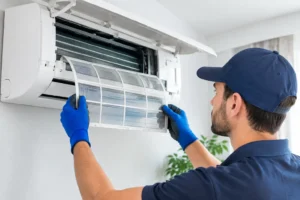
Routine maintenance normally includes cleaning filters and coils, checking refrigerant performance, inspecting electrical components, clearing drainage and testing controls. The exact schedule depends on usage, environment and equipment type. A fashion shop with normal footfall may need less attention than a premises with heavy dust, frequent door opening or refrigeration equipment adding constant heat.
Larger air conditioning systems may also be subject to TM44 inspection requirements. If the combined effective rated output exceeds 12kW, an inspection is generally required at least every five years. A qualified contractor can advise whether this applies to your premises and keep records in order.
When to repair and when to replace
A repair is often the sensible answer when a relatively new system has a clear, isolated fault. But repeated breakdowns, rising electricity bills, poor cooling performance and difficulty sourcing parts are warning signs that replacement may offer better value.
Older equipment can also use refrigerants that are becoming harder or more expensive to manage. Replacing it with a modern, energy-efficient system may reduce long-term operating costs and give the business more dependable comfort. The decision should be based on the condition of the equipment, repair history, expected lifespan and the actual needs of the shop today.
For retail businesses across Essex, a free on-site survey is the most reliable way to turn these considerations into a clear specification and no-obligation quote. Essex Air Conditioning can assess the premises, explain the practical options and install a system designed to keep trading spaces comfortable when it matters most.