When a room takes too long to cool, the problem is not always the air conditioning unit itself. In many homes and business premises, high energy use, uneven temperatures and poor comfort come down to how the whole space handles heat. If you are asking how to improve cooling efficiency, the best results usually come from a combination of system condition, control settings and the building around it.
That matters even more during warmer periods in Essex, when systems can end up running for longer than they should. A unit that is fighting blocked filters, warm air leaks or poor airflow will use more electricity and wear out faster. Better efficiency means lower running costs, more reliable performance and a more comfortable indoor environment.
How to improve cooling efficiency at the source
The first place to look is the air conditioning system itself. Cooling performance drops quickly when a unit is overdue for attention, even if it still turns on and produces cool air. Many people judge a system by whether it works at all, but efficiency problems often appear long before a complete breakdown.
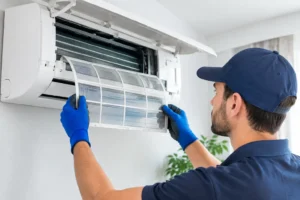
Dirty filters are one of the most common causes. When filters are clogged with dust and debris, airflow is restricted and the system has to work harder to move cool air around the room. That extra strain raises energy use and can reduce the lifespan of key components. Regular filter cleaning or replacement is a straightforward improvement, but it is often missed until comfort starts to suffer.
Indoor and outdoor coils also need to stay clean. If coils are coated in dirt, heat transfer becomes less effective. The result is simple – the system runs longer to achieve the same temperature. In commercial settings, where equipment may operate for extended hours, that inefficiency can add up quickly on energy bills.
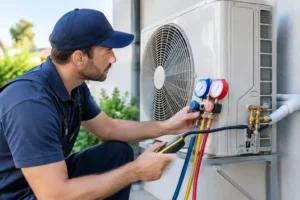
Refrigerant charge is another factor. Too little refrigerant and the unit cannot cool properly. Too much can be just as problematic. This is not an area for guesswork, because incorrect refrigerant levels affect efficiency, system pressure and long-term reliability. A professional inspection is the right approach if cooling output has clearly dropped.
Get the temperature settings right
One of the easiest ways to improve cooling efficiency is to use sensible temperature settings. It is a common mistake to set the thermostat far lower than needed in the hope that the space will cool faster. In practice, most systems cool at a steady rate regardless of how extreme the setting is. Lowering it too far simply encourages the unit to run longer.
For most occupied spaces, the best setting is the lowest temperature that still feels comfortable. That will depend on the room, the number of occupants, sun exposure and the nature of the building. A small office full of equipment may need a different setting from a shaded bedroom. The aim is not maximum cold air. It is stable comfort without unnecessary runtime.
Programmable controls can help here. If your system can reduce output during unoccupied hours and return to comfort levels before people arrive, you avoid wasting energy. This is especially useful in shops, offices and rental properties where the unit may otherwise be left running longer than required.
Airflow makes a bigger difference than most people expect
A good air conditioning unit can still perform poorly if air cannot circulate properly. Cooling efficiency depends on delivering conditioned air where it is needed and allowing return air to move back through the system without obstruction.
Furniture, stock, curtains or partitions placed in front of indoor units can disrupt airflow significantly. In homes, this often happens without anyone noticing. In business premises, layout changes are a common cause. If cooled air is blocked at the point of discharge, the room may develop hot and cold spots and the system may run for longer trying to satisfy the thermostat.
Fans can also support efficiency when used correctly. Ceiling or circulation fans do not lower air temperature, but they help move cool air more evenly through a space. That can make rooms feel more comfortable at a slightly higher thermostat setting, which reduces the demand on the system.
Ducted systems need special attention. Leaks, poor balancing or blocked ducts can waste a large portion of conditioned air before it reaches occupied areas. If some rooms cool well while others remain warm, airflow imbalance may be part of the problem.
Reduce the heat entering the building
If your property is constantly gaining heat, the air conditioning has to keep removing it. That is why improving cooling efficiency is not only about the unit. It is also about reducing the cooling load.
Direct sunlight through windows can raise indoor temperatures quickly, particularly in south-facing rooms, shop fronts and offices with large glazed areas. Blinds, window films or suitable shading can make a noticeable difference. Even modest solar gain reduction can cut the amount of work the system needs to do during the hottest part of the day.
Insulation and draught control matter as well. Gaps around doors, poorly sealed windows and uninsulated areas allow warm air in and cool air out. In some buildings, these losses are enough to keep the system running almost continuously. The effect is often worse in older properties, where insulation standards may be lower than in newer builds.
Internal heat gains should not be ignored either. Lighting, computers, refrigeration equipment and even occupancy levels all add heat to a space. In a commercial setting, changing to lower-heat lighting or reviewing equipment placement can support better cooling performance. In the home, reducing heat-producing appliances during the warmest hours can help the room stay comfortable for longer.
Maintenance is where long-term efficiency is won
There is a difference between a unit that is operational and a unit that is operating efficiently. Regular maintenance closes that gap. It gives technicians the chance to spot issues early, clean critical components, check pressures and test overall performance before small problems turn into higher costs.
This is especially valuable for landlords and business owners. A neglected system may still cool the space, but it often does so at a higher running cost and with greater risk of breakdown. For busy premises, that can become an operational problem as much as a comfort issue.
Planned servicing also helps with consistency. Instead of reacting when the system starts underperforming, you keep it operating as intended. For customers across Essex, where systems may face seasonal peaks and varying building types, a maintenance-led approach is often the most cost-effective way to protect efficiency over time.
When poor efficiency means the system is the wrong fit
Sometimes the issue is not maintenance or settings. It is that the original system was never the right size or specification for the space. An undersized unit will struggle to achieve set temperatures during warm weather and may run constantly. An oversized one can short cycle, switching on and off too frequently, which reduces efficiency and may leave humidity control weaker.
This is where proper surveying matters. Room dimensions, glazing, occupancy, equipment, ceiling height and building use all affect the cooling requirement. A small office, a restaurant back room and a bedroom may appear similar in size, but their cooling loads can be very different.
If your current system has always seemed to work harder than expected, it may be worth reviewing whether the equipment is actually suited to the property. In some cases, upgrading to a newer, more efficient unit is the better financial decision than continuing to run an ageing system that costs more each year to operate.
Practical signs your efficiency needs attention
You do not need to wait for a complete failure before acting. If energy bills have climbed without a clear reason, rooms are taking longer to cool, temperatures vary from one area to another, or the unit seems to run almost non-stop, efficiency is probably falling.
Unusual noises, weak airflow and more frequent faults are also warning signs. So is excess condensation or a stuffy feel indoors despite the system being on. These issues do not always point to one single fault, but they do suggest that the system and its environment need checking properly.
For many property owners, the most sensible route is not trial and error. It is a professional assessment that looks at the full picture – unit condition, controls, airflow and building factors.
If you want to know how to improve cooling efficiency, start with the changes that remove strain from the system rather than forcing it to work harder. Clean filters, sound maintenance, sensible controls and better heat management often deliver the biggest gains. And when a system is no longer fit for the job, getting the right advice early usually costs less than putting up with poor performance for another season.