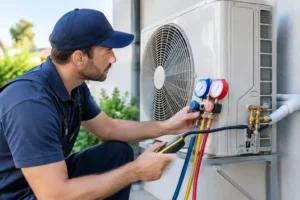
An air conditioning system rarely fails without warning. More often, it starts dropping small clues – weaker airflow, odd noises, warmer rooms, higher running costs. Knowing how to spot aircon faults early can save you from a full breakdown, a costly repair, or an uncomfortable day at home or work.
For homeowners, landlords and business owners, the key is noticing what has changed. Air conditioning should feel consistent. When performance slips, there is usually a reason behind it, and the sooner it is identified, the easier it tends to be to put right.
How to spot aircon faults before they get worse
The first sign of trouble is often a change in how the system behaves day to day. That might be a unit that takes longer to cool the room, switches on and off too often, or runs constantly without reaching the set temperature. None of those symptoms automatically means a major failure, but they do mean the system is no longer working as it should.
A common mistake is assuming the issue is minor because the unit still runs. In practice, air conditioning faults often begin as efficiency problems. Left alone, they can place extra strain on fans, compressors and electrical components. What starts as a small issue can become a much more disruptive repair.
If your system feels different, sounds different, or costs more to operate, that is usually enough reason to have it checked.
Weak airflow from the indoor unit
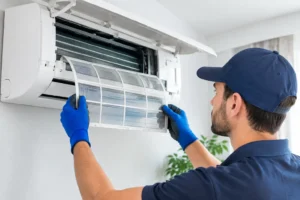
Poor airflow is one of the easiest faults to notice. If the fan is running but the room is not cooling properly, the air volume may have dropped. In some cases, the problem is as simple as a blocked filter. Dust and debris restrict air movement and make the unit work harder than necessary.
There are other possibilities too. A failing fan motor, blocked coil, damaged ducting on a ducted system, or control issue can all reduce airflow. The trade-off here is that while a dirty filter is straightforward, persistent weak airflow usually points to something more technical. If cleaning accessible filters does not improve performance, it is time for a professional inspection.
The air is not cold enough
If the unit is blowing air but not properly cooling, that is a strong indicator of a fault. Sometimes the thermostat settings are the cause, especially after accidental changes or power interruptions. But if settings are correct and the room still feels warm, there may be an issue with refrigerant levels, sensors, coils or the compressor.
This is where early diagnosis matters. Low refrigerant does not just reduce cooling output – it can affect overall system health if ignored. Equally, sensor problems can lead the system to misread the room temperature and operate at the wrong time. It depends on the age of the unit, the type of system, and how long the issue has been present.
Strange noises during operation
Air conditioning systems are not silent, but they should sound familiar. If you begin hearing buzzing, rattling, clicking, hissing or grinding, something has changed. A loose panel might create a harmless rattle, but electrical buzzing, fan imbalance or refrigerant-related noises should not be dismissed.
Different sounds can suggest different faults. Clicking may point to a control or relay problem. Hissing can indicate a refrigerant leak or pressure issue. Grinding often suggests wear in moving parts. The difficulty is that noise alone does not confirm the exact cause, but it does confirm that the system needs attention.
Signs your aircon fault may need urgent repair
Some issues are inconvenient. Others can lead to system damage or safety concerns if left unchecked. Knowing the difference helps you act quickly when it matters.
Water leaks or damp around the unit
A small amount of condensation is normal inside an air conditioning system, but water leaking into the room is not. If you see drips, staining, damp patches or pooled water near the indoor unit, there may be a blocked condensate drain, pump issue, frozen coil or installation problem.
Leaks should be dealt with promptly. Even when the air conditioning fault itself is relatively minor, water can damage ceilings, walls, flooring or nearby electrics. In commercial spaces, it can also create disruption for staff and customers.
Bad smells when the unit starts
Unpleasant odours are another sign that something is wrong. A musty smell often means moisture build-up, bacteria or mould inside the unit or drainage system. A burning smell is more serious and may point to electrical overheating or component failure.
Not every smell means the same thing, which is why guessing is risky. If the odour is persistent, gets stronger, or appears suddenly, switching the unit off and arranging a repair is the safer option.
Repeated tripping or power issues
If the system trips the electrics, struggles to start, or cuts out unexpectedly, there may be an electrical fault. That could involve wiring, capacitors, circuit boards or motor components. Electrical issues should always be treated seriously, especially if the unit has recently become noisy, hot, or unreliable.
This is not an area for trial and error. If resetting the system does not solve the issue immediately, it should be checked by an experienced technician.
Performance clues that are easy to miss
Not every fault is obvious. Some appear gradually and are easiest to spot when you compare current performance with how the system used to run.
Higher energy bills without more usage
If your electricity costs have gone up but your routine has not changed much, your air conditioning may be losing efficiency. Dirty coils, restricted airflow, worn components and refrigerant issues can all force the system to run longer for the same result.
This matters in homes, but it matters even more in offices, shops and other commercial settings where systems operate for longer hours. A unit that still works but runs inefficiently can quietly increase overheads month after month.
Uneven temperatures between rooms
If one room is comfortable and another stays warm, there may be a fault with airflow, controls, pipework, ducting or zoning. In multi-room or commercial systems, this can be especially noticeable when certain areas stop responding as expected.
Sometimes uneven cooling is linked to room layout or solar gain rather than a fault, so context matters. But if the imbalance is new, or if a previously reliable system is no longer maintaining consistent temperatures, it deserves investigation.
Short cycling or constant running
A healthy system should cycle in a controlled way. If it starts and stops too frequently, that is known as short cycling, and it can indicate thermostat problems, oversized equipment, electrical faults or refrigerant issues. On the other hand, if it runs for long periods without reaching temperature, the unit may be underperforming or losing cooling capacity.
Both patterns put stress on the system. They also tend to show up before a total breakdown, which makes them useful warning signs.
What you can check yourself safely
If you are trying to work out how to spot aircon faults, there are a few sensible checks you can make before booking a repair. Look at the thermostat settings, make sure the power supply is on, and inspect any accessible filters for dirt. You can also check whether vents are blocked by furniture or stock in a commercial space.
Beyond that, it is best not to interfere with the system. Opening panels, handling electrical parts or trying to top up refrigerant is not a safe or reliable fix. Air conditioning faults can have overlapping symptoms, and replacing the wrong part wastes both time and money.
A professional engineer will not just identify the visible issue. They will test performance properly, check pressures and electrics where required, and confirm whether the fault is isolated or part of a wider maintenance problem.
Why regular servicing makes faults easier to catch
Many of the most expensive air conditioning repairs begin as maintenance issues. Filters clog, drains block, coils collect dirt and components wear gradually. When a system is serviced routinely, those issues are often found before they affect cooling, comfort or reliability.
That is particularly valuable for landlords and business owners, where downtime can lead to tenant complaints, disrupted trading or unhappy staff. In busy parts of Essex, where systems may work hard through warmer periods, planned servicing gives you a far better chance of avoiding sudden callouts.
Essex Air Conditioning regularly sees faults that could have been resolved earlier with a simple inspection and clean. Preventative maintenance does not eliminate every repair, but it does reduce the risk of avoidable breakdowns.
When to call a professional
If your system is leaking, making unusual noises, not cooling properly, tripping the electrics or showing repeated performance issues, professional attention is the right next step. The same applies if you have cleaned filters and checked settings but the fault remains.
The most practical rule is this: if the unit is behaving differently and you cannot explain it with a simple setting or airflow issue, do not wait for it to fail completely. Air conditioning systems usually tell you when something is wrong. The value is in listening early, while the repair is still manageable and the disruption is still small.
A quick response now is often the difference between a straightforward fix and a much larger problem a few weeks later.