A south-facing bedroom that stays hot long after sunset, or a shop floor that becomes uncomfortable by mid-afternoon, needs more than a portable fan. This Panasonic air conditioning review looks at whether Panasonic systems offer the efficiency, comfort and dependable day-to-day operation Essex property owners expect from a permanent installation.
Panasonic is an established manufacturer with a broad range of wall-mounted, multi-room and commercial air conditioning options. It is often a strong choice for homes, offices, retail spaces and smaller commercial premises where quiet performance and controllable running costs matter. The best system, however, is not simply the one with the highest specification. Correct sizing, sensible unit positioning and professional installation have just as much influence on the result.
Panasonic air conditioning review: the key strengths
Panasonic air conditioning is widely chosen for its balance of refined indoor units, energy-conscious operation and practical controls. Many current systems are designed to provide both cooling in summer and efficient heating during colder months, making them useful well beyond a short heatwave.
For homeowners, the appeal is often the discreet appearance and low noise level of the indoor unit. A correctly selected wall-mounted system can cool a bedroom or living area without the intrusive sound associated with older equipment or portable units. This is particularly valuable in bedrooms, home offices and reception areas, where comfort should not come at the expense of concentration or sleep.
For businesses, Panasonic offers a scalable route from a single room solution to multi-split and larger commercial arrangements. That flexibility can suit a small office adding cooling to meeting rooms, a salon managing heat from equipment, or a landlord upgrading several rooms within a property. Rather than fitting separate outdoor units for every space, a multi-split design can allow several indoor units to connect to one outdoor condenser, subject to the system design and capacity.
Efficient heating and cooling
Modern split air conditioning systems work as heat pumps. In cooling mode, they remove heat from inside the room. In heating mode, they transfer heat from outside air into the building. This can be a highly efficient way to heat occupied rooms, especially during spring and autumn or where targeted heating is more sensible than warming the entire building.
Panasonic systems commonly provide inverter-driven operation. Instead of repeatedly switching fully on and off, the unit adjusts output as the room approaches the target temperature. In practical terms, this can mean steadier comfort, less wasted energy and quieter operation once the space has cooled or warmed.
Actual running costs depend on several factors: the capacity of the unit, room size, insulation, glazing, chosen temperature, hours of use and electricity tariff. A larger unit is not automatically more expensive to run, but an oversized or poorly located system can cycle inefficiently and make occupants feel draughty. A free survey is the right time to establish the appropriate capacity rather than relying on room measurements alone.
Air quality features
Some Panasonic ranges include air purification technology, including nanoe X on selected models. These features are intended to help improve the indoor environment by working with airborne particles and odours. They can be a worthwhile addition for bedrooms, homes with pets, beauty rooms, waiting areas and enclosed offices.
They should not be treated as a substitute for good ventilation. Air conditioning recirculates and conditions the air within a room, while ventilation manages the introduction and extraction of fresh air. In kitchens, busy workplaces and rooms with high occupancy, the wider ventilation requirement should always be assessed separately.
Controls that fit everyday use
Wi-Fi control is available on many Panasonic units, allowing users to adjust settings through an app where configured. This is useful when arriving home on a warm day, managing a holiday let, or checking that an office unit has not been left running unnecessarily. Timers, sleep settings and temperature limits can also help reduce avoidable energy use.
Smart controls are convenient, but they do not replace a well-planned installation. A poorly positioned indoor unit will still struggle to distribute air evenly, regardless of how advanced the controls are. The best outcome comes from pairing useful controls with a layout designed around the room and how it is used.
Where Panasonic may not be the right fit
Panasonic is a credible premium choice, but no brand is ideal for every project. If the budget is the overriding concern and the system will only be used occasionally, a simpler entry-level unit from another established manufacturer may be more appropriate. The important point is to compare like for like: capacity, efficiency ratings, warranty terms, controls, installation quality and aftercare all affect the real value of a quotation.
Availability can also shape the final choice. Indoor unit styles, capacities and specific features vary across ranges, and the most suitable model for a compact bedroom may not be the best option for an open-plan office. A contractor should recommend the unit based on the space, not just supply the product that happens to be in stock.
For larger premises, a wall-mounted split system may not provide the most discreet or practical solution. Ceiling cassettes, ducted units or a more comprehensive commercial design may better suit the layout. This is especially true where several rooms need independent control or where internal appearance and ceiling height are major considerations.
What professional installation changes
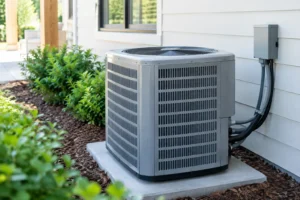
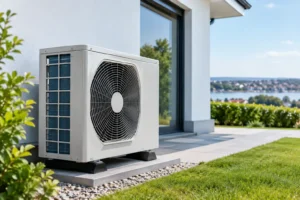
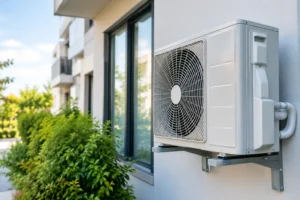
A Panasonic unit can only perform as intended when the installation is properly designed and commissioned. The outdoor unit needs clear airflow, a stable mounting location and consideration for neighbours and noise. Refrigerant pipework must be correctly sized, pressure tested and installed to the manufacturer’s requirements. Condensate drainage also needs careful planning, particularly where the indoor unit is located upstairs or away from an external wall.
The indoor unit position deserves equal attention. It should deliver air across the occupied area without blowing directly onto a bed, desk, dining table or customer seating. Installers also need to consider doors, heat sources, sun exposure, electrics and the route for pipework. These details determine whether the finished system looks neat and works efficiently.
In Essex homes, a survey often identifies practical considerations that are easy to miss when buying online. These can include conservatories with high solar gain, loft conversions with limited wall space, older properties with awkward drainage routes, and garden layouts where the outdoor unit needs to be positioned considerately. A site visit replaces assumptions with a clear recommendation and a no-obligation quotation.
Maintenance, reliability and ownership
Panasonic has a solid reputation in the air conditioning market, but reliability is closely linked to maintenance. Every split system has filters that collect dust over time. If they are not cleaned, airflow falls, efficiency can suffer and the indoor unit may become noisier. Basic filter cleaning is straightforward for many owners, following the manufacturer guidance for their model.
Professional maintenance is still worthwhile. An engineer can inspect electrical connections, check operating temperatures, clean components that are not accessible during routine use, assess drainage and identify early signs of a fault. For businesses and landlords, planned maintenance also helps reduce disruption during the periods when cooling is needed most.
A well-maintained system should provide many years of useful service, but air conditioning is not fit-and-forget equipment. If performance changes, water appears from the indoor unit, unusual noise develops or the system stops responding properly, arranging a prompt repair can prevent a small issue becoming a more expensive one.
Is Panasonic air conditioning worth considering?
For many households and businesses, yes. Panasonic is particularly worth considering when quiet running, efficient heating and cooling, tidy design and optional air quality features are priorities. It offers a broad enough range to suit single-room installations as well as more involved multi-room projects.
The decision should still come down to the individual building. A correctly sized unit from Panasonic, installed by an experienced contractor and maintained properly, is likely to deliver better comfort and value than a more expensive system selected without a survey. Essex Air Conditioning can assess your property, explain the practical options in plain terms and recommend a system that suits the rooms you actually use.